
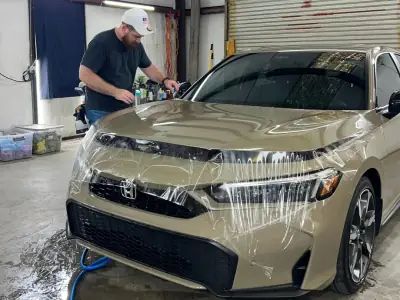
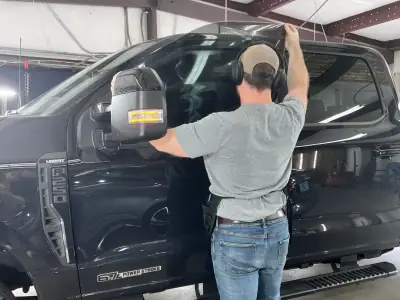

Quick answer: The best spring car care checklist for Auburn and Opelika drivers has seven steps: rinse and decontaminate the pollen and red clay off the paint, wash the wheels, wheel wells and door jambs, inspect the paint for winter and holiday-travel damage, check headlights and glass, reset the interior, confirm your protection (coating, film or wax) is still doing its job, and get window tint sorted before the first real heat. Do the first two right away, because spring pollen turns acidic when it mixes with dew and rain. Do the protection and tint steps before May, when the love bugs arrive and East Alabama's long, hot summer begins.
Spring in Lee County is beautiful, and it is also one of the busiest seasons for a car's finish. Pine and oak pollen coat everything in a yellow-green film, red clay gets kicked up by construction and tailgate fields, and the first love bug swarms are right around the corner. This guide from My Awesome Detailer LLC in Opelika gives you a practical, step-by-step checklist you can work through over a few weekends, explains why each item matters in this climate, and tells you which jobs are simple at-home tasks (a careful rinse and a proper wash) and which are best left to a detailing shop with the right lighting, tools and products.
Why spring is a big deal for your car in East Alabama
Spring is when your car goes from dormant to under attack. Winter in Auburn and Opelika is mild compared with the northern states, so most local cars never see heavy road salt. What they do see is a gradual build-up of grime, followed by a sudden wave of pollen, rain, humidity and rising UV. The combination matters more than any single factor.
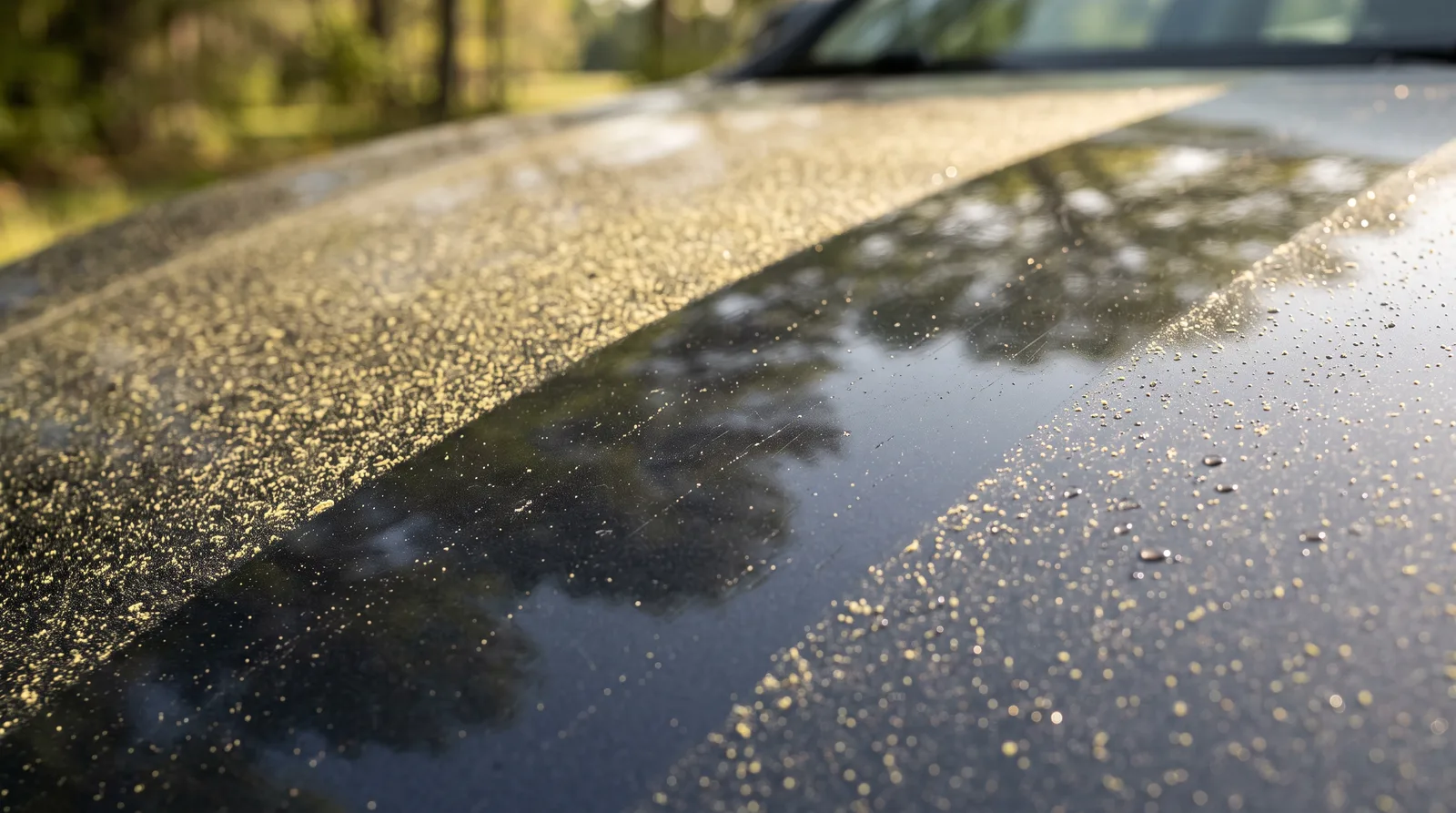
- Pollen. Pine and oak pollen settle in a thick layer. Dry, it is mostly a nuisance. Wet from dew or rain, it becomes a slightly acidic film that can bond to hot paint.
- Humidity and rain. Spring storms leave water spots when drops dry on the panels, and humid air keeps moisture lingering on glass, trim and interiors.
- Red clay. Fine, iron-rich clay collects on lower panels and in wheel wells. Wiping it dry drags grit across the clear coat. See our guide to red clay and your car.
- Rising sun. UV strength climbs quickly from March onward. Paint, plastics, dashboards and leather all start taking more punishment. Read more in how Alabama heat damages car paint.
- Bugs and sap. Trees leaf out, sap drips and the first insects appear. Left on paint in the sun, their residue can etch the clear coat.
The good news is that none of this is hard to handle if you take it in the right order. The checklist below is that order.
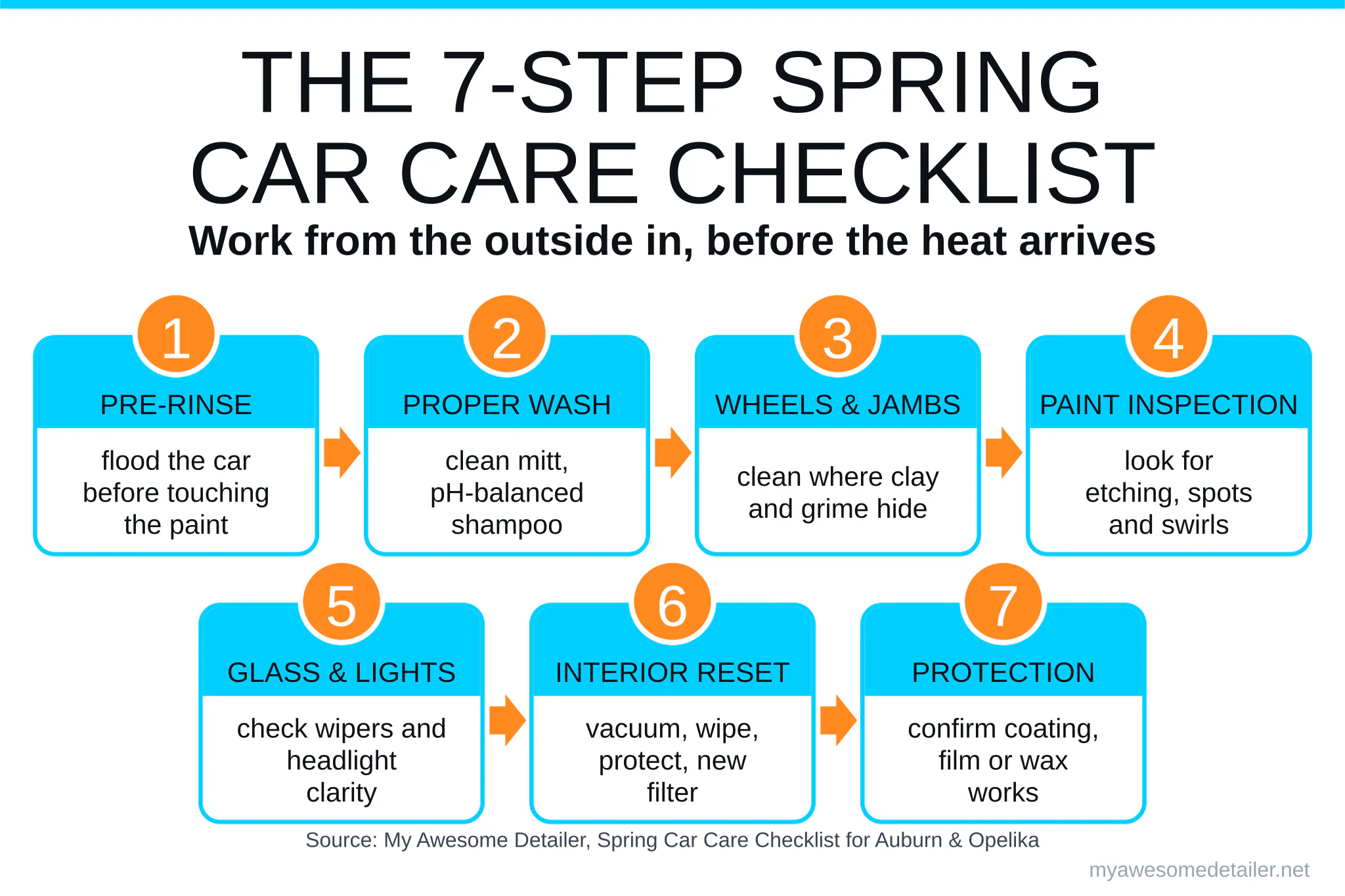
The spring car care checklist at a glance
Work from the outside in, and from gentle to aggressive. Removing loose pollen and clay first means every later step, from washing to polishing to coating, happens on a clean surface and carries less risk of scratching. Here is the full list before we go through each item.
| Step | What you are doing | Why it matters in Alabama | DIY or shop? |
|---|---|---|---|
| 1. Pre-rinse | Flood the car with water before touching it | Lifts loose pollen and clay so a mitt does not drag it across the paint | DIY |
| 2. Proper wash | Two-bucket or foam wash with a clean mitt | Removes the acidic pollen film safely | DIY or shop |
| 3. Wheels, wells and jambs | Clean where clay and grime hide | Clay stains and traps moisture in these areas | DIY or shop |
| 4. Paint inspection | Look for etching, water spots, chips and swirls | Finds problems while they are still simple to fix | Shop (needs good light) |
| 5. Glass and headlights | Clean glass, check headlight clarity | Pollen haze and oxidized lenses hurt night visibility | DIY check, shop restoration |
| 6. Interior reset | Vacuum, wipe, protect, deodorize | Pollen enters through vents; humidity breeds odors | DIY or shop |
| 7. Protection check | Confirm coating, film or wax is still working | Sets you up for summer UV and love bug season | Shop |
Step 1: Pre-rinse before you touch the paint
Never wipe pollen or clay off a dry car. Pollen grains and clay particles are tiny but abrasive, and rubbing them across clear coat is a quick way to add fine scratches. Start with a thorough, gentle rinse from the top down, using plenty of water. Pay extra attention to the roof, the base of the windshield, the area around the mirrors and the lower panels, where the clay collects.
If you have a foam cannon or a pump sprayer, a pre-wash foam helps loosen the film so it slides off instead of being scrubbed off. If you do not, a long rinse followed by a second pass is a fine substitute. Skip high-pressure water held close to edges, emblems or aging paint chips, because it can lift the edges of damage that was stable.
Step 2: A proper spring wash
Use clean water, a clean mitt and a pH-balanced car shampoo, then dry the car with a clean microfiber towel. The two-bucket method is the simplest upgrade to a home wash: one bucket with shampoo, one with plain rinse water, and a rinse of the mitt in the plain bucket after each panel so you are not putting pollen and grit back on the paint.
A few habits make a big difference in this climate:
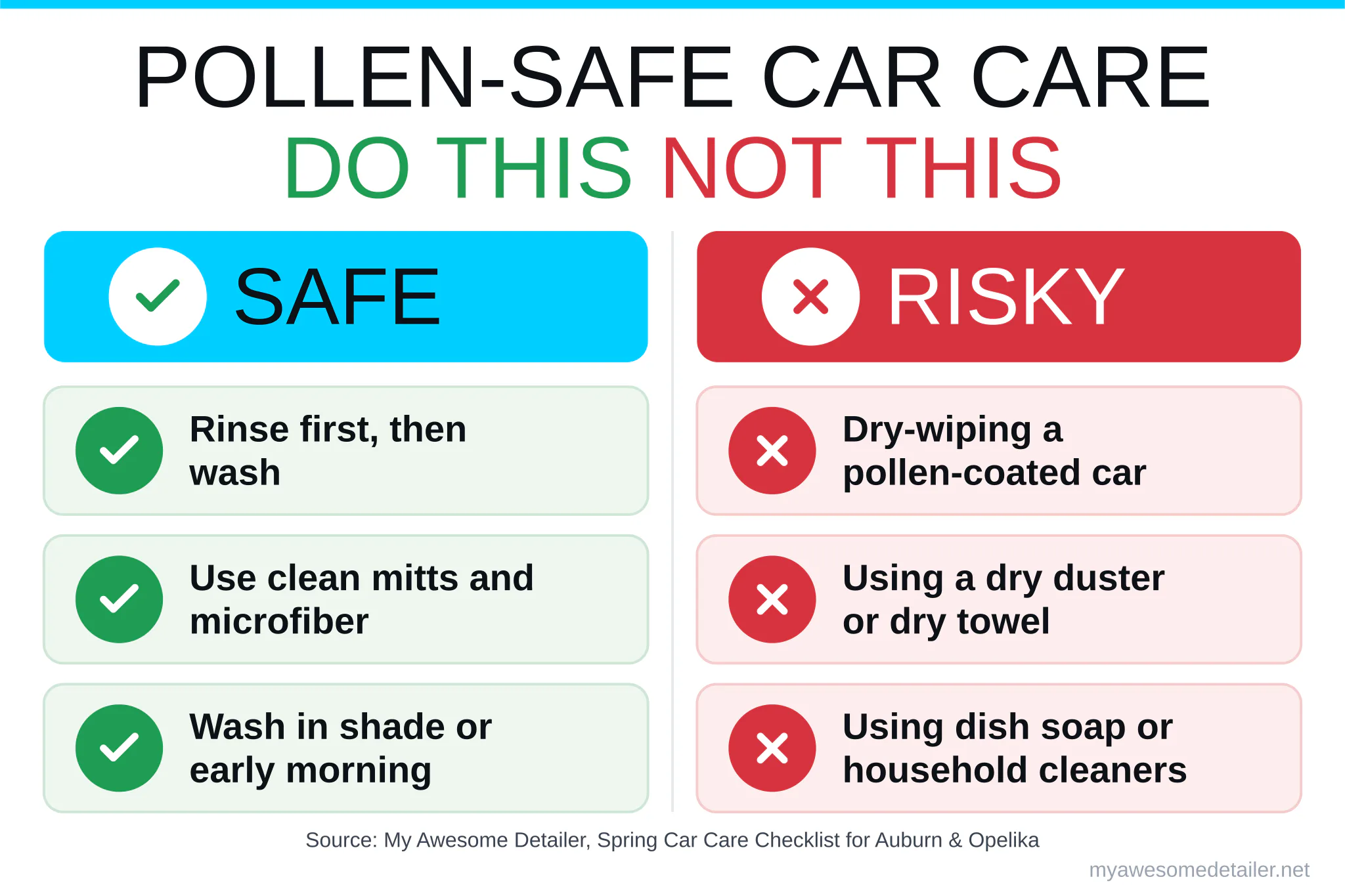
- Wash in the shade, or early in the morning or in the evening. Hot panels dry soap and water spots onto the finish before you can rinse.
- Work in small sections from the roof down, and leave the dirtiest areas, the lower doors, bumpers and rocker panels, for last.
- Rinse thoroughly, then dry. Letting spring rain or sprinkler water air-dry on paint is how water spots form. If spots already exist, our guide to water spot removal explains when they come off with washing and when they need correction.
- Replace worn towels and mitts. Old, gritty microfiber is a hidden source of swirl marks.
If you are not sure whether a quick wash is enough, our comparison of a car wash versus professional detailing lays out what each one does and does not remove.
Step 3: Wheels, wheel wells and door jambs
This is where spring grime hides, and where most home washes stop too early. Wheels take brake dust and clay together, and the wheel wells and lower panels collect fine clay that stays damp for days. Door jambs, the area under the hood edge and the trunk or hatch sill gather pollen that finds its way in every time you open a door.
- Clean wheels and tires first, with separate brushes and mitts, so brake dust never touches your paint mitt.
- Rinse the wheel wells and the undersides of the fenders from the outside with a steady stream of water.
- Wipe the door jambs, hood and trunk edges with a damp microfiber, then dry them.
- Check the drain holes at the bottom of the doors and along the sunroof tracks if your car has them. Pollen and leaf bits can clog them, and trapped water makes odors and rust more likely.
Step 4: Inspect the paint for winter and holiday-travel damage
Spring is the right time to look closely at your paint, because small problems are cheap to fix and expensive to ignore. After a washed, dry car sits in good light, walk around it slowly and look at it from several angles. Use your phone flashlight or sit the car under bright, even light, since many defects only show up when light rakes across the surface.
What to look for
- Rock chips on the hood, bumper and mirrors, especially if you drove long stretches on the interstate over the holidays or on spring-break trips.
- Etching from bird droppings, bugs or sap: dull, cloudy spots or rings with a slightly recessed look.
- Water spots: chalky rings that do not wipe away with a quick detail spray.
- Swirls and fine scratches, which look like spider webs under direct sun or a bright light.
- Oxidation: dull, hazy or chalky patches, usually on the roof, hood and trunk lid first, especially on darker colors.
If you find anything, take a few photos and note where it is. Whether a spot needs a deeper wash, a light polish or full paint correction depends on how deep it goes, and that is a judgment best made in person under proper lighting. Our guide on the signs your car needs paint correction shows what to look for, and how paint correction works explains what happens when you bring it in.
Not sure what your paint needs?
Tell us about your vehicle in the Service Builder. It is a short interview about the car, typically 3-5 minutes, then we text you a code and the exact price is on the screen.
Step 5: Glass, wipers and headlights
Pollen and humidity are hard on visibility, so this step is about safety as much as appearance. Clean the inside and outside of every window with a dedicated glass cleaner and a fresh microfiber. Pollen leaves a hazy film on the windshield that becomes glare when the sun is low, and the inside of the glass collects a film of its own from the interior plastics warming in the sun.
- Wipers. Run a clean, damp cloth along the rubber edge. Cracked, chattering or streaking blades are due for replacement before spring storms.
- Washer fluid. Top it off. Pollen season means you will use more than you expect.
- Headlights. Look at your lenses in daylight. If they have turned yellow, cloudy or chalky, they scatter light instead of projecting it, which cuts night visibility. Our page on headlight restoration explains how clouded lenses are restored and protected.
- Lights check. Have someone confirm that your brake lights, turn signals and fog lights all work.
While you are looking at the windows, check your tint if you have it. Bubbles, purple fading, peeling corners or edges that are lifting are signs the film is reaching the end of its life. See our guide on why window tint bubbles and peels if you spot any of those.
Step 6: Reset the interior
Spring pollen does not stay outside. It rides in on clothes and through the cabin air system, and it settles on the dashboard, vents, seats and carpet. Humidity then adds a damp, musty edge if anything wet gets left in the car. A seasonal interior reset takes an afternoon and makes the cabin noticeably nicer.
- Remove everything: floor mats, trash, sports gear, kids' items and anything left under the seats.
- Vacuum from top to bottom, including seat seams, under the seats, the trunk and the door pockets. Use a brush attachment on vents and seams.
- Wipe hard surfaces with a damp microfiber and a gentle interior cleaner, then follow with a UV-protectant product made for dashboards and door panels.
- Clean and condition leather. Dry leather in an Alabama summer cracks faster than leather that is cleaned and conditioned.
- Clean the floor mats outside the car and let them dry fully before putting them back.
- Check and, if due, replace the cabin air filter. A clogged filter holds pollen and odors.
If your car has a smell you cannot trace, wet carpet, or sticky spills from the winter, a hand-detailed interior goes much deeper than a home vacuum. Our guides to interior detailing and why car interiors smell bad cover the causes and fixes.
Step 7: Check your paint protection before summer
Spring is the last easy window to refresh protection before the hottest months. Whatever is on your paint, wax, sealant, ceramic coating or paint protection film, it should be doing its job by the time summer UV and love bugs arrive. A quick check tells you whether it is.
The water test
On a clean, dry car, spray or pour water on a horizontal panel. On protected paint, water forms tight beads or sheets off quickly. On bare or worn paint, water spreads out and sits flat. That is a rough test rather than a measurement, but it is a useful sign of how much protection remains.
If you have ceramic coating
A coating should be washed regularly with a gentle, pH-balanced shampoo and given the maintenance it needs to keep performing. If the beading has faded or water seems to cling, a proper decontamination wash often brings back much of the behavior, because bonded contamination can mask a healthy coating. Read our ceramic coating maintenance guide for a routine, and what to do about wax after ceramic coating if you are wondering whether to layer anything on top.
If you have paint protection film
Check the edges for lifting and the surface for staining. Film should be washed like paint, with no harsh solvents or high-pressure water aimed at edges. See our PPF aftercare guide for details.
If you have no protection at all
Spring is a good moment to decide. Unprotected clear coat takes the full force of UV, bugs, sap and pollen, and Alabama summers are long. A coating gives the paint a slick, chemically resistant surface that makes spring washing easier, and film adds a physical barrier against rock chips. Which one fits depends on how you drive, where you park and what you want the car to look like. Our paint protection comparison lays out the options side by side, and is ceramic coating worth it for a daily driver takes on the question directly.
Spring pollen: do this, not that
Most spring paint damage comes from well-meant cleaning mistakes rather than from the pollen itself. Pollen on its own is a surface nuisance. The damage happens when it is rubbed in, left to bake or hit with the wrong products.
- Rinse first, then wash. A dry wipe drags abrasive grains across the clear coat.
- Do not use a dry duster or a dry towel on a pollen-covered car, even a soft one.
- Do not let it sit through repeated dew and sun cycles. A damp film that dries on hot paint again and again is the version most likely to leave marks.
- Do not use household cleaners, dish soap or glass cleaner on paint. They can strip protection and dry out trim.
- Use the garage or covered parking where you can, but do not park wet under a fabric cover that traps moisture and grit against the paint.
- Change the cabin air filter so the pollen outside does not end up recirculating in the cabin.
For a closer look at the seasonal timing and how protection holds up, our post on spring car protection has more on planning the work around tax refund season.
Love bug season is coming: prep before May
Love bugs fly in two main waves, roughly May and September, so your spring prep should happen before the first one. Their remains are acidic, and bonded to a hot front bumper, hood or mirror, they can start to etch the finish within days. The prep is simple, and it works for any season of bug splatter.
- Make sure the front end has fresh protection: a sealed, coated or film-protected surface lets bugs wipe off far more easily than bare paint.
- Keep a spray bottle of quick detailer and a clean microfiber in the car for early removal. Soften the residue with the spray first and lift it gently rather than scrubbing.
- Wash the front of the car soon after a long drive instead of waiting for the weekend.
Our post on ceramic coating and bird droppings, sap and love bugs goes deeper on the chemistry and the cleanup.
Window tint: get ahead of summer heat
If your car has no tint, spring is the sensible time to add it, because the cabin heat you notice in June is already building in April. Quality window tint cuts solar heat, blocks UV that fades your interior and reduces glare. Which film and shade you choose matters, as does staying within the Alabama rules. Our guides to how heat rejection and infrared work and the Alabama window tint laws will help you narrow the choice.
If your existing tint is old, purple or bubbling, a spring refresh can be a better use of time than another summer of squinting. See when to remove old window tint for the signs.
What to do yourself and what to leave to the shop
The basics, rinsing, washing and a light interior clean, are well within a careful owner's reach. The jobs that benefit from a shop are the ones that need controlled lighting, specialty tools or an environment free of dust and pollen.
| Task | Good for home | Better at a shop |
|---|---|---|
| Pre-rinse and wash | Yes, with clean mitts and proper technique | When the car is heavily contaminated or the finish is delicate |
| Clay and decontamination | Possible, but easy to scratch if rushed | Yes, when the paint feels rough after washing |
| Swirl and etch removal | No | Yes, this is paint correction work |
| Ceramic coating | Not recommended; prep and cure conditions matter | Yes, in a controlled indoor space |
| Paint protection film | No | Yes, installation is precision work |
| Window tint | No | Yes, dust control and clean cuts matter |
| Headlight restoration | Kits exist, results vary | Yes, for lasting clarity and sealing |
| Deep interior cleaning | Light cleaning, yes | Deep extraction, odors and stains |
If you want to see how the shop approach compares to hands-on work at home, our guide to professional versus DIY ceramic coating explains the tradeoffs honestly, and how often you should detail your car helps set the rhythm for the rest of the year.

A simple spring schedule for Auburn and Opelika drivers
You do not need to do everything in one weekend. Spread the checklist over the season and put the protection and tint work ahead of the heat. Here is a schedule that fits most local drivers.
- Early spring (before peak pollen): a thorough wash and paint inspection, headlight and glass check, and a decision on protection. This is the best time to book coating, film or tint work, because shop calendars fill up as the weather warms.
- Peak pollen (roughly March to May): rinse and wash more often than usual, every week or two for a car that lives outside. Do not wait for the pollen to build up.
- Late spring (before the first love bugs): interior reset, a protection check and a quick-detailer kit in the car.
- Early summer: a maintenance wash and a second look at tint, trim and rubber, then settle into a routine for the hot months.
Because a car looks its worst in the middle of pollen season, resist the urge to judge your finish by how it looks on a yellow week. A proper wash tells you what condition it is actually in.
What to expect when you bring your car to our shop
Everything happens at our Opelika studio, so your car is in a controlled, indoor environment while we work on it. We inspect the vehicle with you, talk about what it needs and explain the timeline before anything starts. Because we are a shop, we can control dust, light and temperature for coatings, film and tint, which matters in a season this full of pollen and humidity. Our guide on what to expect when dropping off your car walks through the day.
We're at 2709 Frederick Road, Opelika, AL 36801, and we serve drivers from Auburn, Opelika and across Lee County, with Phenix City and Columbus, GA close by. We're an Owner's Pride Select installer, one of the top shops in the country in that program, and we're rated 4.9 stars from 200+ reviews. You can also read about our warranty and who we are, or browse our auto detailing, ceramic coating, paint protection film and window tint services.
Ready to get your car summer-ready?
Start the Service Builder: a short interview about your vehicle, typically 3-5 minutes, then a code we text you, and your exact price is on the screen.
The bottom line
A good spring routine for an Auburn or Opelika car is rinse first, wash properly, inspect the paint, check glass and headlights, reset the interior, confirm your protection and handle tint before the heat arrives. None of it is complicated, but the order and the habits matter: a gentle rinse before any contact, clean tools, no dry wiping and early removal of bug and sap residue. Do that, and your car heads into summer clean, protected and easier to maintain.
When you're ready, the quickest next step is the Service Builder. And if you'd like to talk to a person first, call us at (334) 650-6499 or stop by the shop in Opelika.