Quick answer: Yes, ceramic coating is worth it for a daily driver, and in several ways it is worth more on a daily driver than on a garage queen. A car that sits outside at work, gets washed on a schedule you can't always keep and absorbs Alabama sun, pollen, red clay, bugs and bird droppings every single day is exactly the car a coating protects best. A professionally installed coating is rated to last roughly 3–7+ years, makes every wash faster and easier, keeps the paint from slowly dulling, and helps the car hold its appearance and its value. The right question isn't "is my car nice enough?" It's "how many years will I keep driving it, and how much do I hate washing it?"
There is a stubborn myth around Auburn and Opelika that ceramic coating is for exotic cars, lifted trucks and enthusiast builds. That myth is mostly marketing leftover from the early days of coatings, when they were sold as a showpiece product. This guide from My Awesome Detailer LLC in Opelika explains why the logic runs the other way for a regular car, how to think about the cost per year without guessing at numbers, what a coating will and won't do for you, and how to decide whether it fits the car in your driveway.
The "it's only for nice cars" myth
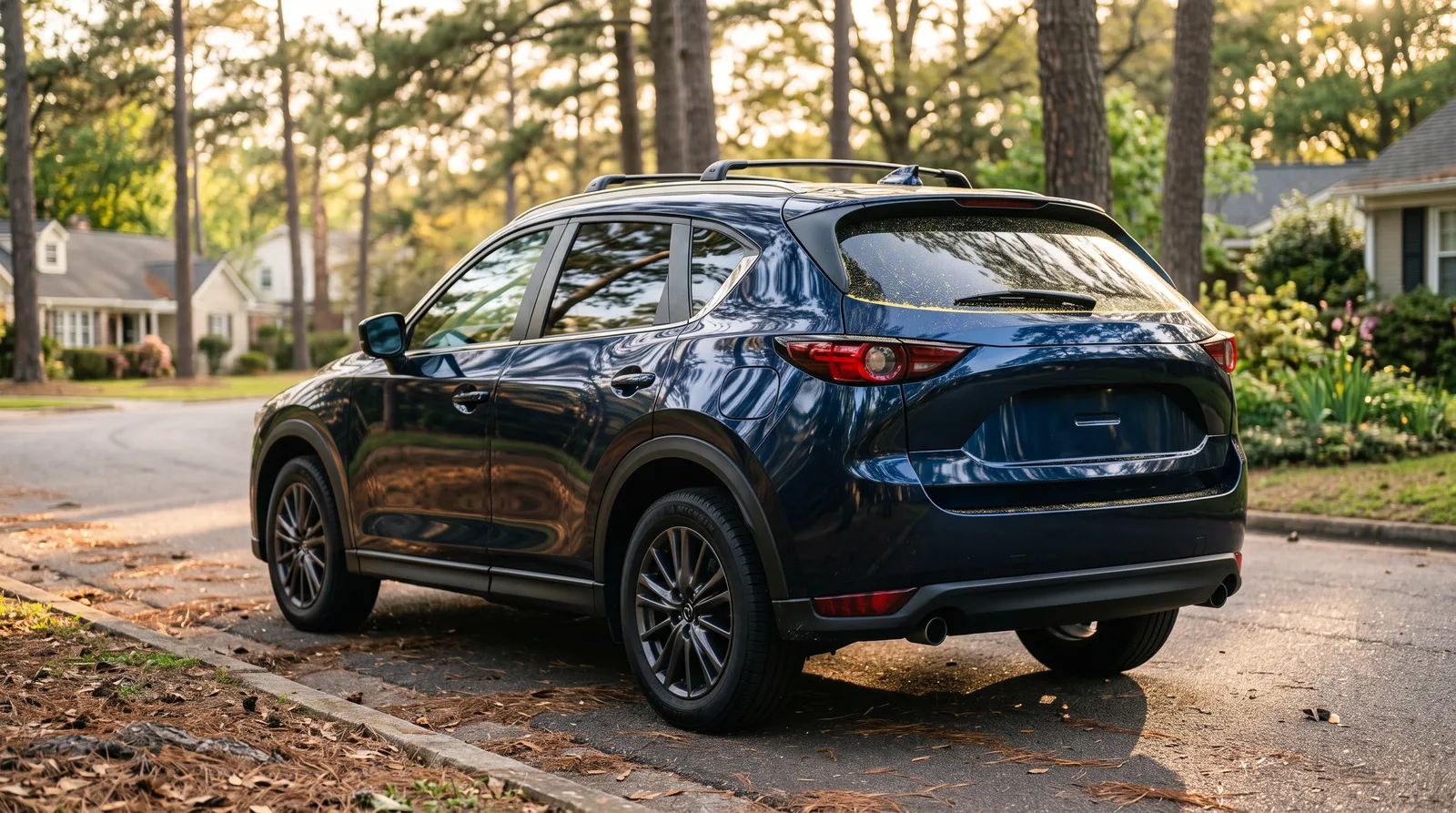
Ceramic coating protects paint from the environment, and the environment doesn't care what badge is on the trunk. UV breaks down clear coat on an everyday sedan exactly the way it does on a sports car. Pollen etches, bird droppings stain and red clay abrades regardless of the sticker price. If anything, the daily driver is the more exposed vehicle: it lives outside, it's parked in the open lot at work or on campus, it sits through the afternoon sun, and it rarely gets the careful, covered-garage treatment a weekend car gets.
The enthusiast framing also hides the most practical benefit of all. For most people, the real value of a coating isn't a mirror shine in a photo. It's the Saturday morning they get back because the car rinses clean instead of needing an hour of scrubbing. That is a benefit that scales with how much you drive and how dirty the car gets, which means the daily driver wins again.
We cover the other common misunderstandings in our guide to ceramic coating myths, busted. The short version is that a coating is a protective layer and a time-saver first, and a show-car product second.
Wondering if a coating makes sense for your car?
The Service Builder is a short interview about your vehicle, typically 3-5 minutes. Then we text you a code, and the exact price for your car is on the screen.
What a daily driver actually goes through in East Alabama
A daily driver in Lee County is exposed to UV, heat, pollen, bugs, bird droppings, tree sap, red clay and road grime nearly every day of the year, and each one of those leaves a mark on unprotected clear coat. Here is what that looks like in practice, season by season.
Summer: sun and heat
Alabama summers put a car's horizontal surfaces through hours of direct UV and high surface temperatures. Hoods, roofs and trunk lids take the worst of it. Over the years that exposure slowly oxidizes and dulls the clear coat, especially on a car that lives outside. We go deeper on this in how Alabama heat damages car paint.
Spring: pollen
Pollen season coats everything in yellow-green dust. Pollen on its own rinses off, but when it's wet, sitting on a hot panel, it can bond and leave a faint stain behind. A slick coated surface lets most of it release with a simple rinse.
Summer and fall: bugs, birds and sap
Bug splatter and bird droppings are acidic. The longer they sit, the more they can etch into paint. On a daily driver parked outside, you often can't deal with them the same day, and that delay is where the damage happens. A coating gives you a sacrificial, slick barrier so you have more time before the paint itself is at risk. For specifics, see ceramic coating vs. bird droppings, sap and love bugs.
All year: red clay and road grime
Red clay gets kicked up on rain-soaked roads and stains lower panels, and it's gritty, which makes it easy to scratch the paint while washing. We wrote a full breakdown in red clay and your car. A coated panel doesn't hold onto that grit the way bare paint does, so it rinses away with less friction.
| Daily hazard | What it does to bare paint | What a coating changes |
|---|---|---|
| Sun and UV | Gradual oxidation and dulling of clear coat | Adds a durable barrier that takes the sun exposure instead of the clear coat |
| Pollen | Can stain when wet and baked on | Slick surface lets most of it rinse off |
| Bugs and bird droppings | Acidic residue can etch if left | Buys you time and wipes off more easily |
| Red clay and road grime | Stains lower panels, gritty to wash off | Releases with less scrubbing, so less wash marring |
| Frequent washing | Every wash risks fine swirl marks | Fewer, faster, gentler washes |
Cost per year: the math that changes the answer
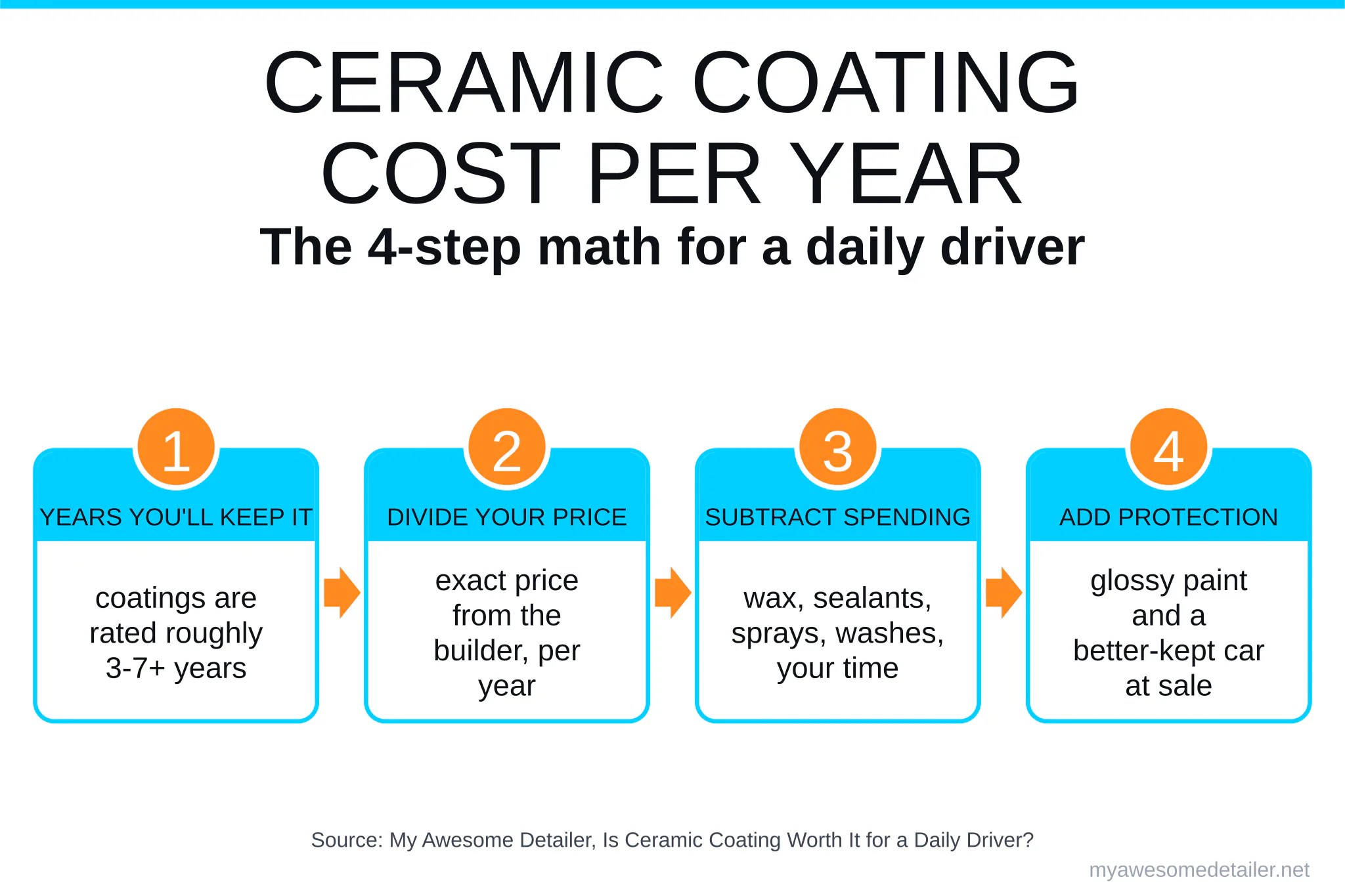
The honest way to judge cost is per year of ownership, not as a single number on an invoice. We don't quote a price in a blog post, because the exact figure depends on your vehicle, its size and the condition of the paint, and the Service Builder shows your exact price on screen. What we can give you is the framework, and it's the same one we'd use on our own cars.
- Start with how long you'll keep the car. A coating is rated to last roughly 3–7+ years depending on the product and how it's maintained. If you drive a car for six or seven years, the coating can cover nearly the whole ownership. If you trade every two years, a long-term coating may be more than you need.
- Divide the price by your years. Take the exact price you get from the builder and divide it by the number of years you expect to keep the car. That is the real annual cost.
- Subtract what you already spend. Add up what you spend on wax, sealants, quick detail sprays, drive-through washes and the supplies for washing at home. Count the hours too. A coating doesn't eliminate maintenance, but it often replaces a good share of it.
- Add the protection value. This is the hard one to put a number on: paint that stays glossy instead of dulling, and a car that looks well kept when it's time to sell or trade.
For many owners, once the annual cost is laid out this way, it lands closer to the cost of regular wax and sealant jobs than they expected, and it comes with a lot more protection. For the broader pricing picture, including how we think about it, read ceramic coating cost in Auburn, AL.
Easier washing is a real time-saver
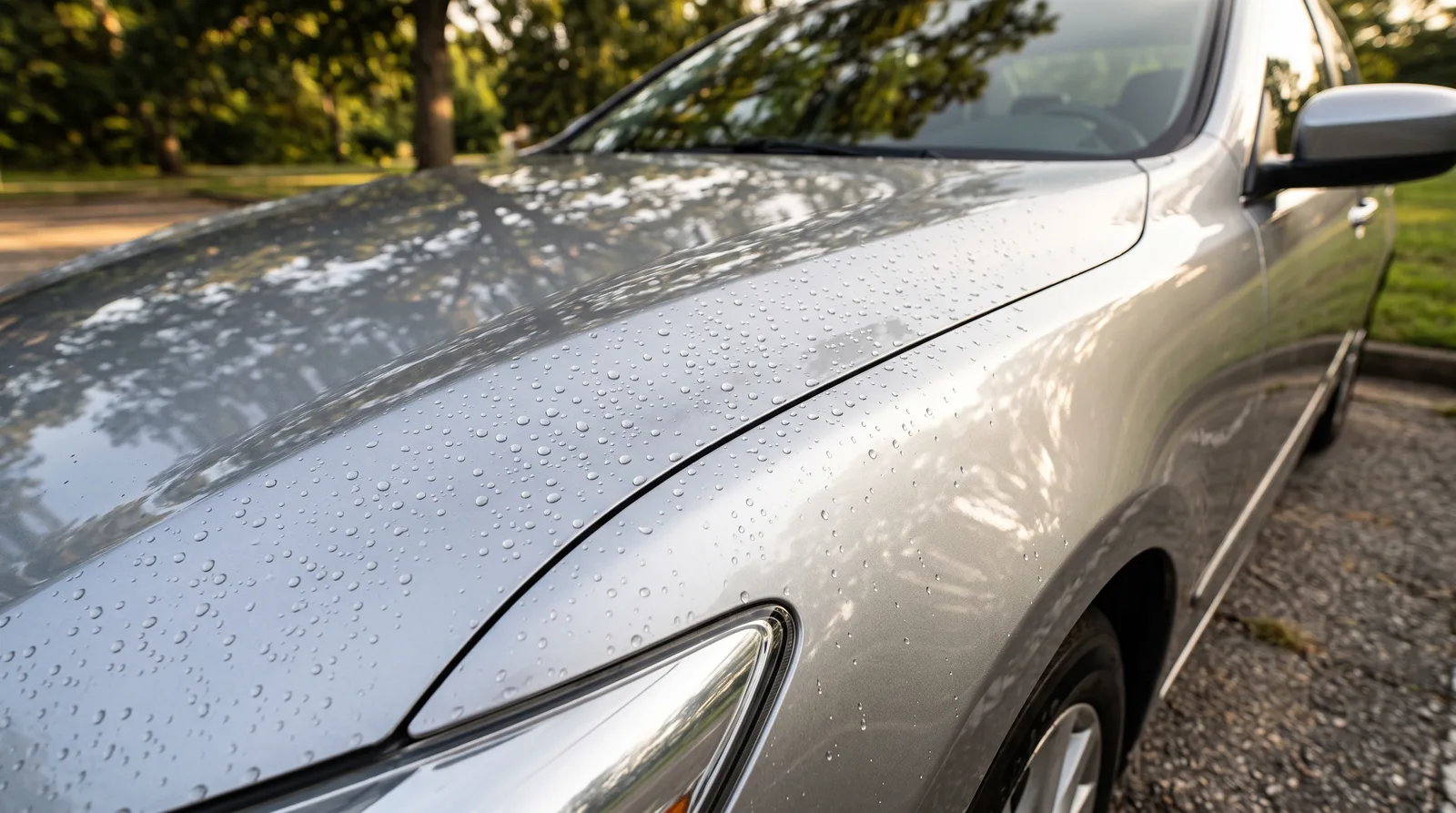
The benefit you will feel most often is not shine. It's that washing takes less effort. Ceramic coatings create a very smooth, water-shedding surface. Dirt doesn't grip it the way it grips bare clear coat, so a regular wash removes it faster, with less pressure and fewer passes of the wash mitt.
That matters for three reasons on a daily driver:
- It saves time. If you wash at home, the job is shorter. If you've been putting off washes because they're a chore, a coated car makes it easier to actually keep up.
- It protects the paint. Most swirl marks come from washing, not from the road. Fewer and gentler contact washes means fewer fine scratches over the life of the car.
- It makes the in-between easier. A pollen-covered or dusty coated car often looks much better after a simple rinse than an uncoated one does, which is valuable when you don't have time for a full wash.
To be clear: a coating is not a force field. You still need to wash the car. Our ceramic coating maintenance guide covers a routine that keeps the slickness working, and it is simpler than most people expect.
What ceramic coating will and won't do
A ceramic coating adds a hard, chemical-resistant, hydrophobic layer on top of your clear coat. It does not make paint scratch-proof, and it does not stop rock chips. Setting expectations correctly is what separates owners who love their coating from owners who feel let down.
| Coating does | Coating does not |
|---|---|
| Add UV and chemical resistance to the paint surface | Make the car immune to scratches or swirl marks from poor washing |
| Make water bead and sheet off | Stop rock chips or door dings |
| Make washing faster and easier | Mean you never have to wash the car |
| Add depth and gloss to healthy paint | Fix existing damage by itself, since correction is a separate step |
| Help paint stay cleaner between washes | Make bug, sap and bird droppings harmless if left for weeks |
If rock chips are your top concern, for instance because you spend a lot of time on the highway, paint protection film is the tool for that, and the two can work together. We explain the combination in ceramic coating over PPF, and you can see the film side at our PPF page.
Paint prep: what makes or breaks the result
A coating locks in whatever condition the paint is in when it goes on, which is why preparation matters as much as the product. On a daily driver that has a few years of washes behind it, that usually means a decontamination wash and some level of paint correction before the coating is applied. A coating sealed over swirl marks keeps the swirl marks.
That is also the quiet argument for coating a car earlier. A newer car with healthy paint needs less correction, so more of the investment goes into protection rather than repair. A car that is already several years old can still be an excellent candidate, it just means the prep stage does more of the work. Our ceramic coating service page outlines how we approach it, and the step-by-step process walks through each stage.
How long will it last on a car that's driven every day?
Coatings are rated to last roughly 3–7+ years, and a daily driver's lifespan depends mostly on maintenance habits, not on mileage. A coated car that's hand washed gently, kept away from harsh chemicals and rinsed after bird or bug hits tends to hold up far better than one that goes through automatic brush washes weekly.
What shortens a coating's life is almost always a habit, and the worst offenders are harsh automatic washes and household degreasers. We list the full set in 5 things that ruin your ceramic coating. If you want the Alabama-specific view on longevity, read how long ceramic coating lasts in Alabama heat.
Four real daily-driver situations
The value of a coating shows up differently depending on how you actually use the car. These are the patterns we see most often from drivers around Auburn and Opelika.
The campus and parking-lot commuter
If your car sits in an open lot or garage deck at work or at Auburn University all day, it takes sun, pollen, bird droppings and the occasional tree drop with no chance for you to deal with them until evening. For that car, the coating's job is to give you more time. Droppings and sap sit on a slick, protected surface instead of directly on clear coat, and they come off more easily when you finally get to them.
The highway commuter
Long drives on I-85 and the routes around Lee County mean a steady shower of bugs, road film and fine grit on the front of the car. A coating makes the front end far easier to clean after a drive, and it keeps the hood and bumper from becoming a permanent record of every trip. If rock chips worry you more than bugs, that's where film comes in; our guide to PPF for highway commuters covers that side.
The family SUV
A family vehicle gets dirtier faster than almost anything else, and it's also the car nobody has time to detail. Easier cleaning is the headline benefit here. A rinse and a gentle wash do most of the work, which is what a busy household needs.
The truck that works for a living
Trucks collect mud, dust and job-site grime. A coating won't stop a bed scratch, but it keeps the paint cleaner and the washing quicker. We go into this in ceramic coating for a Ford F-150.
Notice that none of these situations depends on the car being expensive. Each one depends on how much time the car spends outside and how much of your week goes into keeping it clean, which is why the same coating makes sense on a commuter sedan, a family crossover and a work truck alike.
Common objections, answered honestly
"My car isn't new, so it's too late."
Not necessarily. A car with a few years on it can be a very good candidate, as long as the paint is prepped properly first. The earlier you protect paint, the less repair it needs, but an older car with decent clear coat often looks dramatically better after correction and coating. If the clear coat is already failing, a coating can't fix that, and we'll tell you so rather than sell you something that won't help.
"It's not a luxury car, so it's not worth the money."
What matters is how long you keep it and how much it's exposed, not what it cost on the lot. A car you'll drive for years and park outside gets more value from protection than a car that lives in a garage and comes out on weekends.
"I'll just wax it myself."
Waxing is a fair choice if you enjoy the work and have the time to repeat it. If you'd rather not, a coating replaces that routine for years. We compare the two directly in professional vs. DIY ceramic coating.
"Will a coating change how my car looks?"
It adds depth and gloss to healthy paint, but it doesn't change the color. We explain what to expect in does ceramic coating change paint appearance.
"What if I take it through the car wash?"
You can, but harsh brush washes work against the coating and against your paint in general. The occasional touchless rinse is far less of a problem than a weekly brush tunnel. If you want the coating to last, hand washing is the best habit to build.
A simple first-year routine for a coated daily driver
Keeping a coated daily driver looking good takes a short, repeatable routine, not a weekend project. Here is the version we give customers.
- Rinse the car regularly. Especially after pollen days, rain with red clay runoff or a long highway drive.
- Remove droppings and bugs promptly. A soft towel and a quick spray lifts them far more easily from a coated panel. Don't let them sit for weeks.
- Hand wash with a pH-balanced car shampoo. Use clean mitts and avoid household cleaners and dish soap.
- Skip the brush tunnels. Gentler washing keeps both the coating and the paint in better shape.
- Dry with a clean microfiber towel. This prevents water spots, which are common in strong Alabama sun.
- Come back for a check. If you're in the Coating Club, we handle maintenance every 90 days; otherwise bring it by if beading looks like it's fading.
That's the whole routine. Compared with the cycle of washing, waxing and re-waxing, it's meaningfully lighter, which is exactly why the math tends to favor a daily driver.
Two ways to own it: Coating Club or Select, For Life
We offer two ways to own a coating, built around how long you plan to keep the car and how you prefer to pay. Both protect the same surfaces; the difference is who maintains it and how it's paid for.
| Option | How you pay | Best fit for a daily driver |
|---|---|---|
| Coating Club | A monthly membership | Cars you'll drive for a few years, or owners who want it maintained for them: we maintain it every 90 days and you can cancel anytime |
| Select, For Life | Paid once, owned outright | Cars you plan to keep long-term: a multi-layer, self-healing coating you pay for one time |
Neither option requires you to guess at the price from a blog post. The Service Builder shows both in context for your vehicle.
Is it worth it for your car? A quick decision guide
The cases where a coating is a clear yes, a maybe and a probably-not are fairly easy to sort. Use this as a gut check.
It's usually a strong yes if…
- You plan to keep the car three or more years.
- The car lives outside, at home, at work or on campus.
- You dislike washing, or you wash less often than you'd like.
- You want the car to look good, and hold its value, when it's time to sell or trade.
- You're buying new or nearly new and want to start with the paint protected. See new car protection.
It's a maybe if…
- You'll trade the car in within a year or two. A membership-style plan may fit better than a long-term coating.
- The paint is in rough shape. It can still be worth doing, but the correction step becomes a bigger part of the job.
It's probably not for you if…
- You use automatic brush washes weekly and don't plan to change that. You'd be fighting your own protection.
- The car is about to be retired or is being kept as a short-term beater.
For the resale angle in particular, we break it down in ceramic coating and resale value.
Coating vs. just waxing a daily driver
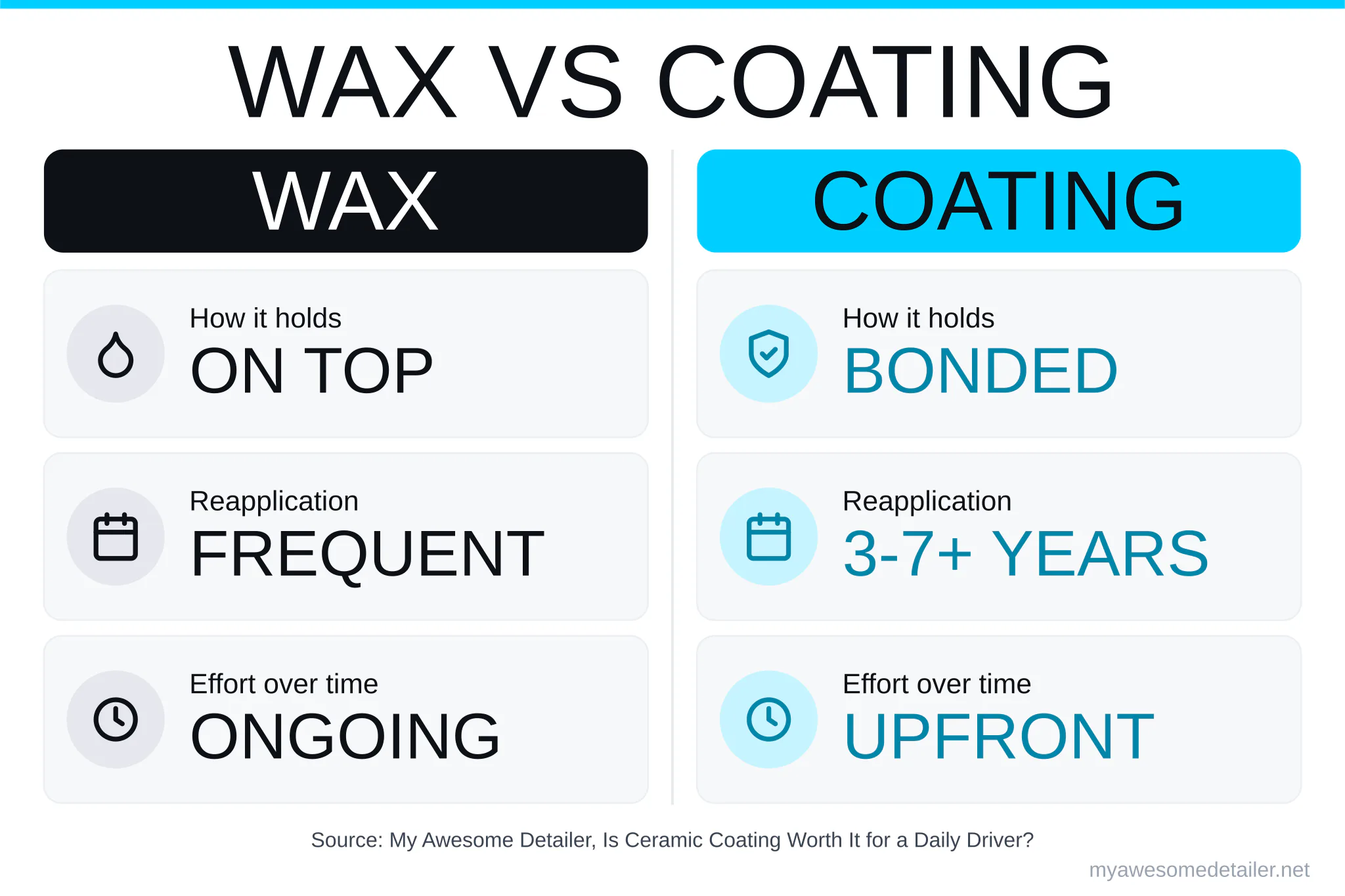
Wax is cheap and quick, but it doesn't last long and it needs to be redone often, so on a daily driver the effort adds up. A coating bonds to the paint instead of sitting on top of it, so it holds up to repeated washing in a way wax doesn't. You can compare the three main options, coating, film and wax, side by side in ceramic coating vs. PPF vs. wax.
| Factor | Wax or sealant | Ceramic coating |
|---|---|---|
| How it holds | Sits on the surface and wears off | Bonds to the clear coat |
| Reapplication | Frequent, so it's a recurring job | Rated roughly 3–7+ years with good care |
| Effort over time | Ongoing | Front-loaded, then lighter upkeep |
| Washing | Helps a little at first | Noticeably easier throughout |
What to expect when you bring a daily driver to our shop
Everything happens at our Opelika studio, and you can plan it around your week. We inspect the paint with you, talk through what correction (if any) the car needs, and explain the timeline before anything starts. A coating job takes more than a quick appointment, because the prep is what makes the result last, so it helps to plan how you'll get around while we have the car.
- Inspection. We look at the paint under proper light and talk honestly about what it needs.
- Prep. Decontamination wash and any correction the paint calls for.
- Coating. Applied panel by panel in our shop.
- Walkthrough. We show you the result and explain how to wash it so it lasts.
We're at 2709 Frederick Road, Opelika, AL 36801, and we serve drivers from Auburn, Opelika and across Lee County, with Phenix City and Columbus, GA close by. We're an Owner's Pride Select installer, one of the top shops in the country in that program, and we're rated 4.9 stars from 200+ reviews.
See what a coating would look like on your car
Start the Service Builder, tell us about your vehicle, and get your exact price on screen. Prefer to talk it through? Call the shop.
The bottom line
If you plan to keep your car a few years, park it outside and would rather spend weekends doing something other than scrubbing it, ceramic coating is one of the more practical upgrades you can make. It protects paint against the daily wear of an Alabama climate, makes washing faster, helps the car look better for longer and supports its value when you sell. It isn't magic and it isn't only for expensive cars. It's a protective layer that pays off in direct proportion to how much you use and expose your vehicle, which makes a daily driver the ideal candidate.
When you're ready, the quickest next step is the Service Builder. And if you'd like to talk to a person first, call us at (334) 650-6499 or stop by the shop in Opelika.