Quick answer: Alabama red clay is a real threat to car paint, not just a cosmetic mess. The dust is packed with iron oxides and fine grit, so wiping it off dry or scrubbing it in a cheap wash grinds micro-scratches into the clear coat. Left wet in the sun, red clay stains white paint, textured trim, rubber seals, and carpet with an orange tint that regular soap won't lift. The fix is a pre-rinse and foam wash that removes the grit before anything touches the paint, regular decontamination for the hidden spots, and a slick protective layer like a ceramic coating so the clay can't bond in the first place.
If you live in Auburn, Opelika, or anywhere in Lee County, you already know the look: a pale orange haze across the rocker panels, a red line along the bottom of every door, and wheel wells that never seem fully clean. Red clay on cars is so normal around here that most people stop noticing it. That is exactly why it does so much damage. It builds up quietly in the places you don't look, and it gets ground into the paint every time the car is washed the wrong way.
At My Awesome Detailer LLC, 2709 Frederick Road in Opelika, we see red clay on almost every car that rolls into our shop, from student cars that live in gravel lots to trucks that spend weekends at the deer camp. This guide explains what makes Alabama red dirt different from ordinary road grime, the three ways it damages a car, where it hides, how to wash it off without scratching, and how to keep it from staining your paint in the first place.
Why Alabama red clay is different from ordinary dirt
Most dirt is a mix of sand, silt, organic material, and a little clay. The red soil across East Alabama and the Georgia Piedmont is different in two important ways: its color and its particle size.
The color comes from iron
Red clay gets its color from iron oxide minerals, the same family of compounds as rust. Over a very long time, heat and heavy rainfall in the Southeast weathered the rock underneath into soil, washed away much of the softer material, and left iron behind. That iron coats the soil particles and gives them their red and orange color.
Iron oxide is a pigment. It is literally the kind of material used to color paint, brick, and concrete. When it lands on a porous or slightly rough surface and stays wet, the pigment works its way into that surface, which is why red clay stains in a way that gray road dirt usually does not.
The particles are fine and gritty
Clay particles are extremely small. When red clay dries into dust, it becomes a fine powder that drifts into door seams, panel gaps, and the tiny pores of textured plastic. But Alabama red dirt is rarely pure clay. It is usually mixed with sand and silt, which are harder and sharper. So a film of red dust on your hood is really a layer of fine abrasive sitting on your clear coat, waiting for a towel or a brush to drag it around.
Lee County gives it plenty of chances
Around Auburn and Opelika, red clay finds your car in a lot of ways:
- Construction. New subdivisions, road widening, and commercial projects across Auburn and Opelika leave exposed clay that turns into dust when dry and red slurry when it rains.
- Unpaved and gravel lots. Overflow parking, grass and dirt lots on game days, church lots, and job sites all kick red dust onto the lower half of a car.
- Rural and county roads. A short drive down a dirt road toward Lake Martin, Chewacla, or a hunting lease can coat a truck from bumper to tailgate.
- Rain splash. Heavy Alabama thunderstorms splash clay-laden runoff off shoulders and medians and onto rocker panels and wheels.
- Wind. In dry spells, red dust blows off fields and construction sites and settles on cars parked outside.
Add the Alabama sun, which bakes whatever sits on your paint, and you have a contaminant that is gritty, staining, and constantly renewed.
The three ways red clay damages your car
Red clay car damage usually comes from one of three problems. Knowing which one you are dealing with tells you how to fix it.
1. Scratching: the wash-induced damage
Red clay rarely scratches paint just by sitting there. The scratches come when the car is cleaned. Wiping dusty paint with a dry towel, using a quick detailer spray on a dirty panel, scrubbing with a single sponge and bucket, or running through an automatic wash with brushes all drag that gritty dust across the clear coat. The result is a web of fine swirl marks and light scratches that show up as a hazy, spiderweb look in direct sun.
Because clay dust sits heaviest on the lower panels, those areas take the worst of it. It is common for us to inspect a car where the hood and roof look fine but the lower doors and rocker panels are covered in fine scratches from years of washing red dirt off them.
2. Staining: when the color soaks in
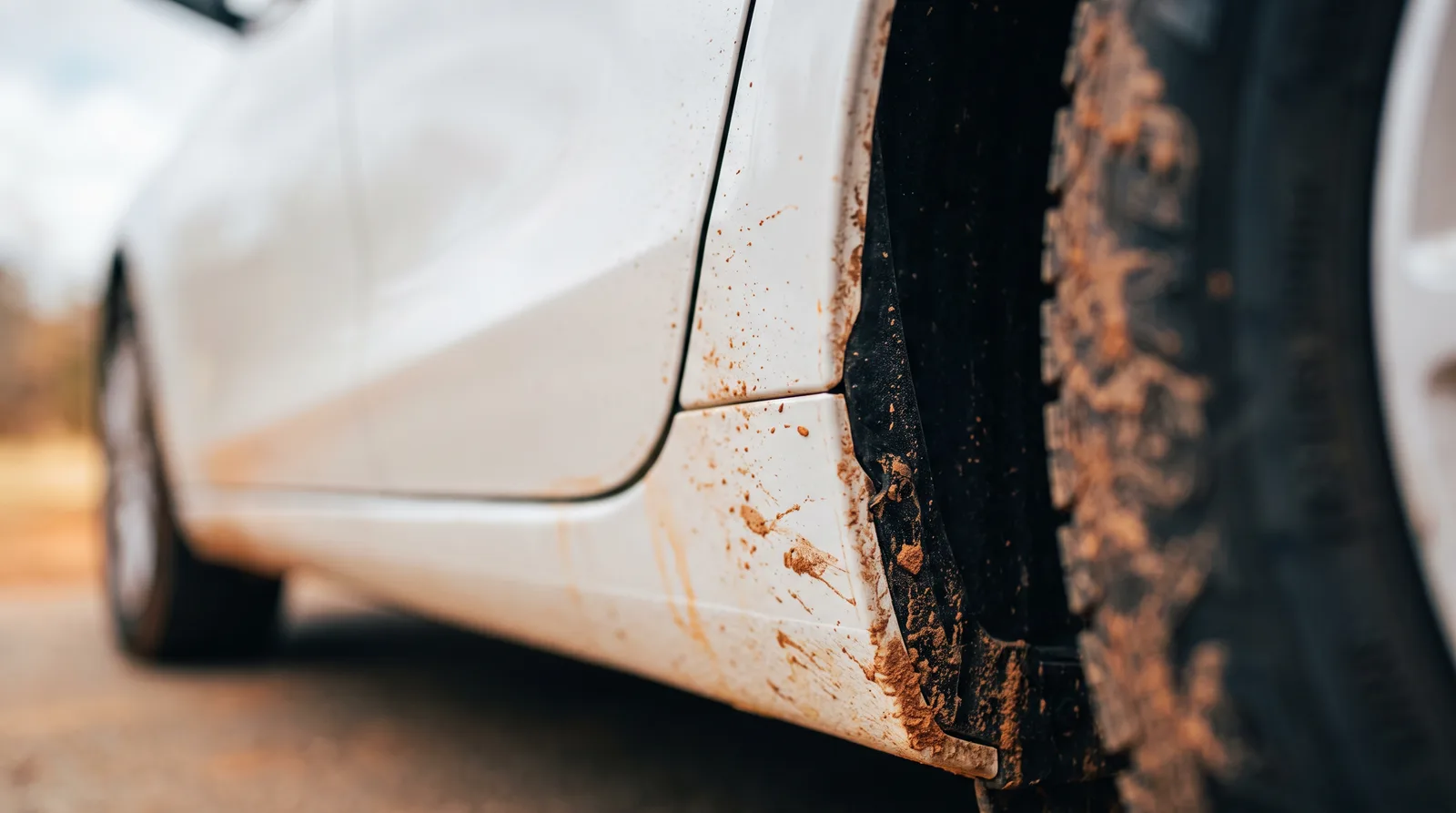
Red clay stains car surfaces when wet clay sits long enough for its iron-rich pigment to settle into anything porous. Healthy, sealed clear coat is fairly resistant, but plenty of surfaces on a car are not:
- Unpainted textured plastic trim, like fender flares, bumper inserts, and cowl panels, has a rough surface that grabs pigment.
- Rubber door seals and window weatherstripping hold clay in their folds and can take on an orange tint.
- White and light-colored paint, especially if the clear coat is worn, oxidized, or etched, can show a pink or orange cast along the lower panels.
- Carpet, floor mats, and cloth seats stain easily when muddy shoes and wet clay get tracked inside.
- Wheels with a worn finish and textured lug nut areas trap clay and brake dust together.
Heat makes staining worse. A wet clay splash that dries on a black plastic bumper in August can leave a reddish shadow that survives normal washing.
3. Hidden buildup: the slow, out-of-sight problem
The third kind of damage happens where you rarely look. Red clay packs into wheel wells, behind plastic fender liners, inside door jambs, under the rocker panel pinch welds, and around the frame of trucks and SUVs. Once it is there, it acts like a sponge. Clay holds moisture against metal for days after a rain, and any spot where the factory coating is chipped or thin is more exposed to surface rust over time.
Packed clay also adds weight to wheels and can throw off wheel balance if it builds up on the inside of the rim, which some owners notice as a vibration at highway speed after a muddy weekend. A thorough wheel and wheel-well cleaning usually solves it.
Where red clay hides on your car
When we detail a car that spends time on Alabama red dirt, these are the spots we always check. If you wash at home, give each of them attention at least every few washes.
| Area | What red clay does there | How to clean it |
|---|---|---|
| Rocker panels and lower doors | Heaviest dust and splash, most wash scratches | Foam pre-soak, rinse, then a separate lower-panel wash mitt |
| Wheel wells and fender liners | Packs in thick, holds moisture, stains liners | Pressure rinse at an angle, long-handled well brush, plastic-safe cleaner |
| Door jambs and hinges | Dust settles in, turns to paste in rain | Damp microfiber with diluted all-purpose cleaner, never a dry wipe |
| Rubber seals and weatherstripping | Clay sits in folds, orange tint | Soft brush and mild cleaner, then a rubber protectant |
| Textured plastic trim | Pigment soaks into pores | Soft brush with trim-safe cleaner, then a trim coating or dressing |
| Wheels and lug nut recesses | Mixes with brake dust, bakes on | Dedicated wheel cleaner and brushes, separate bucket |
| Fuel door and tailgate seams | Fine dust drifts into gaps | Detailing brush and rinse |
| Undercarriage and frame (trucks/SUVs) | Packed clay holds moisture against metal | Undercarriage rinse after muddy trips |
| Carpet and floor mats | Tracked-in mud stains fibers | Let dry, vacuum loose clay, then extract or shampoo |
Red clay compared with other Alabama paint enemies
Red clay doesn't get the attention that love bugs, bird droppings, or pollen do, but it is in the same league. The difference is that it attacks in two ways at once: it stains and it scratches. Here is how it compares with the other contaminants Auburn and Opelika drivers deal with:
| Contaminant | Main risk to paint | How fast it causes trouble | Best defense |
|---|---|---|---|
| Red clay dust and mud | Wash scratches, staining of trim and light paint | Scratches on the next bad wash; stains over days of wet contact | Touchless pre-rinse, foam, two-bucket wash, coating |
| Love bugs | Acidic etching | Days in summer heat | Prompt removal, ceramic coating |
| Bird droppings | Acidic etching | Hours to days in direct sun | Remove same day, coating or PPF |
| Spring pollen | Film that turns sticky when wet, light scratching if wiped dry | Ongoing in season | Rinse often, never dry-wipe |
| Hard water spots | Mineral rings that can etch | Days to weeks in sun | Dry after washing, coating |
| Brake dust | Embedded iron particles on wheels and lower panels | Weeks to months | Wheel cleaning, iron decontamination |
If you have read our guide to bird droppings, sap, and love bugs or our article on water spot removal, the pattern will look familiar. Whatever sits on Alabama paint in Alabama heat does more damage the longer it stays there.
How to wash red clay off your car without scratching it
The goal is simple: get the grit off the paint before anything rubs on it. Every scratch from red clay comes from a towel, mitt, brush, or wash machine dragging dust across the surface. Here is the method we recommend for at-home washing between professional visits.
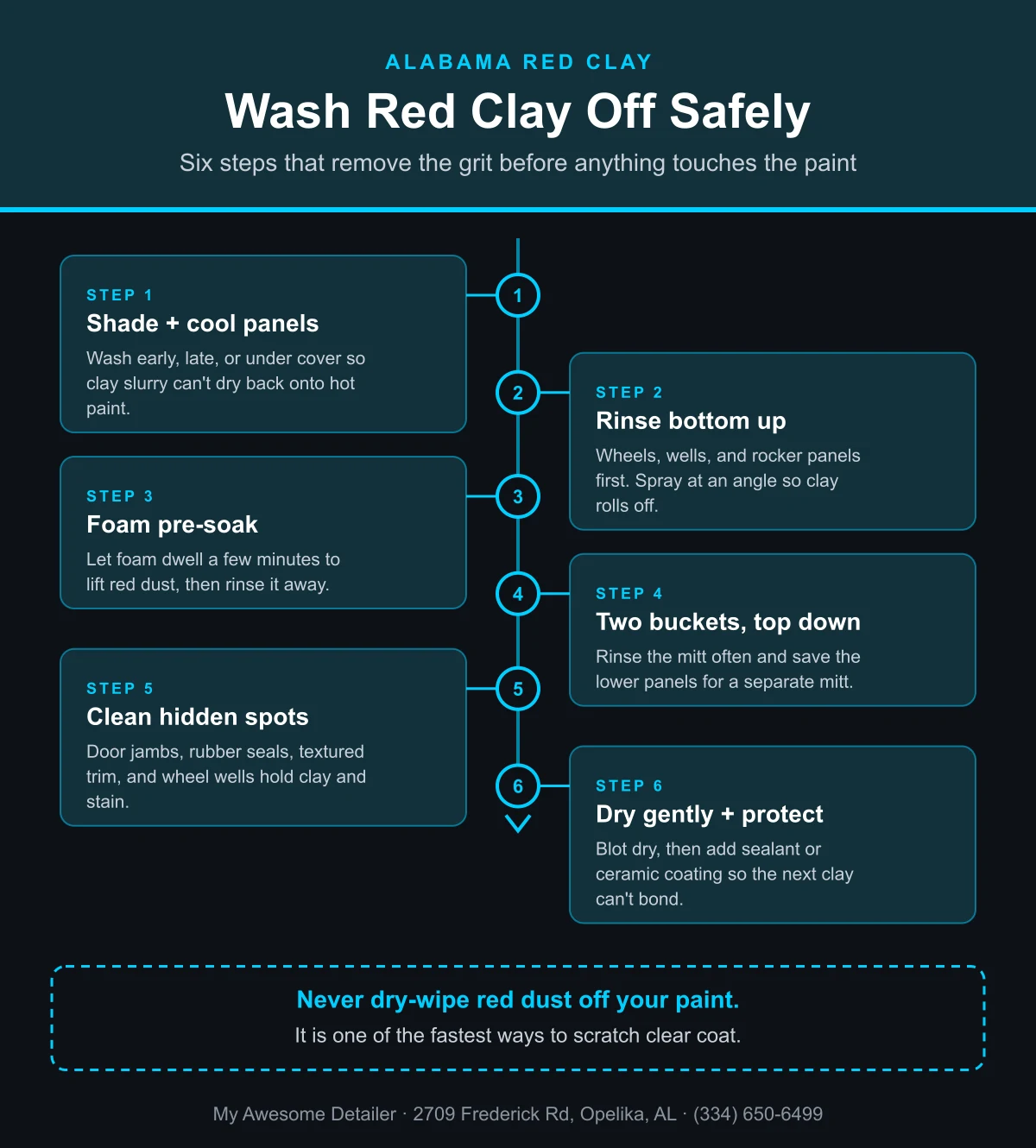
Step 1: Work in the shade on a cool car
Wash early in the morning, in the evening, or in a covered spot. On a hot panel, water and soap dry fast, and clay slurry can dry right back onto the paint. A cool surface gives you time to rinse everything off cleanly.
Step 2: Rinse the heavy clay first, bottom up
Start with the wheels, wheel wells, and lower panels, where the clay is thickest. A pressure washer on a wide fan tip held at a safe distance, or a strong hose nozzle, lets water do the work. Spray at an angle so the clay rolls off instead of being pushed into seams. Don't hold a narrow tip close to paint, trim edges, or decals.
Step 3: Pre-soak with foam or a rinseless pre-wash
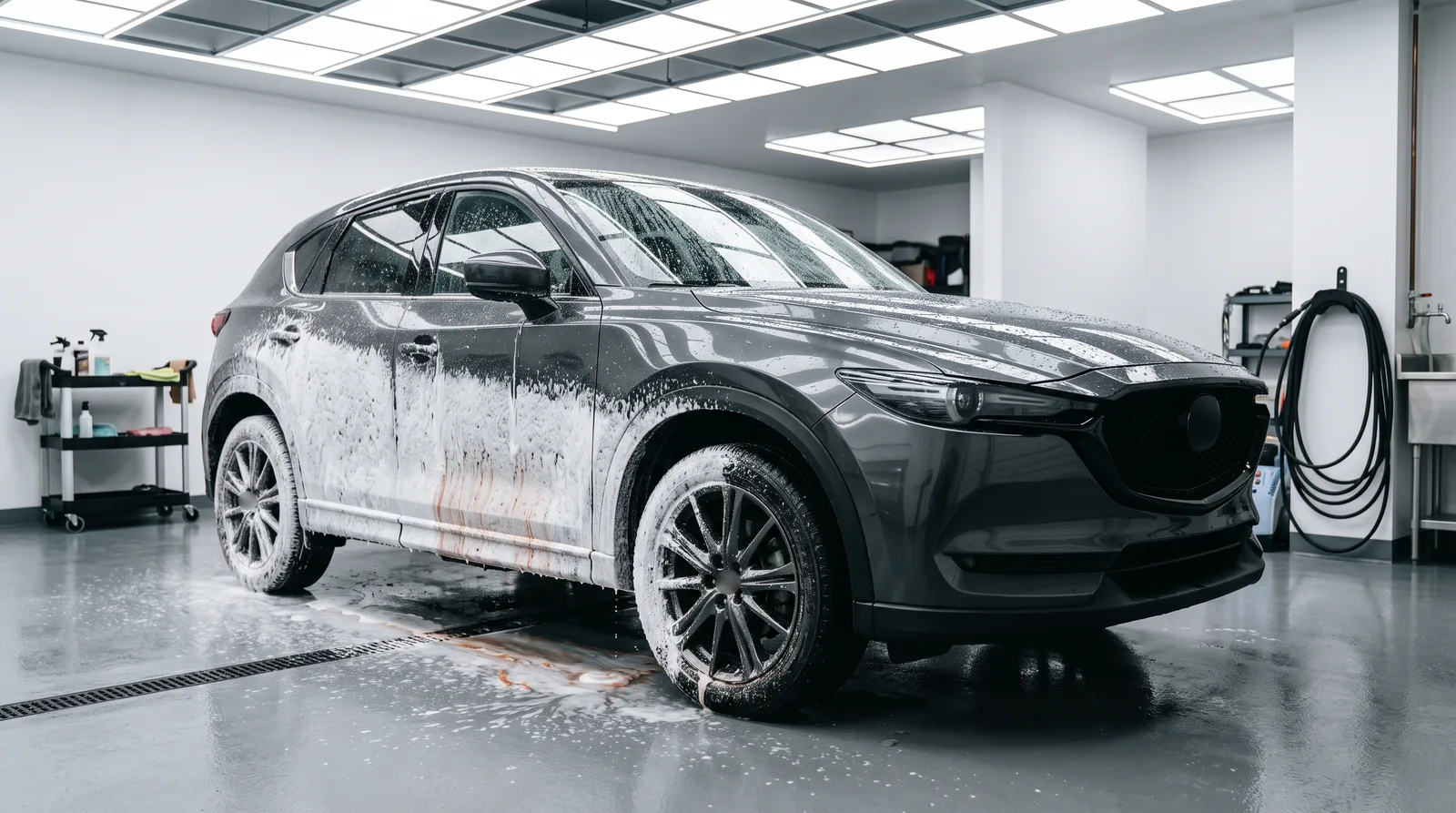
A layer of car wash foam or a dedicated pre-wash product softens clay and lifts dust away from the paint. Let it dwell for a few minutes without drying, then rinse it off. On a car with heavy red dust, you will often see orange runoff during this step, and every bit of clay that leaves here is clay that won't be scrubbed into the paint later.
Step 4: Wash with two buckets, top down
Use one bucket of soapy water and one of plain rinse water, ideally with grit guards in the bottom. Wash from the roof down, one panel at a time, and rinse the mitt in the clean bucket before reloading it with soap. Save the lower panels for last, and if possible, use a separate mitt for the rocker panels and lower doors so the dirtiest grit never travels to the hood.
Step 5: Clean the hidden spots
Open the doors and wipe the jambs with a damp microfiber and diluted cleaner. Brush out the wheel wells and the textured trim. Clean the rubber seals. These areas don't get scratched the way paint does, but they are where red clay stains and holds moisture.
Step 6: Dry gently and protect
Dry with a clean, plush drying towel or filtered air, blotting or pulling the towel rather than scrubbing. Then add protection: a spray sealant at minimum, and ideally a ceramic coating maintained with a compatible topper. Protection is what keeps the next layer of clay from bonding.
Red clay mistakes we see all the time
- Dry-wiping dusty paint. A quick swipe with a towel or your sleeve to clean a spot near the door handle is one of the fastest ways to scratch clear coat.
- Waterless wash on a muddy car. Waterless and rinseless products are fine for light dust, but not for caked clay. They don't have enough lubrication to carry heavy grit away.
- Automatic brush washes. Spinning brushes pick up red grit from the car ahead of you and drag it across yours. Our car wash vs. detailing guide explains why automatic washes cause swirl marks.
- One bucket, one sponge. Sponges trap grit in their surface, and one bucket means you're rinsing clay back onto the paint.
- Harsh household cleaners. Dish soap, degreasers, and strong all-purpose cleaners at full strength can strip wax and dry out trim, leaving it even more porous and easier to stain.
- Letting it sit. Clay that gets wet and dries repeatedly over weeks is much harder to remove than clay you rinse off after a muddy weekend.
When red clay stains won't wash out
Sometimes the clay is gone but the color isn't. That is when you are dealing with staining rather than dirt, and it takes a different approach.
Stained paint on white and light cars
If the lower panels of a white car have a pink or orange tint after a careful wash, the pigment has bonded to the surface or settled into tiny imperfections in the clear coat. A proper decontamination usually helps: an iron remover and a mild chemical decon can loosen some bonded iron-rich residue, and a clay bar or clay mitt then pulls out what is left on the surface. If a tint remains after that, the stain is usually sitting in damaged or etched clear coat, and light machine polishing is what removes it. Our article on ceramic coating for white cars covers why light paint shows this kind of staining so clearly.
Stained black plastic trim
Textured trim is the hardest surface to fully clean once red clay has soaked in. A soft brush with a trim-safe cleaner, repeated a few times, often brings most of it back. Then a trim coating or quality dressing seals the pores so the next splash wipes off. Old, faded trim that has gone chalky stains much more easily, so restoring and coating it is worth doing on trucks and SUVs that see dirt roads.
Stained carpet and floor mats
Never scrub fresh red mud into carpet. Let it dry completely, vacuum up the loose clay, then treat what's left with a carpet cleaner and hot water extraction. Red clay is one of the tougher interior stains, so fast action matters. Our interior car detailing guide explains what a full interior shampoo and extraction includes.
Wash scratches from years of red dirt
If your lower panels look hazy and covered in fine swirls even when they're clean, that is the scratching side of red clay damage. No soap or wax will remove it. Paint correction, which levels the clear coat with machine polishing, is the only real fix. You can read more in our guide to how paint correction works.
How decon washing and ceramic coating prevent red clay staining
The best way to handle red clay is to make sure it never gets a grip on your car. That comes down to two things: removing what has already bonded, and putting a slick, chemical-resistant layer on top.
Decontamination removes what normal washing misses
A standard wash removes loose dirt. A decontamination wash goes further. It typically includes an iron remover for embedded metallic particles, a tar and adhesive remover where needed, and a clay bar or clay mitt treatment that physically pulls bonded contaminants off the surface. For cars that live around red dirt, a decontamination every few months keeps residue from building up in the clear coat and gives protection products a clean surface to bond to.
Ceramic coating gives clay nothing to hold
A professional ceramic coating bonds to your clear coat and forms a hard, slick, hydrophobic layer. That changes how red clay behaves on your car in three useful ways:
- It sheds water and slurry. Muddy water beads and rolls off a coated panel instead of sitting flat and drying in place.
- It resists staining. The coating seals the microscopic pores in the clear coat, so iron-rich pigment has a much harder time settling in.
- It makes washing easier. Clay releases faster during the rinse and foam steps, so you touch the paint less and with less pressure, which means fewer wash scratches.
A coating doesn't make paint scratch-proof, and it doesn't replace safe washing. But on Alabama red dirt, it is the difference between clay that hangs on and clay that rinses away. Coating the wheels and textured trim, not just the paint, extends that protection to the areas that stain most. Our guide to ceramic coating wheels, glass, and trim explains those add-ons.
PPF for the panels that take the worst of it
If you drive dirt roads often, paint protection film on the rocker panels, lower doors, and behind the wheels adds a physical barrier against grit and the small rocks that come with it. Many owners pair PPF on high-impact areas with a ceramic coating over the rest of the car.
Protection options for red clay country, compared
Not every car needs the same level of protection. Here is how the common options stack up against Alabama red dirt. Durability figures are typical ranges and depend on the product, how the car is washed, and how much time it spends outside.
| Protection | Typical durability in Alabama | Red clay staining resistance | Wash scratch reduction | Best for |
|---|---|---|---|---|
| No protection | None | Low | None | Not recommended |
| Carnauba wax | A few weeks | Low to moderate | Slight, while it lasts | Show-car shine, short term |
| Spray or paint sealant | About 2 to 6 months | Moderate | Moderate | Budget maintenance between details |
| Professional ceramic coating | Multiple years with proper care | High | Good, mainly through easier washing | Daily drivers, trucks, light-colored cars |
| Paint protection film (PPF) | Many years | High | Best, since the film takes the abrasion | Rocker panels and lower doors on dirt-road vehicles |
Tired of the orange line on your doors?
Bring your car to our Opelika shop and we'll inspect the paint, trim, and wheel wells, then recommend the right mix of cleaning, correction, and protection.
A red clay maintenance schedule for Auburn and Opelika drivers
How often you need to deal with red clay depends on where your car goes. Use this as a starting point:
| Your driving | Safe wash | Wheel wells and jambs | Decontamination | Protection refresh |
|---|---|---|---|---|
| Mostly paved roads, garage parked | Every 2 weeks | Monthly | Twice a year | Sealant every few months or ceramic topper as directed |
| Paved roads, parked outside near construction | Weekly to every 2 weeks | Every 2 weeks | Every 3 to 4 months | Sealant topper every 1 to 2 months |
| Regular dirt or gravel roads, rural commute | Weekly and after every muddy trip | Every wash | Every 2 to 3 months | Ceramic coating recommended |
| Hunting, fishing, off-road weekends | Within a day or two of each trip | Every trip, plus undercarriage rinse | Every 2 to 3 months | Ceramic coating plus PPF on lower panels |
The single most useful habit is rinsing the car after a muddy trip instead of waiting for the weekend. Wet clay rinsed off the same day leaves almost nothing behind. The same clay baked on for two weeks takes real work.
Game days, tailgates, and red dirt lots
Fall in Auburn means a lot of cars parked on grass and dirt for hours at a time. A rainy game day can leave your lower panels caked in red mud, and a dry one can leave a layer of fine dust over the whole car after hundreds of cars drive past. A few simple tips:
- Rinse the car within a day or two after a muddy game day, before the clay dries and sets.
- Don't wipe the dust off the windows or paint with a napkin or towel at the tailgate. Wait for a proper rinse.
- Keep rubber floor mats in during football season so red mud stays out of the carpet.
- If your car is coated, a simple foam and rinse after the game will usually take care of most of it.
What a professional red clay detail includes at our shop
When a car covered in red clay comes into My Awesome Detailer at 2709 Frederick Road in Opelika, we approach it in a specific order so we never grind grit into the paint:
- Inspection. We look at the paint under proper lighting, check the trim and seals for staining, and note any wash scratches already there.
- Wheels, wells, and lower panels first. The heaviest clay comes off with careful rinsing and dedicated brushes before the body gets touched.
- Foam pre-wash and contact wash. A thick foam softens and lifts the remaining clay, then a careful two-bucket hand wash cleans the paint.
- Decontamination. Iron remover, clay treatment, and trim cleaning remove bonded residue and stains where possible.
- Jambs, seals, and interior. We clean door jambs, condition seals, and extract red clay out of carpets and mats when interior service is included.
- Correction and protection. If wash scratches or stains remain in the clear coat, paint correction can level them. Then a sealant or ceramic coating locks in the result.
An exterior detail with a full decontamination wash typically runs about $150 to $300 in the Auburn and Opelika area, depending on the vehicle's size and condition. Paint correction and ceramic coating are quoted separately after we see the car, because the right level of work depends on what the clay has already done. Our auto detailing page has more on what each service includes, and our detailing packages guide breaks down the options.
We are a shop-based detailer. Your car is cleaned and protected indoors, in a controlled environment with proper lighting and water, which matters for a contaminant as gritty as red clay. We serve drivers from Auburn, Opelika, and across Lee County, with Phenix City and Columbus, Georgia, close by.
Red clay and your car: the bottom line
Alabama red clay is an underrated paint enemy because it attacks two ways at once. As dust, it is a fine abrasive that turns every careless wipe and brush wash into scratches. As mud, its iron-rich pigment stains trim, seals, carpet, and light-colored paint, especially when it sits wet in the heat. And out of sight, it packs into wheel wells and seams, holding moisture against the car.
The fix isn't complicated. Rinse the clay off before it sets, wash in an order that removes grit before anything touches the paint, clean the hidden spots, and give the clay nothing to grab with a decontamination and a quality protective layer. For daily drivers and trucks that live on Lee County roads, a ceramic coating is the most practical long-term defense, and PPF on the lower panels adds a physical shield where the grit hits hardest.
Get the red clay out and keep it out
We remove red clay, decontaminate the paint, and protect it with ceramic coating at our Opelika shop, serving Auburn, Opelika, and Lee County.