Quick answer: Alabama heat damages car paint in four main ways: UV rays break down the clear coat and fade the color underneath, repeated hot-to-cool cycles stress the clear coat until it dulls and can crack, dark panels in direct sun can climb past 140°F so contamination bakes on instead of washing off, and washing in direct sun dries water on the surface and leaves spots that etch into the clear coat. The damage is slow and cumulative, so most owners notice it only after the paint looks chalky or hazy. What stops it is a system: correct the paint, protect it with a coating or film, and keep UV and heat out of the cabin with ceramic window tint.
If you live in Auburn or Opelika, you already know what a Lee County July feels like. The air is thick, the asphalt radiates heat after dark, and a car parked at a campus lot or a shopping center off I-85 sits in direct sun for hours. What most people don't think about is what that does to the paint, every single day, for years.
This guide explains what Alabama's heat and sun do to automotive paint, why some cars show it years before others, how to tell damage from dirt, and what actually slows it down. It's written by My Awesome Detailer LLC, a shop-based detailer at 2709 Frederick Road in Opelika. We're rated 4.9 stars from more than 200 reviews and we're an Owner's Pride Select installer, one of roughly the top 40 shops in the U.S. for that program. Every vehicle comes to our studio and is worked on indoors, out of the same sun we're talking about.
What does Alabama heat actually do to car paint?
Modern paint is a layered system. Over the metal sits primer, then a color coat, then a transparent clear coat that is only a few thousandths of an inch thick. The clear coat carries the gloss and does nearly all of the protecting. Heat and sunlight attack that thin top layer, and once it weakens, the color beneath is exposed to the same punishment.
Four things happen in a climate like ours:
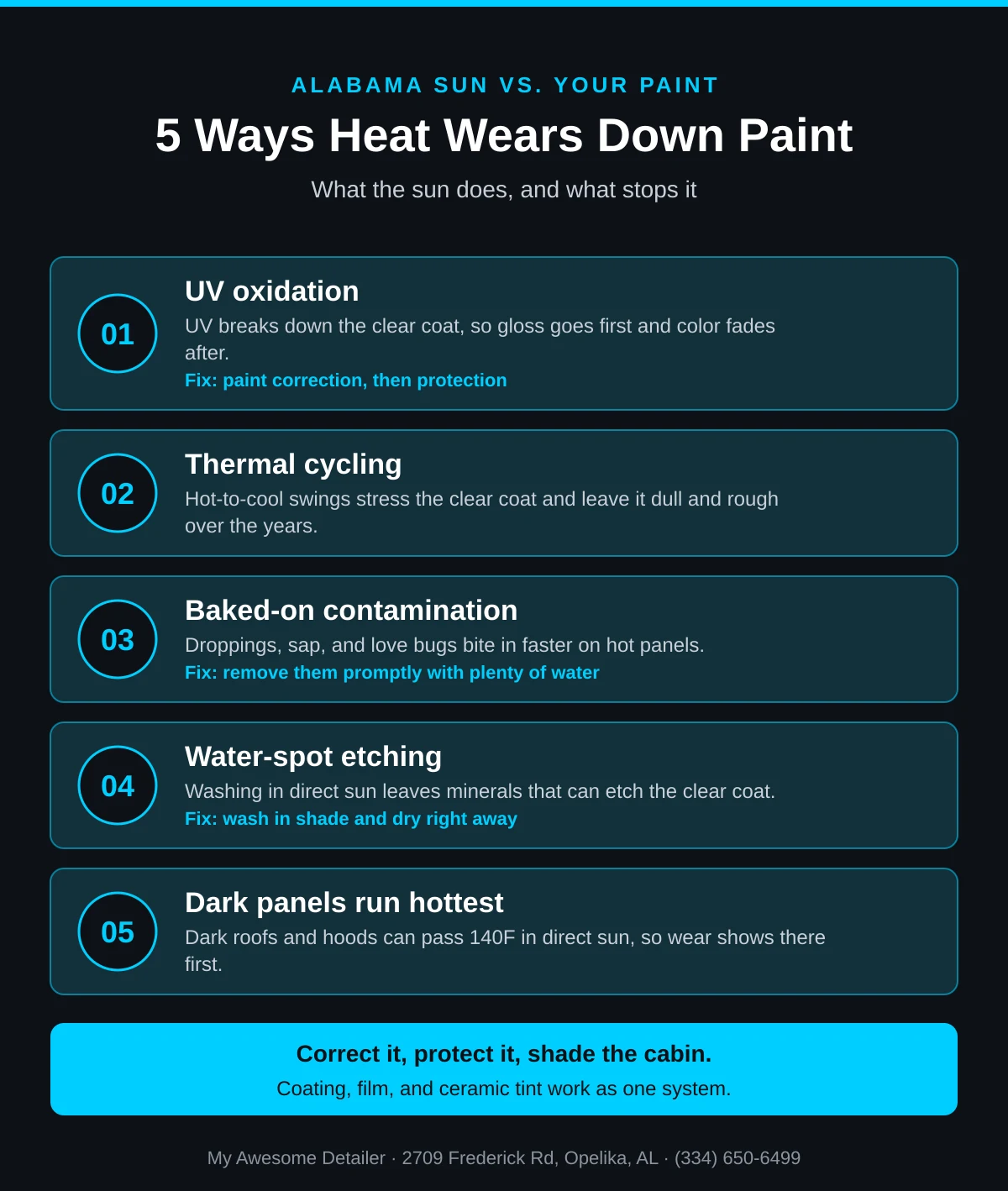
- UV oxidation and fading. Ultraviolet light breaks chemical bonds in the clear coat. The surface loses gloss first, then turns hazy or chalky, and eventually the color below fades.
- Thermal cycling. Paint expands when it heats and contracts when it cools. A car can go from a cool morning to a baking afternoon to a storm that drops the panel temperature in minutes. Over years that repeated stress can leave fine cracking and a dull, rough finish.
- Baked-on contamination. Bird droppings, tree sap, love bugs, and pollen are bad on a cool day. On a hot panel they cook into the clear coat and can leave a mark that stays after the contaminant is gone.
- Water-spot etching. Washing or rinsing in direct sun makes water evaporate fast, leaving its dissolved minerals behind. Those minerals can bond to and eventually etch the clear coat.
None of these is dramatic on any single day. That's exactly why they're easy to ignore, and why paint that looked fine at three years old can look tired at six.
How hot does car paint really get in the sun?
Air temperature is not paint temperature. A panel in direct summer sun absorbs far more heat than the air around it, and color matters a great deal. Black, dark blue, dark gray, and deep red absorb most of the light that hits them and turn it into heat. White and silver reflect a lot of it.
Dark panels on a hot, sunny day in the South can reach surface temperatures above 140°F. Roofs, hoods, and trunk lids take the worst of it because they face the sky. Exact numbers vary with sun angle, wind, paint, and time of day, but the pattern is consistent: the hotter the panel, the faster the chemical and physical wear on the clear coat, and the more firmly anything sitting on it bonds.
The table below shows how color and surface affect what you tend to see. It's a general guide to what we observe in the shop, not a measurement.
| Paint or panel | Heat absorbed | What we tend to see first |
|---|---|---|
| Black and very dark colors | Highest | Swirl marks show more, gloss dulls, water spots stand out |
| Dark red and dark blue | High | Fading and a chalky look on the roof and hood |
| Medium colors (gray, mid-blue, green) | Moderate | Gradual loss of gloss on horizontal panels |
| White and silver | Lowest | Damage is subtle; contamination and yellowing show instead |
| Horizontal panels (roof, hood, trunk) | Highest on any color | Oxidation and etching show here before the doors |
| Vertical panels (doors, quarter panels) | Lower | Wear is slower but still visible on the sun side |
If you only look closely at one place on your car, look at the roof and the hood. They tell the story first.
UV oxidation: why paint goes dull and chalky
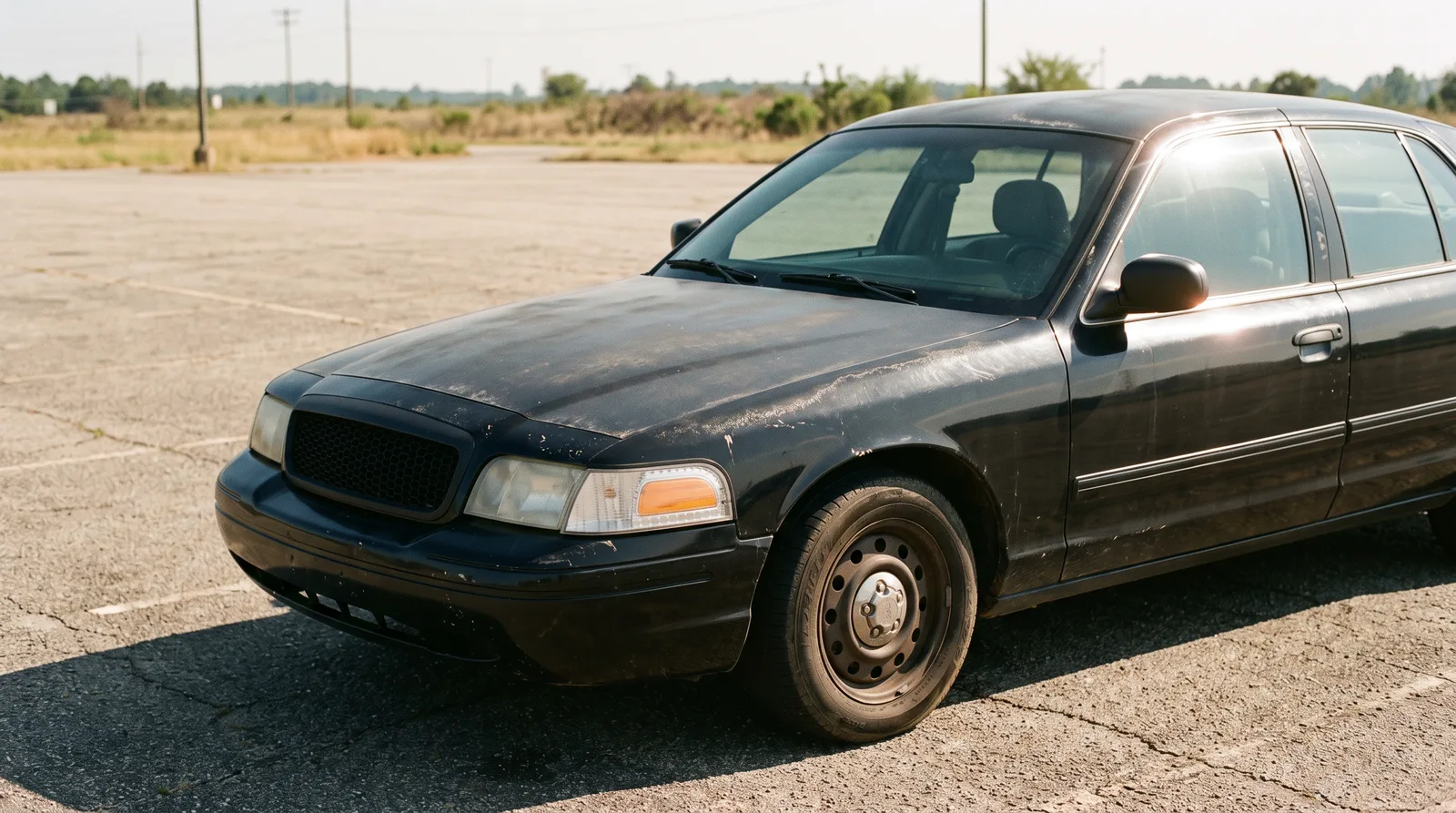
The sun's UV radiation carries enough energy to break down the polymers in a clear coat. The process is called photo-oxidation. Gloss is the first casualty, because the surface gets microscopically rougher and scatters light instead of reflecting it cleanly. Over time the clear coat can turn cloudy, and in severe cases it begins to peel or flake away, leaving color coat exposed to the same UV with nothing in front of it.
We see it most often on older vehicles that lived outdoors, on single-stage paints, and on dark or red cars. Red has a reputation for fading first, and that reputation is earned: some red pigments are simply less UV-stable than others. If your red or black car looks faded on the roof and hood but fine on the doors, that is sun doing exactly what you'd expect.
There's an important point here. Oxidized paint is not a stain on top of the surface. It's damaged surface. A wax can hide it for a few weeks, but only machine polishing, which removes the damaged layer, brings the real gloss back. That's why the fix for oxidation is paint correction, followed by protection so it doesn't start over.
Thermal cycling: the stress you can't see
Paint and the metal beneath it don't expand and contract at the same rate. Every time a panel heats up, the layers push against each other a little; every time it cools, they pull back. In a place with big daily swings and sudden afternoon thunderstorms, a hot panel can be hit with cool rain and drop in temperature quickly.
One cycle does nothing you'd notice. Thousands of them across a decade can contribute to a dull, rough surface, tiny cracks in the clear coat, and a finish that holds dirt more easily. It's one more reason older, unprotected paint tends to look worn even if it was washed regularly.
You can't stop the sun from heating a car. You can limit how much of that heat and light reaches the paint, which is what protective films and coatings are for, and you can get the car out of direct sun when it's practical.
Baked-on bird droppings, sap, love bugs, and pollen
Alabama has more than its share of things that land on cars: bird droppings, pine and oak sap, love bugs in May and September, and heavy yellow pollen in spring. On a cool day, most of these wipe off with a quick wash. On a hot panel, several things go wrong at once:
- Heat softens the clear coat slightly and speeds up the acidic reaction of droppings and bug remains, so the contaminant bites in faster.
- Sap cures and hardens, and then takes real effort to remove without scratching.
- The longer it sits, the more likely it leaves a permanent etched outline, even after it is gone.
The practical rule is simple: remove these as soon as you can, with plenty of water and a soft microfiber, and don't scrub them dry. If a mark remains after the contaminant is gone, it has etched into the clear coat. Light etching can often be polished out; deep etching may not be fully removable, and we'll tell you honestly which one you have. We cover the topic in detail in our guide to ceramic coating, bird droppings, sap, and love bugs.
Water spots: the damage you cause while trying to help
Washing your car in the driveway on a hot Saturday afternoon feels responsible. Done in direct sun, it can do harm. Water evaporates quickly off a hot panel, and everything dissolved in it, including calcium, magnesium, and other minerals, stays behind as a spot. Those spots start as a residue you can wipe off. Left on hot paint, repeated wet-dry cycles let them bond to the surface, and eventually they etch into the clear coat as rings you can feel with a fingernail.
Sprinkler overspray is a common cause. If your lawn sprinklers reach the driveway, or you park under a system that runs early in the morning, mineral-rich water lands on the car and dries in the sun every day.
If you already have spots that don't come off, our guide to water spot removal and when paint correction is the only fix explains how to tell a surface spot from an etched one.
How to wash in Alabama heat without causing spots
- Wash in the shade, early in the morning, or in the evening after the panels have cooled.
- Rinse the car with cool water first so the panel isn't hot to the touch.
- Work one section at a time and rinse each before soap can dry.
- Dry with a clean microfiber towel or a dedicated drying aid right after the final rinse.
- Avoid letting the car air-dry, especially with hard water.
Signs your paint is already heat-damaged
Walk around your car in daylight, ideally in shade so you can see the surface and not just glare. Look for these signs:
- The roof and hood look duller or hazier than the doors.
- The color looks lighter or chalky in patches, especially on red, black, or dark blue.
- Water no longer beads or sheets; it flattens out and clings.
- Rings or spots that don't wipe off after washing.
- A rough, grabby feel when you run your hand over a clean panel.
- Fine web-like cracking in the clear coat, or clear coat that is peeling at edges.
The earlier you catch it, the more can be saved. Light oxidation and spotting are often correctable. Clear coat that has already failed, meaning it has peeled or flaked down to the color coat, generally can't be polished back; that needs a refinish at a body shop. A good detailer will tell you which category you're in before doing any work.
Not sure how far the sun has gotten to your paint?
Tell us about your car and we'll point you to the right service. The Service Builder is a short interview about your vehicle, typically 3-5 minutes, then a code we text you, and the exact price is on the screen.
Why waxing alone doesn't solve it
Wax and sealants have their place. They add gloss and a bit of short-term protection. But in Alabama heat, a traditional carnauba wax is soft and can melt off a hot panel, so it may last only weeks. Spray sealants and polymer sealants last longer, but they are still a thin sacrificial layer and they don't repair anything underneath.
More important, none of them fixes the damage that's already there. Waxing over oxidized paint seals in a dull surface. If the roof is chalky, the correct order is always the same: correct first, protect second.
What actually stops heat damage: correct, protect, and shade the cabin
Heat damage is a system problem, and the answer is a system. Each layer does a different job:
| Layer | What it does | What it does not do |
|---|---|---|
| Paint correction | Machine polishing removes oxidation, swirls, and light etching so the surface is smooth and glossy again | Does not protect on its own; bare corrected paint is exposed again right away |
| Ceramic coating | A hard, hydrophobic layer that resists UV, chemical contamination, and water spotting and makes washing easier | Does not stop rock chips or deep scratches; not a force field |
| Paint protection film (PPF) | Thick clear urethane film that takes impacts and abrasion on high-risk areas | Does not replace the glossy, slick surface a coating gives; often paired with one |
| Ceramic window tint | Reduces heat and UV entering the cabin, protecting the interior and the people in it | Does not protect exterior paint |
| Good washing habits | Removes contamination before it bakes in; avoids spotting | Cannot undo existing damage |
Step 1: Correct what's already damaged
Paint correction removes a very thin layer of damaged clear coat to level the surface. Oxidation, swirl marks, and light water spots go with it. The result is the gloss the car had when new, or as close as the remaining clear coat allows. How far we can take it depends on how much clear coat is left, which is why we inspect the paint before we promise anything. Our guide to how paint correction works walks through the process, and the auto detailing page lists the services we offer.
Step 2: Protect the corrected paint
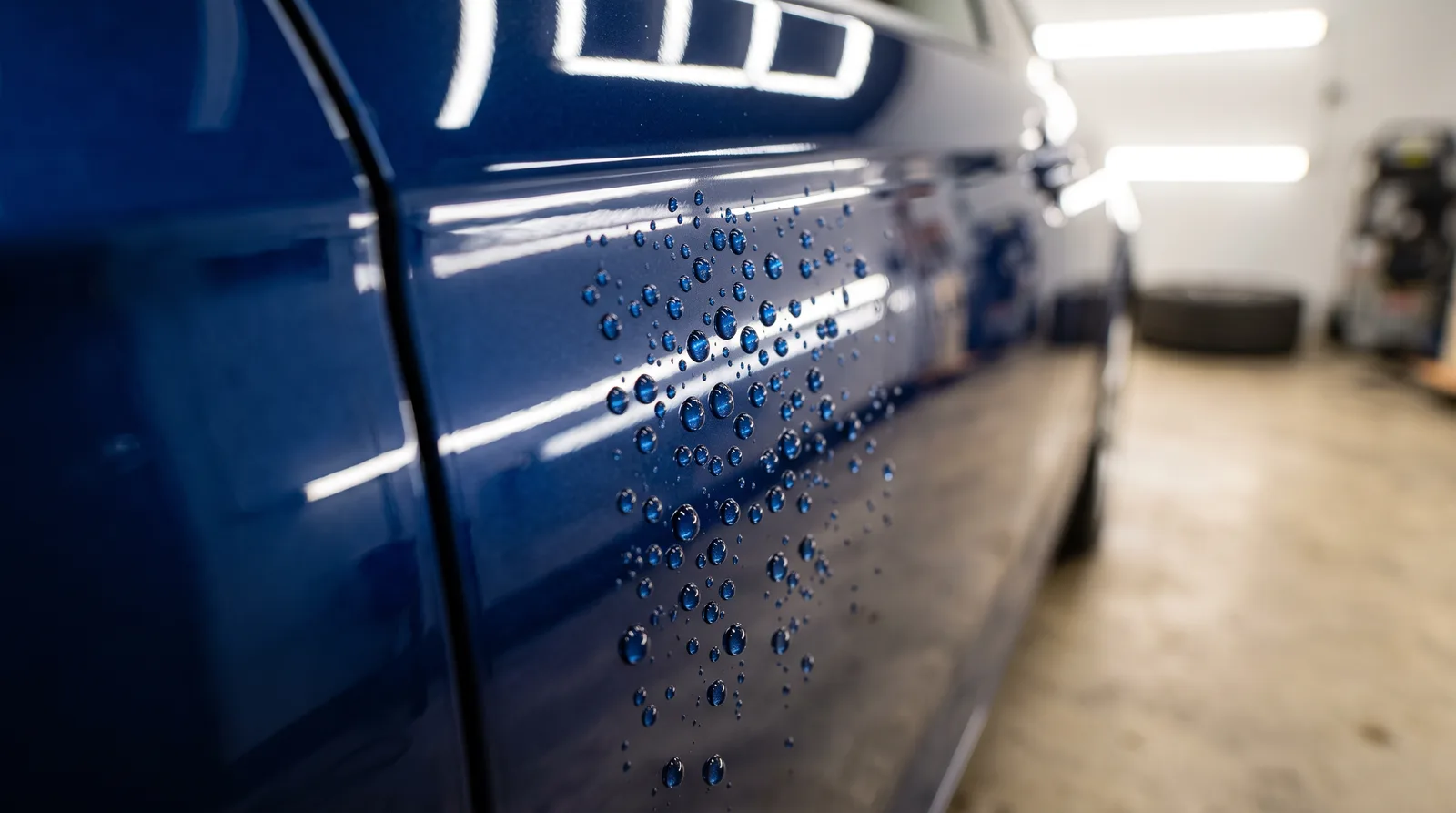
Once the surface is corrected, you want it protected immediately. For most drivers that means a ceramic coating. A coating bonds to the paint and forms a hard layer that resists UV and chemical attack and keeps contaminants from gripping. It also makes the car much easier to wash, which means you're more likely to wash it promptly. For the details on durability in our climate, see how long ceramic coating lasts in Alabama's heat.
For the areas that take physical abuse, such as the front bumper, hood, fenders, and mirrors, paint protection film adds a physical barrier against rock chips on I-85 and US-280. Many owners of newer or higher-value vehicles do both: film on the high-impact areas and ceramic coating over everything. Our post on ceramic coating over PPF explains how they work together.
Step 3: Cool and protect the cabin
Heat doesn't only hit the outside. Sun streams through glass and heats the dashboard, seats, and leather, which fade, dry, and crack over the years. Ceramic window tint cuts a large share of the heat and UV coming through the glass, so the interior stays cooler and lasts longer, and the A/C doesn't have to fight as hard. It's a separate job from paint protection, but in this climate it belongs in the same plan. We go deeper on that in how Alabama's heat, UV, and pollen make window tint a necessity.
Step 4: Keep up simple maintenance
Even the best protection works better with basic care. Wash gently every one to two weeks, remove bird droppings and bugs promptly, avoid automatic washes with stiff brushes, and keep the car in shade or a garage when you can. Our ceramic coating maintenance guide covers the routine in detail.
Does ceramic coating really protect against Alabama heat?
Honestly, yes and no, and the distinction matters. A ceramic coating does not make paint cooler. A black car with a coating still gets hot in the sun. What the coating does is act as a hard, UV-resistant barrier that takes the exposure on the clear coat's behalf, slows oxidation, resists the chemical etching from droppings and water spots, and keeps contamination from bonding. In other words, it can't stop the heat, but it dramatically reduces what the heat can do to the paint.
That's also why we say it's one part of a system. Coating plus correction plus, where it makes sense, film on the impact zones, plus tint to protect the interior, plus sensible washing, is what holds a finish together for the long term.
Which approach fits your car?
Every vehicle and every owner is different. Here's how we usually think about it:
- New car, garage-kept or mostly parked outdoors: Protect it before damage starts. Film on high-impact areas and a ceramic coating on the rest is the strongest start. See new car protection in Auburn.
- Daily driver, a few years old, parked outside at work: Correct the swirls and early oxidation, then coat. This is the most common job we do.
- Older car with visible fading or chalkiness: We inspect first. Light to moderate oxidation is often correctable; failed clear coat is not, and we'll say so.
- Dark-colored car: Dark paint shows everything and runs the hottest. It benefits most from correction and protection.
- Vehicle you plan to sell: A correction and good detail can help it present better. See our post on detailing and correction before selling a car.
Final pricing depends on the vehicle, its size, and the condition of the paint, so we always evaluate before quoting.
Common myths about heat and car paint
"My car is garage-kept, so the sun doesn't matter."
It helps a lot, but even garage-kept cars are driven in the sun, washed, and exposed to pollen and contamination. Protection still matters; it just matters a little less.
"A car cover solves it."
A clean, breathable cover helps if the car is stored outdoors. A dirty or cheap cover can scratch paint as it moves in the wind, and you can't wear it while driving.
"Wax is enough in Alabama."
Wax is a short-term layer. In summer heat it wears off quickly, and it does nothing about damage that has already occurred.
"Light colors don't have this problem."
White and silver hide fading and swirls better and run cooler, but they still oxidize, spot, and etch. The damage is just harder to see.
"A ceramic coating means I never have to wash my car."
A coating makes washing easier, not unnecessary. Contamination left on any surface for a long time can still cause trouble.
What to do this week, before you book anything
- Wash the car properly, in shade, and dry it completely.
- Inspect the roof, hood, and trunk in daylight for dull patches, rings, and rough spots.
- Remove bird droppings and bug remains today, not next weekend.
- Check that sprinklers aren't hitting the car where you park.
- Take photos of any damage so you can show us when you visit.
If what you find is minor, regular washing and a protective layer may be all you need. If it's more than that, an in-person inspection is the only reliable way to know what can be corrected.
Protect your paint before another Alabama summer
Start with the Service Builder: a short interview about your vehicle, typically 3-5 minutes, then a code we text you, and the exact price is on the screen. Bring the car to our Opelika shop and we'll handle the rest indoors.
The bottom line for Auburn and Opelika drivers
Alabama's sun and heat won't ruin your paint overnight, but they will wear it down steadily, and the damage is easiest to fix early. UV breaks down the clear coat, heat cycles stress it, hot panels bake contaminants in, and washing in the sun leaves etched spots. The answer isn't one product; it's correcting what's already damaged, protecting the surface with a ceramic coating or film, shading the cabin with ceramic tint, and washing smartly.
Questions about your own car? Call (334) 650-6499, visit us at 2709 Frederick Road in Opelika, or see the full list of services. We serve Auburn, Opelika, and the Lee County area, including drivers from Phenix City and Columbus, GA.
Frequently asked questions
These are the questions we hear most from Auburn and Opelika drivers. You'll also find them marked up as FAQs at the bottom of the page.
Does Alabama heat damage car paint?
Yes. Heat and UV gradually oxidize the clear coat, stress it through repeated heating and cooling, bake on contaminants, and make water spots etch. The damage is slow, which is why it often goes unnoticed until the paint looks dull or chalky.
How hot does car paint get in the sun?
Dark panels in direct summer sun can exceed 140°F on the surface, well above the air temperature. Roofs and hoods get hottest, and dark colors absorb more heat than white or silver.
Can sun-faded car paint be fixed?
Often, yes, if the clear coat is still intact. Machine polishing removes oxidized material and restores gloss. If the clear coat has peeled or failed, it cannot be polished back and needs a refinish.
Does ceramic coating protect against heat and UV damage?
A ceramic coating doesn't make the paint cooler, but it forms a hard, UV-resistant layer that slows oxidation and resists contamination and water-spot etching. It reduces what heat and sun can do to the paint.
Should I wash my car in direct sun?
No. Water dries too fast on a hot panel and leaves mineral spots that can etch the clear coat. Wash in shade, early morning, or evening, and dry the car right away.
Do dark cars get more paint damage in Alabama?
Dark cars run hotter and show swirls, oxidation, and water spots more clearly. Red can also fade earlier than other colors. All colors are affected; dark ones just show it first.
Is wax enough to protect paint in Alabama summers?
Wax adds short-term gloss, but it wears off quickly in heat and doesn't repair existing damage. For lasting protection, correct the paint first and then protect it with a coating or film.