Quick answer: If you want to spend part of a tax refund on your car, put it into protection instead of a one-off cosmetic upgrade. A ceramic coating, ceramic window tint, or paint protection film on the front end keeps working every day for years, and it guards the most expensive thing you can't easily replace: the factory paint and interior. Timing matters in Alabama. Booking it in late winter or early spring means the car is protected before pine pollen season, spring storms, and the summer heat and UV that do the most damage around Auburn and Opelika.
For a lot of families in Lee County, the tax refund is the biggest single check of the year. It's tempting to spend it on something you can see right away: new wheels, a light bar, a louder exhaust, or a bigger screen in the dash. Some of those are fun. But most of them don't protect anything, and a few of them make the car harder to sell later.
A smarter tax refund car upgrade does two jobs at once. It makes the car look better the day you pick it up, and it keeps the car looking that way through the next several Alabama summers. That's the case for protection: ceramic coating, ceramic window tint, paint protection film, and a proper detail or paint correction to start from a clean slate.
At My Awesome Detailer LLC, 2709 Frederick Road in Opelika, spring is when we see the most people walk in with a refund and a question: "What's actually worth it?" This guide is our honest answer. It covers what each type of protection does, what it typically costs in ranges, how to stretch a smaller refund, how to time it around Alabama's spring pollen and summer heat, and which upgrades we'd tell a friend to skip.
Why a tax refund car upgrade should be protection first
Most car upgrades fall into one of two buckets. The first bucket is cosmetic: it changes how the car looks or sounds, and that's all it does. The second bucket is protective: it changes how well the car holds up. Protective upgrades also look good, but their real value shows up a year or three later, when the paint is still glossy and the dash isn't cracked.
Your paint and interior are the expensive parts to fix
Factory paint can't be put back the way it came. Once the clear coat is etched, chipped, or oxidized, the fix is either polishing it down (which removes clear coat you don't get back) or repainting a panel. A respray never quite matches factory paint, and buyers and appraisers can often spot it. Interior damage is similar. A sun-cracked dashboard or faded leather seat is a replacement part, not a cleaning job.
Protection is cheap compared to those repairs. That's the whole math behind spending a refund this way: you're paying a smaller amount now to avoid a bigger bill, or a lower trade-in offer, later.
Cosmetic upgrades fade, protection keeps working
A set of aftermarket wheels looks great until the first curb. A dash-mounted gadget is outdated in two years. A tint job, a ceramic coating, or a clear film on the hood keeps doing its job every single day the car sits in a parking lot at Tiger Town, on campus, or in your driveway in July. It's an upgrade you use whether you think about it or not.
It helps at trade-in time
Nobody can promise a set number of dollars at trade-in, and we won't. But a car with clean, glossy, chip-free paint and an uncracked interior is simply easier to sell and harder to lowball. Protection keeps the car closer to that condition. If resale matters to you, our guides on ceramic coating and resale value and whether PPF protects resale value go deeper.
What Alabama does to a car between March and September
The reason timing matters is that the next six months are the hardest on a car in East Alabama. If you're going to spend the refund on protection, the best time to do it is before this stretch starts, not after it's done its damage.
Spring pollen season
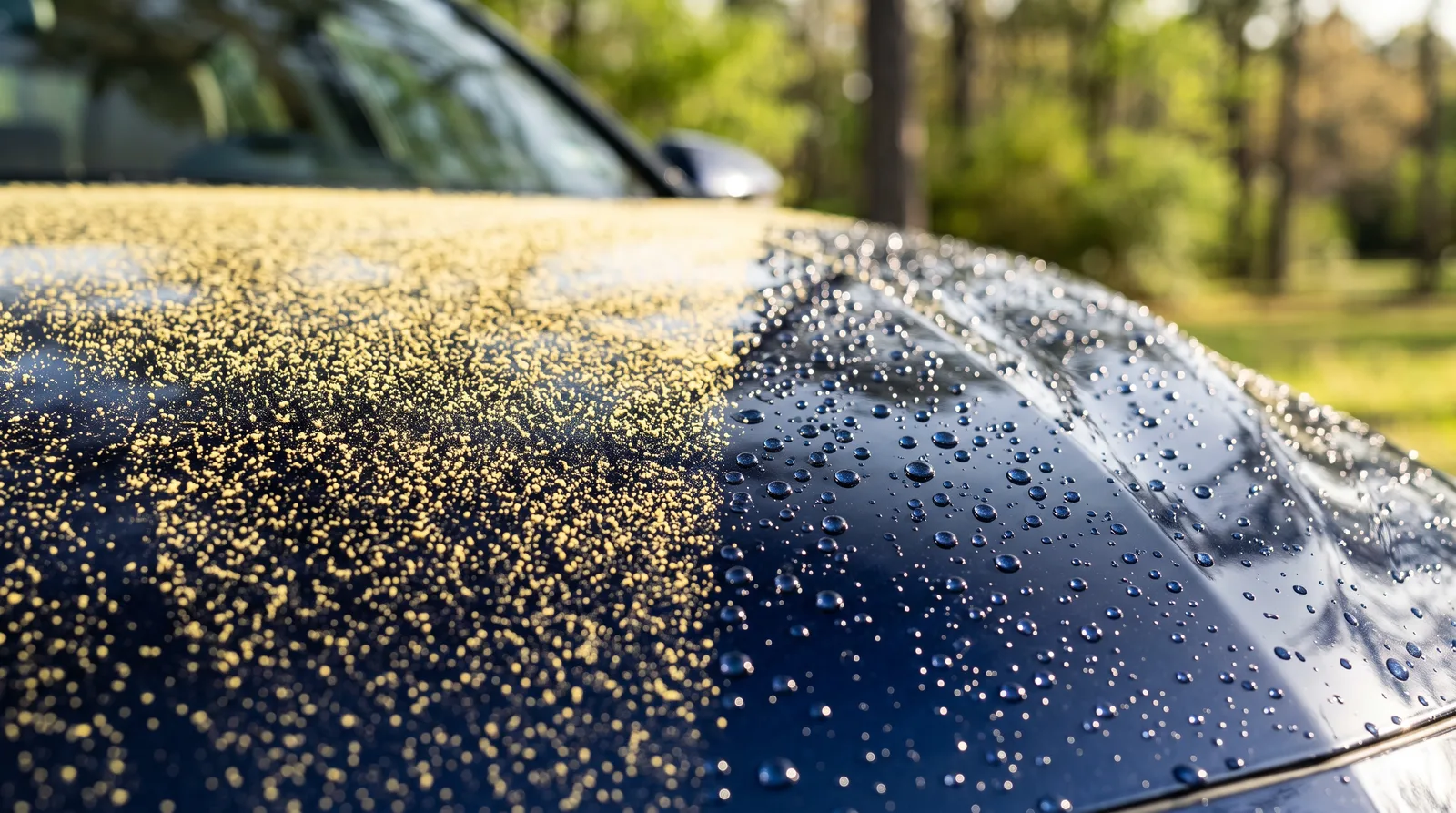
Every spring, Lee County turns yellow. Pine pollen covers cars, windshields, and every flat surface for weeks. Pollen is mostly harmless on its own, but it's gritty, it sticks when it gets damp, and the way most people remove it is the problem. Wiping it off dry, or running the car through a brush wash every few days, drags that grit across the paint and leaves swirl marks. On dark cars, a single pollen season of bad washing can leave the paint looking hazy in direct sun.
A slick protective layer makes pollen easier to rinse off and less likely to bond. That means fewer contact washes and fewer chances to scratch the paint.
Spring storms, love bugs, and tree sap
Spring also brings heavy rain that leaves mineral water spots when it dries in the sun, and the first love bug flights of the year land on bumpers and mirrors. Love bug remains and bird droppings are acidic, and in Alabama heat they can etch into clear coat within days. Tree sap from parking under pines does the same. We cover these in our guide to bird droppings, sap, and love bugs.
Summer heat and UV
By June, a car parked in an Auburn or Opelika lot can be painfully hot inside, and the dashboard and seats take the brunt of it. UV fades interiors, dries out leather, and breaks down unprotected paint and plastic trim over time. This is where window tint pays off the most. A quality ceramic tint blocks the vast majority of UV and rejects a meaningful share of the heat coming through the glass, which helps both you and the interior. Our Alabama climate and window tint guide explains why tint is close to a necessity here.
Road debris on I-85 and US-280
If you commute toward Montgomery, Columbus, or Atlanta, the front of your car takes a steady beating from gravel and debris. Rock chips on a hood and bumper add up fast. A coating doesn't stop chips. Paint protection film does, because it's a physical, impact-absorbing layer.
The best ways to spend a tax refund on your car
Here are the protective upgrades that give you the most for your money, roughly in the order most people should consider them. Your best choice depends on the car, how you drive, and how big the refund is.
1. A full detail or paint correction to start fresh
Protection works best on a clean, decontaminated surface. Coating or film over swirls and contamination just locks them in. So the first step for most cars, especially ones that have been through a few seasons of pollen and drive-through washes, is a proper detail with a full decontamination wash, and sometimes a paint correction to polish out swirls and light scratches.
Even on its own, without anything added afterward, a full detail is a solid use of a small refund. It resets the car for spring. Learn more on our auto detailing page or in our guide to how paint correction works.
2. Ceramic window tint
Tint is one of the most practical upgrades for an Alabama driver. You feel it the first hot afternoon: a cooler cabin, less glare, and less sun on your arms and the dash. Ceramic tint uses non-metallic particles that block heat without interfering with phone, GPS, or radio signals, and it doesn't turn purple the way cheap dyed film does.
Tint also has a legal side. Alabama limits how dark front side windows can be, so pick a shop that knows the law. Our Alabama window tint laws guide covers the details, and the window tint page explains our film options.
3. Ceramic coating
A ceramic coating is a hard, slick, protective layer bonded to the clear coat. It gives the paint deep gloss, makes water bead and sheet off, and makes pollen, red clay, and bugs much easier to wash away. It also adds resistance to UV and the etching that bird droppings and bug remains cause. It does not stop rock chips, and it isn't a force field, but for a daily driver in Alabama it's the most practical all-around paint protection.
Coating prices depend heavily on the vehicle and the paint's condition, so we don't quote a one-size number here. Our ceramic coating builder shows your exact price in about a minute based on your vehicle. More on the service itself is on our ceramic coating page.
4. Paint protection film on high-impact areas
Paint protection film (PPF) is a clear urethane film applied to the panels that take the most hits: the front bumper, hood, fenders, and mirrors. It absorbs rock chips and minor scrapes, and many modern films heal light swirls with heat from the sun. If you drive the interstate a lot, own a new or high-value car, or just hate rock chips, PPF on the front end is the upgrade that actually prevents damage instead of making it easier to clean.
You don't need full-body film to get most of the benefit. A partial or full front package covers the areas that get chipped. See our paint protection film page and our PPF coverage options guide.
5. Smaller add-ons that punch above their weight
- Headlight restoration. Yellowed, foggy headlights age a car and reduce light output at night. Restoring and sealing them is a quick, inexpensive fix. See our headlight restoration guide.
- Interior detail and protection. A deep interior clean plus UV protection for the dash and leather conditioning slows the cracking and fading that Alabama summers cause. Our interior detailing guide breaks it down.
- Windshield tint. A clear or very light heat-rejecting film on the windshield can make a big difference in summer comfort, as long as it stays within Alabama's rules.
Not sure which upgrade fits your refund?
Tell us your vehicle and budget and we'll recommend the protection that gives you the most for it, at our Opelika shop.
Spring car detailing deal vs long-term protection: what each costs
Here's how the common options compare. All prices are typical ranges for the Auburn and Opelika area. Your final price depends on the vehicle's size, its condition, and the products you choose, so treat these as a starting point, not a quote.
| Upgrade | Typical price range | How long it lasts | What it protects against |
|---|---|---|---|
| Exterior detail with decontamination | $150–$300 | Weeks to a few months | Resets the paint; removes pollen, sap, iron, and grime |
| Full detail (interior + exterior) | $250–$500+ | A season | Clean slate inside and out before spring |
| Paint correction (one-step to multi-stage) | $250–$1,500+ | Long-term, if protected afterward | Removes swirls, haze, light scratches, water spots |
| Ceramic window tint (full sedan) | $300–$500 | Many years with quality film | Heat, UV, glare, interior fading |
| Ceramic window tint (full SUV or truck) | $350–$600 | Many years with quality film | Heat, UV, glare, interior fading |
| Ceramic coating | Exact price in about a minute at /cc-build/ | Years, with proper maintenance | UV, etching from bugs and droppings, pollen and clay bonding, easier washing |
| PPF, partial front | $700–$1,200 | Many years | Rock chips on the leading edge of the hood and bumper |
| PPF, full front | $1,500–$2,500 | Many years | Rock chips and scrapes across the whole front end |
| Headlight restoration (pair, sealed) | $80–$180 | Longer when sealed | Yellowing, haze, reduced night visibility |
Compare that with how long a "spring car detailing deal" lasts on its own. A cheap express wash-and-wax special is a nice refresh, but in pollen season the wax is often gone within weeks. A detail followed by real protection costs more up front, but you're not paying for the same refresh over and over.
What to do with a tax refund for your car, by budget
There's no single right answer for what to do with a tax refund for your car. It depends on how much you want to spend and what you drive. Here's how we'd split it at a few common budget levels. These are suggestions, not packages, and the ranges come from the table above.
Around $300 to $600
At this level, pick one thing and do it well. For most Alabama drivers, that's either ceramic window tint (if the car has none or has old, purple, bubbling film) or a full detail to reset the car for spring. If the headlights are foggy, adding a headlight restoration often fits in this range too.
Around $600 to $1,500
Now you can combine. A popular choice is tint plus a full detail, or a detail plus paint correction on a car whose paint is swirled and dull. If the car is newer and the paint is in good shape, this is also where a ceramic coating often fits. Check your exact coating price in the builder before you plan the rest of the budget around it.
Around $1,500 to $3,000
This is where a real protection package comes together: a ceramic coating and ceramic tint, or a partial or full front PPF paired with tint. For a commuter car that spends time on I-85, PPF on the front end plus tint covers the two biggest Alabama threats, chips and heat.
Above $3,000
With a larger refund, or if you're protecting a new or high-value vehicle, you can stack it all: paint correction, full front PPF, a ceramic coating over the film and remaining paint, and ceramic tint. That's the same approach we recommend for new cars in our new car protection guide, and it's the closest you can get to keeping a car looking new for the long haul.
Whatever the budget, don't stretch it to the point where the work gets rushed or the cheapest product gets used. One upgrade done right beats three done poorly.
Timing: when to book a spring protection upgrade in Auburn
Refunds usually land between February and April, which lines up well with Alabama's seasons, if you don't wait too long.
Book before the heavy pollen starts
The ideal window is late winter, before the pine pollen arrives in force. Coating or film goes on a clean, dry, decontaminated car, and that's easiest to achieve before everything outside turns yellow. A car that's already protected when the pollen hits is much easier to keep clean through the season.
Don't wait for summer for tint
Tint is the upgrade people think about on the first 95-degree day, which is exactly when everyone else books it too. Getting it done in spring means you're already comfortable when summer arrives, and the interior is protected from the start of the high-UV months.
Plan around curing time
New tint needs a few days before you roll the windows down, and a fresh ceramic coating needs some time before its first wash. We'll tell you exactly what to do and avoid. Our tint aftercare guide and ceramic coating maintenance guide cover the details.
Upgrades we'd skip, or at least put second
We're a detailing and protection shop, so of course we lean one way. But here's our honest take on the upgrades that tend to give the least long-term value for a refund.
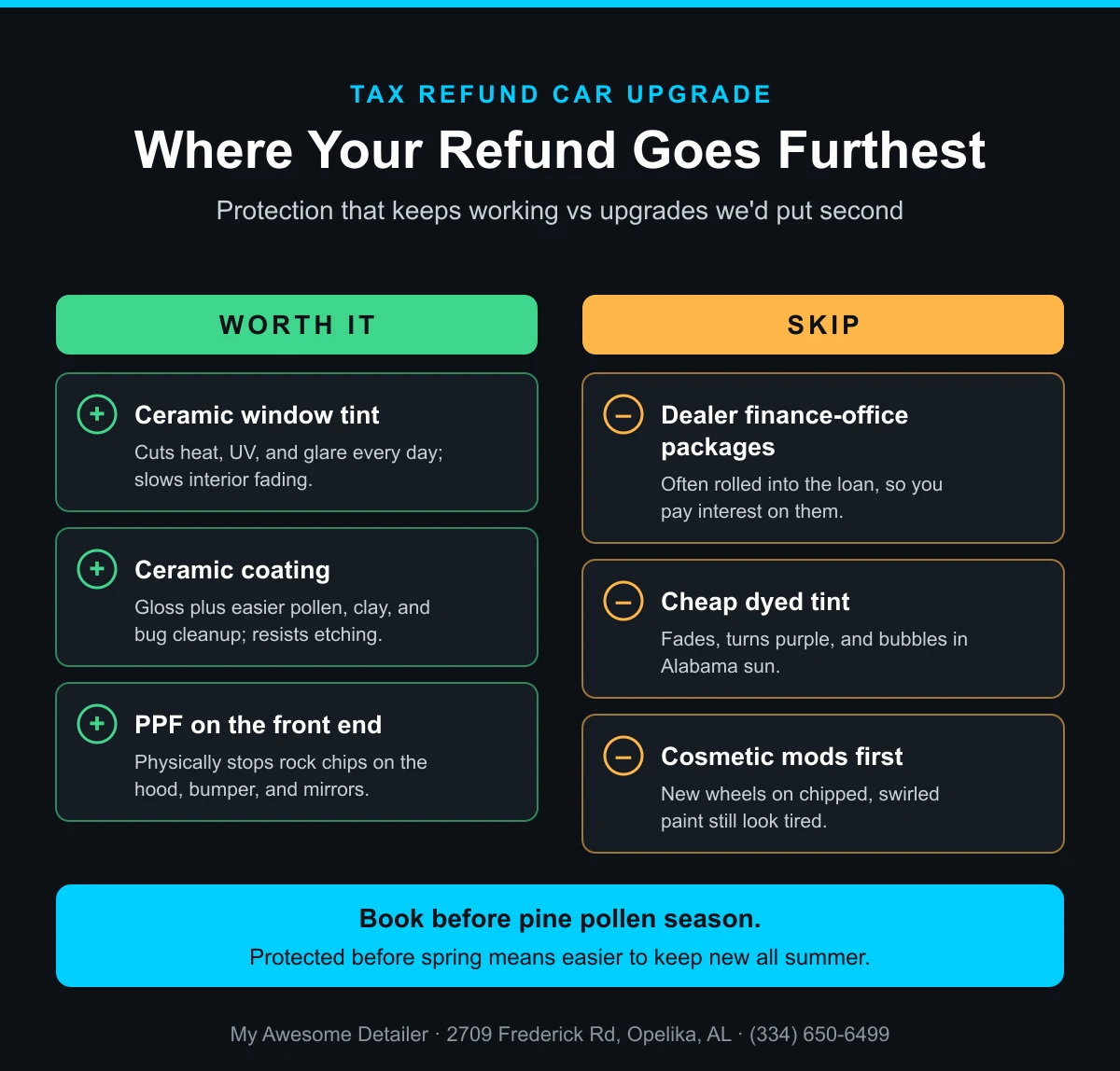
Dealer "protection packages" bought in the finance office
If you're buying a car with your refund as the down payment, be careful with protection packages added during paperwork. They're often rolled into the loan, so you pay interest on them, and it can be hard to know exactly what product was applied or how well. Getting protection installed by a dedicated shop gives you a clear, itemized job you can see. Our new car protection guide explains what to ask before you sign.
Cheap dyed tint
Low-cost dyed film is tempting, but it rejects little heat, and in Alabama sun it tends to fade, turn purple, and bubble. Then you pay to remove it before you can put good film on. See our ceramic vs regular tint comparison.
Spray-on "ceramic" products as a substitute for a coating
Spray sealants are fine as a maintenance topper. They are not the same as a professionally applied coating on corrected paint, and they won't last through an Alabama summer the same way. Our professional vs DIY ceramic coating guide covers the difference.
Purely cosmetic mods before the paint is protected
Wheels, lighting, and trim pieces aren't bad. Just consider doing them after the paint and glass are protected. A car with chipped, swirled paint and new wheels still looks like a car with chipped, swirled paint. Some modifications can also narrow the pool of buyers later, while clean original paint never does.
Questions to ask before you spend your refund at any shop
Whether you bring your car to us or somewhere else, a few questions will tell you a lot about the quality of the work you're paying for. A good shop will be glad to answer them.
- What prep is included? Ask whether the price includes a decontamination wash and, for coatings, any polishing. Coating over unprepared paint seals in swirls and contamination.
- Which exact film or coating will you use? You should get a brand and product name, not just "ceramic." Ask what the manufacturer's warranty covers and for how long.
- Is the work done indoors? Tint, film, and coatings all need a clean, controlled space. Dust, pollen, and direct sun cause defects during installation.
- How long will you need the car? Rushed jobs are where problems start. Proper paint correction or a full front PPF install takes real time.
- What aftercare do you recommend? A shop that explains the first week and the long-term routine is a shop that expects the work to last.
- Is the tint legal in Alabama? The installer should know the state's limits for each window and steer you to a legal shade.
If a quote is far below the ranges in this guide, ask what's being left out. The difference usually shows up as skipped prep, a lower-grade product, or less careful installation, and those are the things that decide whether your refund upgrade still looks good next spring.
How to make your refund upgrade last
Protection is only as good as the care it gets afterward. A few habits make a huge difference in Alabama.
- Rinse pollen off, don't wipe it. A gentle rinse moves pollen without dragging grit across the paint. Never dust a pollen-covered car with a dry towel.
- Remove bugs and droppings quickly. Even on a coated or filmed car, acidic remains are best cleaned off within a day or two, especially in summer heat.
- Skip the brush car wash. Rotating brushes are the fastest way to put swirls back into paint. Use a touchless wash or a careful hand wash with clean mitts.
- Use pH-neutral soap. Harsh cleaners can wear down protection faster than it should wear.
- Park in shade when you can. Less direct sun means less heat on the interior and fewer baked-on spots.
- Keep up with maintenance. Coatings and film last longest with periodic professional maintenance washes. See our PPF aftercare guide and window tint care guide.
How My Awesome Detailer handles a refund upgrade
When you bring a car to our shop with a budget in mind, here's how it usually goes.
- We look at the car with you. Paint condition, existing chips, old tint, headlights, and interior wear all affect what will give you the most value.
- We match the work to the budget. If the refund covers one upgrade, we'll tell you which one we'd pick for your car and how you drive. If it covers more, we'll put them in the right order.
- We prep properly. Decontamination and, where needed, paint correction happen before anything is coated or filmed, so the result locks in clean paint.
- We do the work indoors. We're a shop-based detailer. Your car is protected inside our Opelika facility with proper lighting and a controlled environment, which matters for tint, film, and coatings.
- We explain the aftercare. You leave knowing what to do for the first few days and how to keep the protection working for years.
My Awesome Detailer is rated 4.9 stars from 200+ reviews and is an Owner's Pride Select installer, one of the top shops in the country for that program. We serve drivers from Auburn, Opelika, and across Lee County, with Phenix City and Columbus, Georgia, nearby. You can read more about us, see our warranty details, or browse all services.
The bottom line on a tax refund car upgrade
The best tax refund car upgrade is the one that keeps paying you back. Cosmetic upgrades give you a quick thrill. Protection gives you a car that still looks good and holds its value after several Alabama springs and summers. For most drivers in Auburn and Opelika, the smartest order is: get the car clean and corrected, add ceramic tint for the heat and UV, add a ceramic coating for everyday paint protection, and add PPF on the front end if rock chips are a concern.
And book it early. A car that's protected before the pollen, the storms, and the summer heat arrive is far easier to keep looking new than one you try to rescue in August.
Put your refund into protection that lasts
Ceramic tint, ceramic coating, PPF, and detailing at our Opelika shop, serving Auburn, Opelika, and Lee County.