


Quick answer: For most Auburn and Opelika drivers, a full professional detail twice a year is the baseline: once after spring pollen season and once before or after the long summer heat. Daily commuters and work trucks usually do better with a full detail every three to four months, while a garaged weekend car can often stretch to once or twice a year. Between details, a safe hand wash every one to two weeks and a quick interior reset every few weeks keep the car from needing a rescue job. How often you detail your car in Alabama comes down to three things: how you drive it, where it sits, and whether the paint is protected.
If you have ever typed "how often should I detail my car" into a search bar, you have probably seen answers that say "every six months" or "once a year" with no explanation. Those numbers come from somewhere, but they were not written for east Alabama. Here, a car faces a spring that coats everything in yellow-green pine pollen, a summer where the sun and humidity work on paint and dashboards for months, red clay that gets tracked into carpet and splashed up the rocker panels, and a fall full of leaves, sap, and the occasional football weekend. All of that changes the schedule.
At My Awesome Detailer LLC, 2709 Frederick Road in Opelika, we detail cars, trucks, and SUVs from across Auburn, Opelika, and Lee County every week. This guide gives you a practical cadence by scenario, explains why the Alabama climate pushes the interval tighter than it would be in a milder place, breaks the schedule into exterior and interior, and shows what to do between professional details so each one starts from a better place.
What "detailing" means, and why frequency matters
A wash removes loose dirt. A detail is a deeper reset: a careful decontamination of the paint, cleaning of the places a wash never reaches (door jambs, wheel barrels, vents, seat seams), and finishing steps that restore gloss and add a layer of protection. If you want the full comparison, we break it down in car wash vs. detailing in Auburn.
Frequency matters because most of what harms a vehicle does not happen in a single day. It builds. Bonded contamination that sits on paint gets harder to remove each week. Dirt that works into seat fabric or leather grinds against the surface every time someone sits down. Pollen and moisture sit in door seals and window channels. A schedule that catches these things early means each detail is easier, faster to do, and gentler on the car than a once-in-three-years recovery.
The goal is not to detail as often as possible. The goal is to match the schedule to how the car is actually used.
The Alabama factor: why our interval is tighter than most
National advice is written for an average climate that does not exist in Lee County. A few local conditions are the reason we recommend a tighter rhythm here.
Pollen season is heavy and sticky
Every spring, pine and hardwood pollen covers parked cars in a visible film. Pollen on its own is mostly a nuisance, but it mixes with morning dew and rain into a damp paste that sits on paint, glass, and trim. It also gets pulled into the cabin through the HVAC system, which is one reason a car can feel dusty inside even when it has not been driven much. A good rinse and a safe wash during the season help, and a reset after the season ends clears what the washes missed.
Heat, UV, and humidity run for months
Our summers are long. Sun beating on a dark dashboard, leather seats that bake with the windows up, and clear coat that takes direct UV day after day all age faster than they would in a cooler region. We explain the paint side in how Alabama heat damages car paint. The takeaway for frequency: surfaces that are cleaned and protected on a regular schedule handle the heat better than surfaces that are neglected and then cleaned in a hurry.
Red clay gets everywhere
Red clay is part of daily life in this part of Alabama. It rides in on shoes, collects in wheel wells and along the lower body, and works into floor mats and carpet. Clay is gritty, and gritty dirt is the enemy of a clean finish, whether it is on a lower door panel or ground into a seat. Our guide to red clay and your car goes through how to deal with it. For scheduling, it means trucks, SUVs, and anyone who parks on gravel or unpaved lots should lean toward the shorter end of the ranges below.
Bugs, sap, and bird droppings
Between love bug seasons, pine sap, and birds, a car parked outside can pick up acidic contamination quickly. The longer it sits, the more likely it is to etch into the clear coat instead of wiping off. Frequent safe washing is the best defense, and a protective layer on the paint makes everything release more easily.
How often to detail by scenario
Here is the practical part. These are guidelines for a typical vehicle in our area. Your own car may land earlier or later depending on its condition and what protects the paint.
| Scenario | Full detail | Hand wash | Interior reset |
|---|---|---|---|
| Daily commuter, parked outside | Every 3-4 months | Every 1-2 weeks | Every 3-4 weeks |
| Family vehicle with kids | Every 3-4 months | Every 2 weeks | Every 2-3 weeks (spills and crumbs) |
| Work truck or job-site vehicle | Every 2-3 months | Weekly or as needed | Every 2-3 weeks |
| Weekend or garaged car | Every 6-12 months | Before and after each outing | Every 1-2 months |
| Rideshare or high-use vehicle | Every 2-3 months | Weekly | Every 1-2 weeks |
| Ceramic coated or PPF-protected car | Maintenance care every 6-12 months, plus regular washes | Every 2 weeks | Every 1-2 months |
These ranges are starting points. Final recommendations depend on the vehicle, its current condition, and how you use it, which is why we look at the car before suggesting a plan.
The daily commuter
If you drive to Auburn University, a job in Opelika, or up Highway 280 to Birmingham every day and park outside, your car sees the full range of weather and road contamination. Every three to four months is a good detail rhythm. That lines up neatly with the seasons: one after pollen, one after the hottest part of summer, one in the fall, and one in winter if you want the car in top shape for the new year. If the budget only allows two, make them the post-pollen detail and the post-summer detail.
The family vehicle
With kids and sports gear, the interior is the limiting factor, not the paint. Crumbs, juice, sunscreen, cleats, and car seats leave marks that set over time. Plan on a full detail every three to four months, with a quick vacuum and wipe-down every couple of weeks in between. Cloth seats and carpet are where odors begin, so catching spills early saves a lot of work. If you are dealing with a smell already, see why your car interior smells bad.
The work truck
Trucks collect mud, dust, and job-site residue faster than any other vehicle we see. Beds, wheel wells, and the undercarriage all need regular attention, and the interior often needs it even more. A detail every two to three months keeps a work truck from becoming a rolling storage unit for dirt. Our truck detailing guide breaks down what a complete truck detail covers, zone by zone.
The weekend car
A garaged car that comes out for sunny Saturdays is the easy one. Once or twice a year is often enough for a full detail, as long as you wash it carefully after each drive and keep it covered or indoors. The exception is a car that sits for long stretches. Dust, trapped moisture, and old contamination can settle on a car in storage, so a pre-season detail is worth it before you start driving it again.
The rideshare or high-use vehicle
If many different people ride in your car, the interior is touched constantly. Plan on shorter intervals and focus on high-touch surfaces, seats, and floor mats. A fresh, clean interior is part of what keeps ratings and tips healthy.
The protected car
If your paint has a ceramic coating or paint protection film, the schedule changes. Protected surfaces resist contamination and clean up more easily, so the full detail interval can stretch, but regular safe washing still matters. A coating is not a substitute for care. We cover the routine in ceramic coating maintenance in Auburn.
Exterior vs. interior: two different clocks
It helps to think of the outside and the inside of a car as running on two separate schedules.
Exterior cadence
The exterior is exposed to weather, so it deserves the more frequent attention in Alabama:
- Rinse as needed. After a pollen storm, a bug-heavy drive, or a bird strike, a gentle rinse keeps contamination from setting.
- Safe hand wash every one to two weeks. Use clean wash mitts, a pH-balanced car soap, and a separate wheel brush. Avoid dish soap, which can strip protection.
- Decontamination and protection every few months. This is the step that removes bonded contamination a normal wash will not, and puts a protective layer back on the paint.
- Paint correction only when needed. Swirls and scratches are not a calendar item. If you can see them in direct sun, it may be time. See signs your car needs paint correction.
Interior cadence
The interior is shielded from rain but not from heat, spills, or the people riding in it:
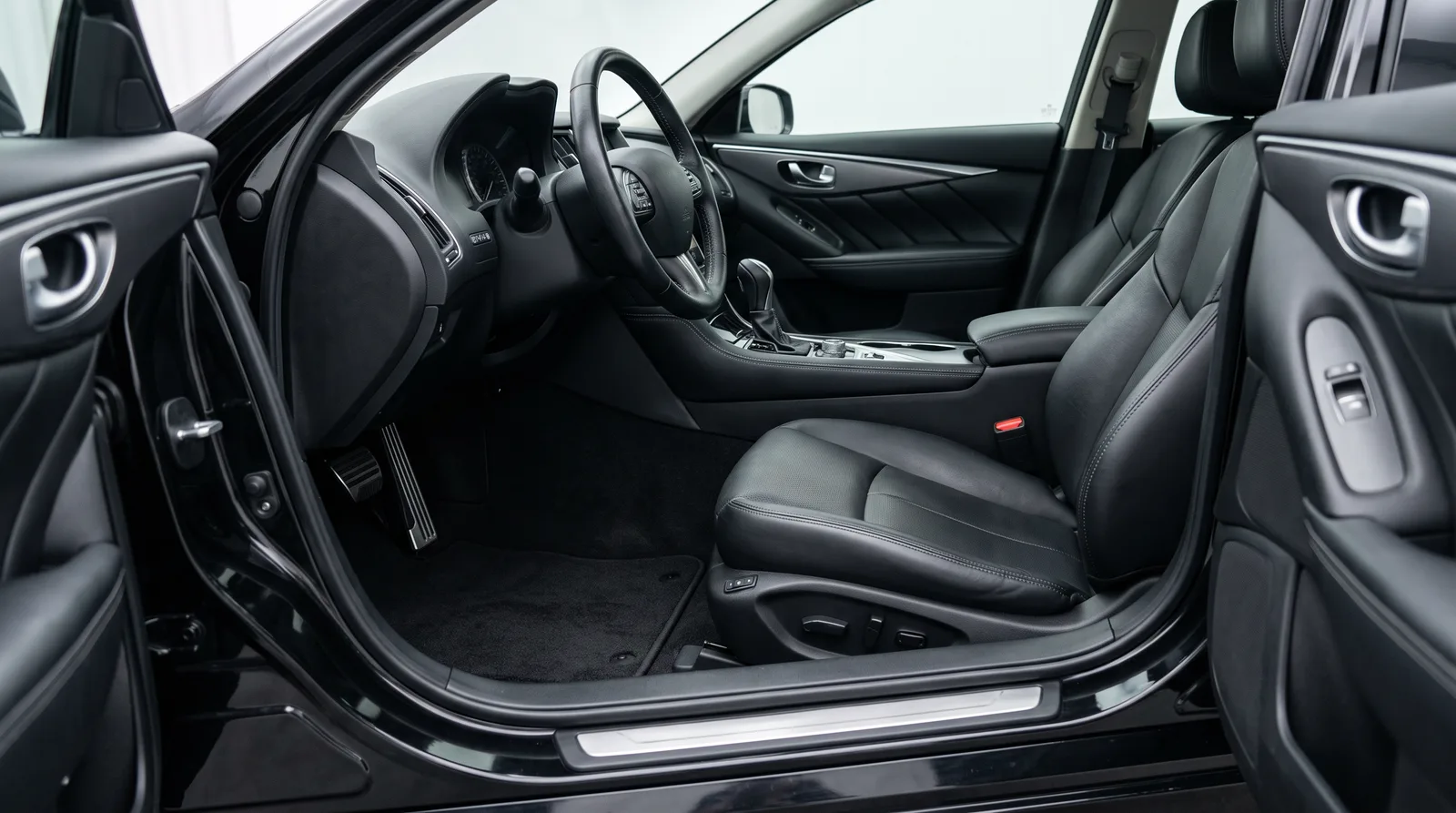
- Quick reset every two to four weeks. Vacuum floors and seats, empty trash, and wipe the dash, console, and door handles.
- Deep clean every three to six months. This covers carpets, mats, upholstery, seat tracks, vents, and door pockets.
- Leather and surface care a few times a year. Cleaning and conditioning leather, and protecting plastics against sun, keeps them from drying out or cracking in the heat.
For a walkthrough of what an interior service covers, read interior car detailing in Auburn.
Not sure which schedule fits your car?
Tell us about your vehicle in a short interview, typically 3-5 minutes, and we text you a code. The exact price for your car is on the screen, no guessing.
A year of care in Auburn and Opelika
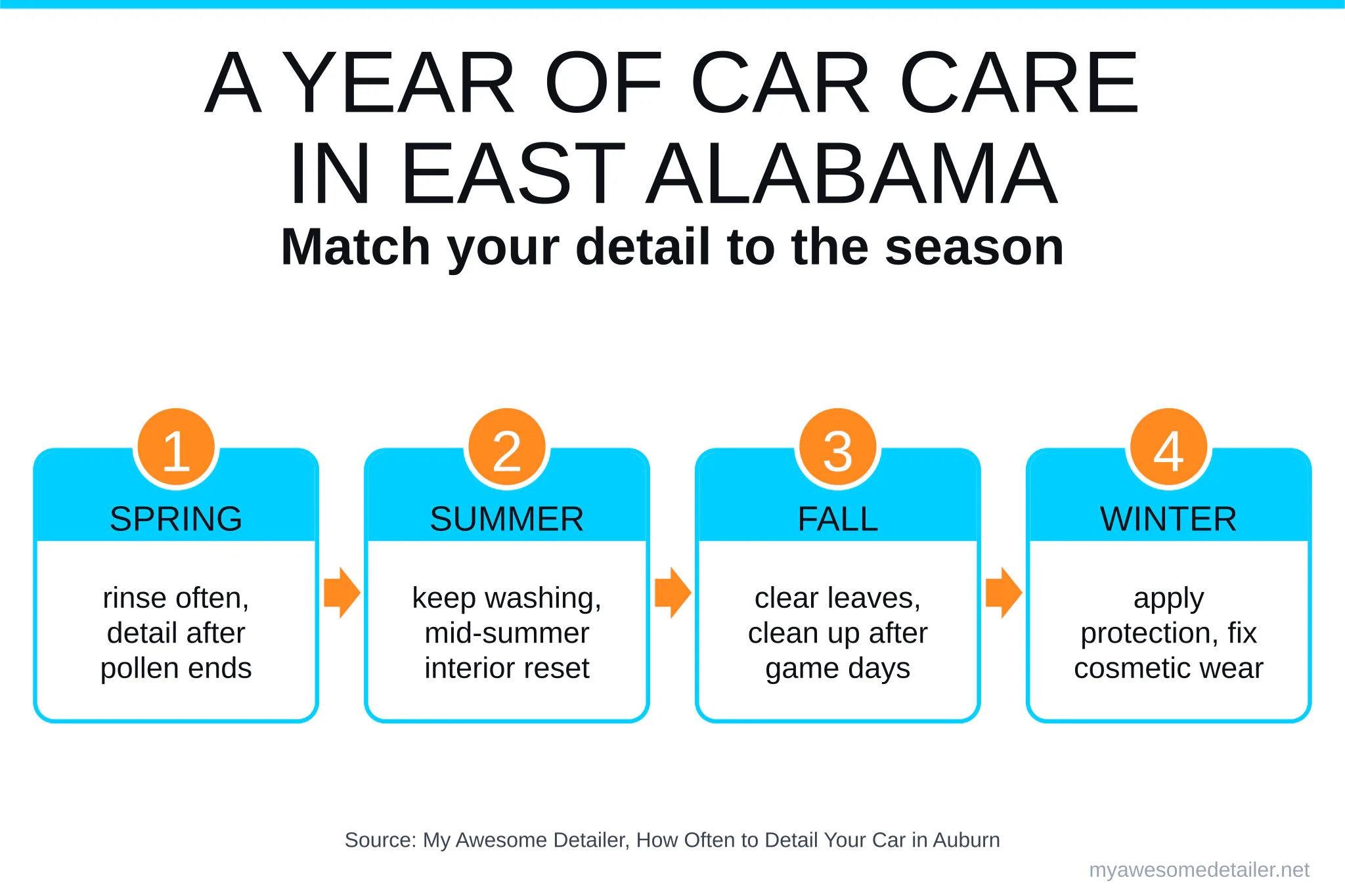
If you like a simple calendar, this is how a typical year looks for a car that lives outside in east Alabama.
Spring: pollen reset
Rinse and wash more often while the pollen is falling. Once it tapers off, book a detail to clean the paint, the glass, the door jambs, and the cabin air path, and to reapply protection that the season wore down.
Summer: sun and heat
Keep the car washed, use a sunshade, and watch the interior. This is the season when dashboards and seats take the most punishment, so a mid-summer interior reset pays off.
Fall: leaves, sap, and game days
Leaves trap moisture against paint and can stain it. If you tailgate or park on grass and gravel for football weekends, plan a clean-up afterward. See our game day car care guide.
Winter: prep and protect
Cold, wet months are a good time to apply longer-lasting protection and fix the cosmetic issues that built up. A winter detail also puts the car in great shape for the next pollen season.
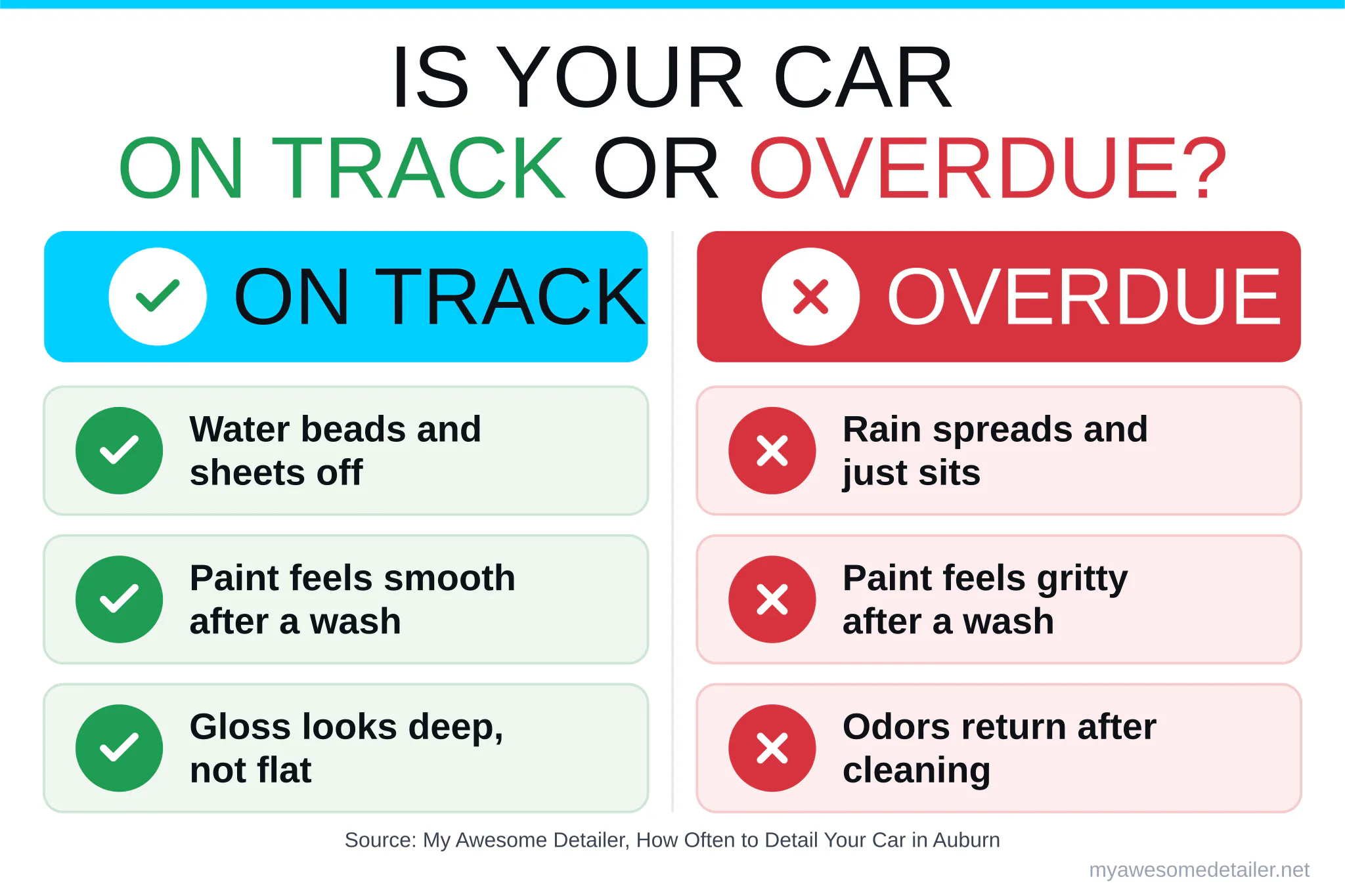
Signs you are overdue for a detail
Instead of counting months, you can let the car tell you. Any of these signs suggest it is time:
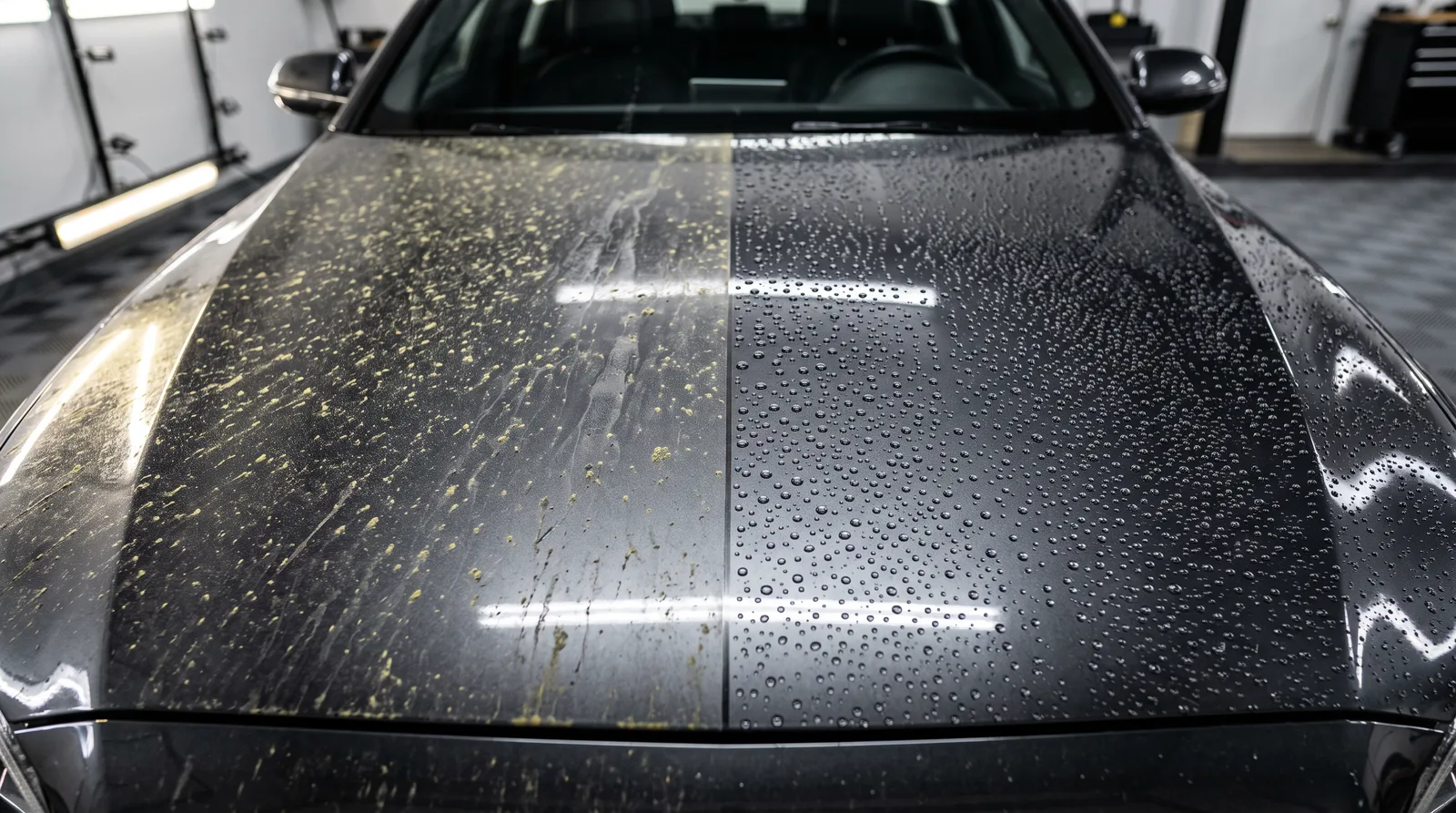
- Water no longer beads or sheets. If rain just spreads and sits on the paint, protection is thin or gone.
- The paint feels rough after washing. Run a clean hand inside a thin plastic sandwich bag over a clean panel. If it feels gritty, there is bonded contamination on the surface.
- The gloss looks flat. Dull paint often means contamination, oxidation, or fine swirls scattering the light.
- Odors that linger. A smell that returns after you clean usually has a source deeper in the carpet or upholstery.
- Visible grime in seams. Dirt in door jambs, around badges, and in trim gaps is a sign that a regular wash is no longer reaching everything.
- Stains on seats or carpet. The longer a stain sits, the harder it is to remove.
- Water spots or etched marks. These need attention before they become permanent. Our article on water spot removal explains the difference between surface spots and etching.
What to do between professional details
The cheapest way to detail less often is to care for the car well in between. A few habits make the biggest difference.
Wash safely
Most swirl marks come from improper washing, not from time. Use two buckets or a rinseless method, clean microfiber, and a gentle motion. Avoid automatic brush washes, which can leave fine scratches. Dry with a clean microfiber towel instead of letting water air-dry in the sun, which can leave mineral spots.
Work from the top down
Roof first, lower panels last. The lower sections hold the most grit, and you do not want to drag it across cleaner paint.
Do not let contamination sit
Bird droppings, bug remains, and sap are acidic or sticky. Remove them as soon as you notice them, using plenty of lubrication and a soft cloth.
Park smart
When you can, park in a garage, under a covered spot, or away from trees. A shade structure or a sunshade makes a measurable difference to the interior in summer.
Keep the interior from building up
Keep a small trash bag in the car, shake out the floor mats regularly, and wipe spills right away. A little maintenance keeps the deep clean from turning into a major project.
How protection changes the schedule
Paint that has no protection sits directly in the path of UV, pollen, and road film, so it needs more frequent attention. Protection comes in several forms, and each changes how often you need to detail.
- Wax or sealant. These add gloss and a short-term barrier, but they need to be renewed more often, which means a shorter schedule.
- Ceramic coating. A coating bonds to the paint and makes the surface slicker and easier to clean. See our ceramic coating service for how it works at the shop.
- Paint protection film. Film is a physical layer that guards against rock chips and scratches, covered on our PPF page.
Protection does not mean the car never needs a detail. It means the details are easier and the interval between them can grow. Interior surfaces, glass, and wheels still need regular care.
If you are comparing options, our guide to auto detailing packages explains what each level includes, and our auto detailing page lists what we offer. Every service is performed at our Opelika shop.
What a professional detail includes
When you book a detail, you should know what you are getting. A thorough service typically covers:
- Wheel, tire, and wheel well cleaning
- Safe hand wash and decontamination of the paint
- Door jambs, trunk or cargo area, and fuel door
- Glass cleaned inside and out
- Interior vacuum, wipe-down, and detailed cleaning of vents, seams, and consoles
- Carpet, mat, and upholstery cleaning as needed
- Protection applied to the paint, trim, and interior surfaces
The specific steps depend on the package and the condition of the car. Pricing is based on your vehicle, its size, and its condition, so the best way to know is to describe the car and see your price before you commit.
Common mistakes that shorten the time between details
- Washing in direct sun. Soap and water dry fast on a hot panel and leave spots.
- Using dish soap or household cleaners. These can strip protection and dry out plastics and rubber.
- Using one dirty towel for everything. Grit trapped in a towel scratches paint.
- Ignoring the wheels. Brake dust is corrosive and bakes on in summer heat.
- Skipping the interior until it is bad. Dirt and body oils are much harder to remove after months of heat cycles.
- Waiting until paint looks bad. By then the fix is correction, not maintenance, and correction removes a tiny amount of clear coat each time.
Is detailing more often worth it?
It depends on what you value. A regularly detailed car is nicer to drive, easier to keep clean, and presents better at resale time. Fresh, well-kept paint and an interior free of heavy wear are the things buyers notice first. Regular care also spreads the work out: several light details usually cost less effort than one heavy recovery. We talk about the resale angle in our guide on detailing before selling your car.
At the same time, more is not always better. Over-polishing removes clear coat, and over-aggressive cleaning can wear interior surfaces. A good detailer will tell you when a car does not need a full service yet.
Build your own schedule
Here is a simple way to set your cadence:
- Start with your scenario from the table above.
- Adjust for parking. Garaged? Move toward the longer end. Parked under pine trees or on gravel? Move toward the shorter end.
- Adjust for protection. If the paint is coated or filmed, you can stretch the details and keep the washes regular.
- Anchor it to the seasons. Tie details to post-pollen and post-summer, then add more as your use demands.
- Re-check every year. If your commute, your family, or your parking changes, so should the schedule.
Ready to put your car on a schedule?
Start the short interview about your vehicle and see your exact price. Prefer to talk it through? Call the shop, or visit us at 2709 Frederick Road in Opelika.
Frequently asked questions
How often should I detail my car in Alabama?
Most drivers do well with a full detail every three to four months if the car is a daily driver parked outside, and every six to twelve months for a garaged weekend car. Pollen season and summer heat make the post-spring and post-summer details the most valuable ones.
Is it bad to detail my car too often?
Washing and interior care cannot be done too often if done safely. The thing to watch is aggressive paint polishing, which removes clear coat, so it should only happen when the paint needs it. A professional can tell you when a full service is not needed yet.
How often should I wash my car in Auburn and Opelika?
A safe hand wash every one to two weeks suits most cars, with an extra rinse after heavy pollen, bug-heavy drives, or bird droppings. Avoid washing in direct sun, and dry the car afterward.
How often should I clean my car's interior?
A quick vacuum and wipe-down every two to four weeks, and a deeper clean every three to six months. Family vehicles, work trucks, and rideshare cars should lean toward the shorter end.
Does ceramic coating mean I can detail less often?
A coating makes the paint easier to clean and more resistant to contamination, so the exterior can go longer between full details. It still needs regular washing, and the interior, glass, and wheels need their usual care.
When is the best time of year to detail a car in Alabama?
Right after pollen season in late spring and again after the hottest part of summer are the two most useful times. A winter detail is a good way to apply protection and get ready for the next spring.
How do I know my car is overdue for a detail?
Look for water that no longer beads, paint that feels rough after a wash, flat-looking gloss, lingering odors, grime in seams and jambs, and stains on seats or carpet.
Where can I get my car detailed near Auburn?
My Awesome Detailer is at 2709 Frederick Road in Opelika, AL 36801, serving Auburn, Opelika, and the Lee County area, with Phenix City and Columbus, GA nearby. Every service is done at our shop. Call (334) 650-6499 or use the online builder to see your price.
The bottom line
The right detailing frequency is not one number. For a typical Auburn or Opelika daily driver it is a full detail every three to four months, a safe wash every one to two weeks, and a quick interior reset every few weeks. A garaged weekend car can go much longer, and a work truck needs it sooner. East Alabama's pollen, heat, and red clay are the reasons our intervals run tighter than national averages.
If you would like a plan built around your own vehicle, My Awesome Detailer is rated 4.9 stars from over 200 reviews and is an Owner's Pride Select installer, one of the top shops in the country. Visit us at 2709 Frederick Road in Opelika, call (334) 650-6499, or start the service builder. You can also browse our full list of services or learn more about the shop.