Quick answer: Truck detailing in Auburn is different from detailing a car because a pickup has more surface, more textured plastic and rubber, a bed that takes a beating, and an underside that collects mud, red clay, and road grime. A proper truck detail covers six zones: the bed and liner, the wheels and wheel wells, the undercarriage and frame rails, the paint and trim, the glass, and an interior that often carries job-site dust or trail mud. A full truck detail in the Auburn and Opelika area typically runs about $300 to $650, depending on the truck's size and how dirty it is.
Drive through Auburn, Opelika, or anywhere in Lee County and count the pickups. Half-tons heading to job sites, heavy-duty trucks pulling trailers down Highway 280, lifted 4x4s coming back from the trails, and farm trucks that haven't seen a wash since the last rain. Trucks are everywhere here, and most of them work harder than the average sedan ever will.
That work shows up in specific places. Bed liners fade and hold grit. Wheel wells pack with clay. Floor mats turn into a layer of dried mud. Cloth seats soak up sweat, drywall dust, and spilled coffee. A quick run through an automatic wash doesn't touch most of it, and a standard car detail isn't built for it either.
At My Awesome Detailer LLC, 2709 Frederick Road in Opelika, trucks are a big part of what we see every week. This guide explains what makes truck detailing different, what a complete truck detail should include zone by zone, how to handle bed liners and work-truck interiors, how off-road truck cleaning should be done without damaging anything underneath, what it typically costs, and how to protect the truck once it's clean.
Why truck detailing is different from car detailing
A truck isn't just a bigger car. The way it's built, the materials inside it, and the way people use it all change how it should be cleaned.
More surface, more height, more time
A full-size crew-cab pickup has a lot more painted surface than a midsize sedan, plus a bed that adds the floor, two inner bed sides, the bed rails, and both sides of the tailgate. Many trucks sit high enough that the roof and the top of the cab can't be reached safely from the ground without a step or platform. Lifted trucks add even more height and much bigger wheel wells. All of that adds time, which is why nearly every detailer prices trucks above cars for the same package.
Different materials
Trucks use a lot more textured black plastic than most cars: fender flares, step bars, mirror caps, grille surrounds, bumper caps, and bed rail caps. Inside, work trucks often have vinyl or rubber flooring instead of carpet, heavy rubber all-weather mats, cloth bench seats, and wide hard-plastic consoles. Then there's the bed liner, which can be spray-in polyurethane, a drop-in plastic liner, a rubber mat, or bare painted steel. Each of these needs a different cleaner and a different finish. Using a glossy tire shine on a spray-in liner, for example, leaves a slick, greasy surface that collects dust and makes cargo slide.
How trucks actually get used
The biggest difference is the job the truck does. A truck that hauls lumber, drywall, or mulch picks up a different kind of dirt than one that spends Saturdays on muddy trails or in a hunting lease. A family truck that carries kids to ball practice collects sand, sports drinks, and crumbs. A detail that doesn't ask how the truck is used usually misses the problem areas.
That's why we start every truck detailing job in Auburn by looking at the truck with the owner and asking what it does during the week. It changes where we spend the time.
What a full truck detail covers, zone by zone
Here's what a complete truck detail should include. If you're comparing quotes, use this list to see what's actually in the package and what's an add-on.
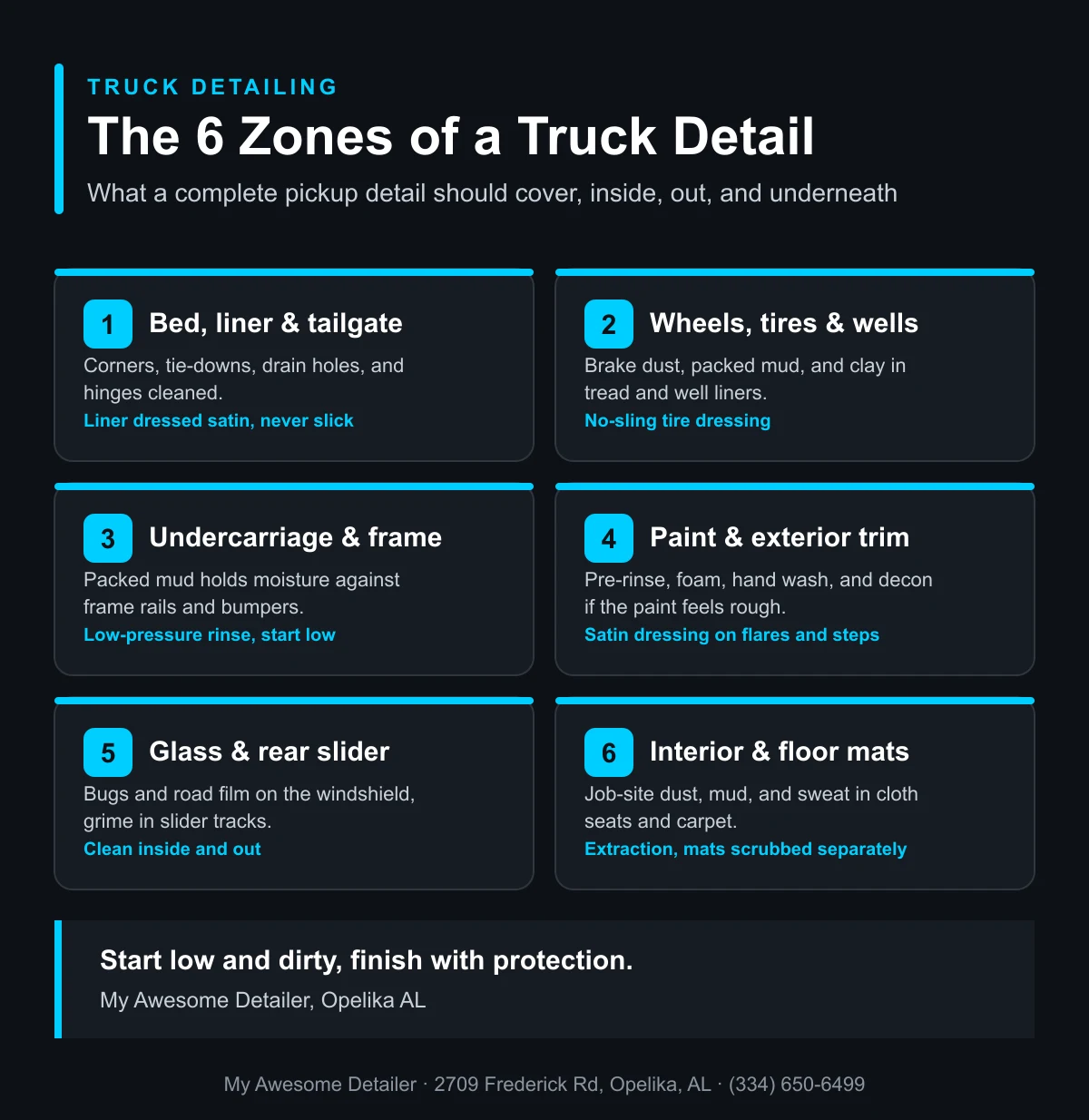
1. The bed, liner, rails, and tailgate
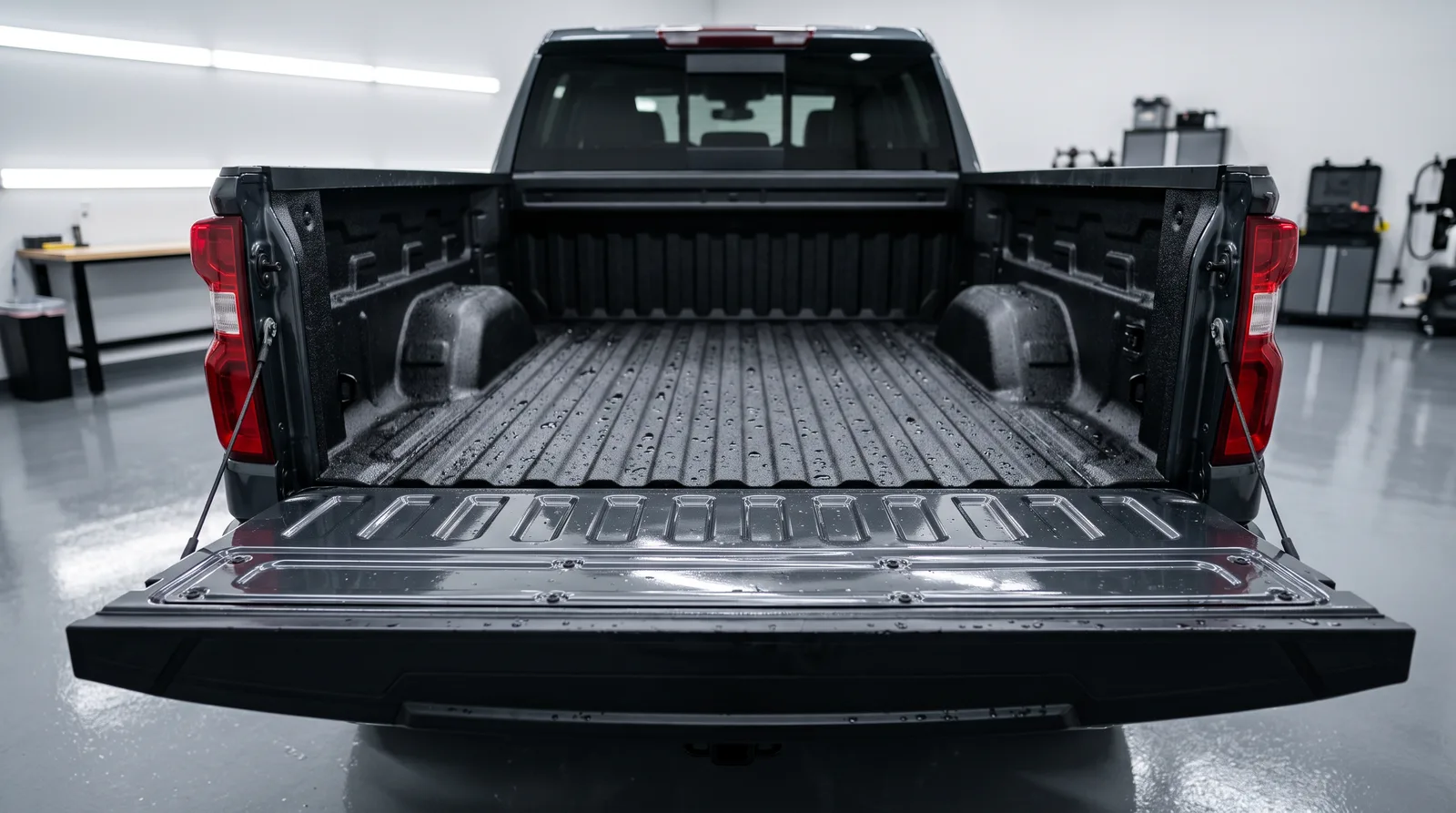
The bed gets its own wash and rinse, with attention to the corners, the tie-down points, the drain holes, and the tailgate hinges where grit packs in. The liner is cleaned with a product suited to its material and finished with a non-slip dressing, not a slick shine. Painted bed rails and the top of the tailgate get washed like the rest of the paint, because they take a lot of scrapes from cargo.
2. Wheels, tires, and wheel wells
Truck wheels collect heavy brake dust, and off-road tires carry mud and clay deep in the tread. A proper detail cleans the wheel faces, the barrels as far as they can be reached, the lug areas, and the tire sidewalls, then cleans the plastic or bare-metal wheel well liners. Tires get a dressing that won't sling onto the paint.
3. Undercarriage and frame rails
For trucks that see dirt roads, job sites, or trails, the underside matters as much as the paint. Mud and clay packed along the frame rails, crossmembers, and inside the bumpers hold moisture against metal. A careful low-pressure rinse and degreasing of reachable areas loosens that buildup. This is not about making the underside showroom-shiny. It's about getting packed dirt off.
4. Paint and exterior trim
The paint gets a safe pre-rinse and foam wash, then a hand wash. If the paint feels rough, a decontamination step removes bonded grime, tree sap, and iron fallout. Textured plastic trim, flares, and step bars are cleaned and dressed with a satin, non-greasy protectant. A spray sealant or wax adds a short-term layer of protection.
5. Glass
Truck windshields are large and upright, so they collect bugs and road film fast, especially on highway trips. The rear slider window is easy to forget and often has grime in the tracks. Clean glass inside and out matters for safety, not just looks.
6. Interior
Floors, mats, seats, door panels, console, dash, vents, and headliner. A work truck interior usually needs more vacuuming and extraction than a commuter car, and the rubber mats get scrubbed separately. We'll go deeper on interiors below.
Truck bed detailing: liners, rails, and tailgates
The bed is the part of a truck that most owners ignore until it looks rough. But truck bed detailing is worth doing, especially if you plan to keep or sell the truck. A clean, dressed bed makes a truck look cared for, and it's one of the first places a buyer looks.
Spray-in bed liners
Spray-in liners are tough, textured polyurethane coatings bonded to the bed. Their texture is what makes them grippy, but it also holds fine dirt, clay, and grime that a hose won't remove. Under the Alabama sun, many spray-in liners also fade from black to a chalky gray over time.
The right approach is a cleaner suited to the liner, agitation with a stiff brush to pull dirt out of the texture, a thorough rinse, and a dry. Then a dressing made for bed liners or textured trim brings back a deep, even color without leaving the surface slippery. Avoid silicone tire shine in the bed. It looks good for a day, then it collects dust and can make anything you haul slide around.
Drop-in plastic liners
Drop-in liners are molded plastic shells that sit in the bed. They protect against dents, but they have a hidden downside: water, sand, and grit get trapped between the liner and the painted bed floor. Over time, that grit can rub through the paint under the liner, and trapped moisture can start rust in the corners.
If your truck has a drop-in liner and it's been in for years, it's worth having it removed so the bed underneath can be cleaned, dried, and inspected. Many owners are surprised by what they find. That's usually something we discuss when quoting, because removal depends on how the liner is fastened.
Bare painted beds and bed mats
Some trucks have no liner at all, just a painted bed, sometimes with a rubber bed mat on top. A rubber mat should come out so the floor under it can be washed and dried, since water sits under mats for days in humid weather. A bare painted bed gets washed like the rest of the paint, and it benefits from the same protection as the body.
Bed rails, tailgate, and tonneau covers
The tops of the bed rails and the tailgate take constant contact: tools, coolers, ladders, bikes, and knees climbing in. Their paint gets scratched and dulled faster than the rest of the truck. These areas get washed carefully and protected. If you have a tonneau cover, the soft vinyl or hard panels get cleaned and treated with a UV protectant, since sun-baked vinyl covers can crack. The rubber seals around the cover and tailgate get cleaned too, so they keep water out.
Work truck interiors: job-site dust, grease, and mud
Work trucks are where interior detailing earns its keep. The cab of a contractor's or tradesperson's truck is a rolling office, a break room, and a tool shed at the same time. Here's what usually needs the most attention.
Fine dust from job sites
Drywall dust, concrete dust, sawdust, and insulation fibers are very fine and get everywhere: into seat fabric, under seat tracks, inside vents, and between the console and seats. Simple vacuuming moves some of it but leaves a lot behind. Compressed air to blow dust out of seams and vents, followed by thorough vacuuming and wiping, gets far more out.
Mud, clay, and dirt on floors and mats
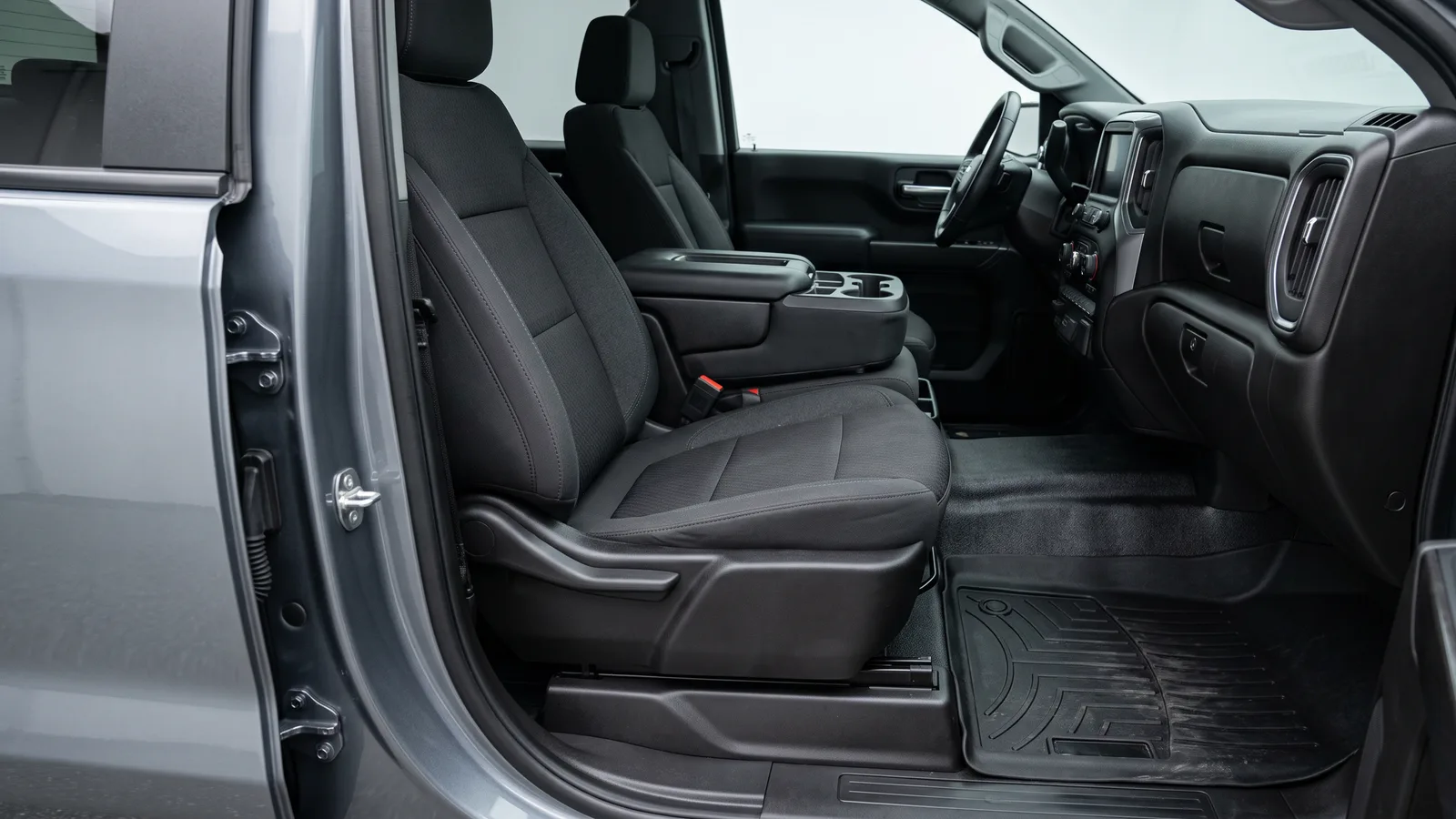
Boots carry mud and red clay straight onto the floor. Rubber all-weather mats contain most of it, but dirt still ends up around the edges, under the pedals, and on the door sills. The mats come out and get scrubbed and rinsed separately. Carpeted floors get vacuumed, then shampooed and extracted where clay or grime has soaked in. Vinyl or rubber floors get scrubbed and wiped clean.
Grease, sweat, and food
Steering wheels, door handles, shifters, and seat bolsters pick up grease from hands and sweat from long Alabama summer days. Food wrappers, spilled drinks, and fast food crumbs end up under and between the seats. These get degreased, cleaned, and wiped down. Cloth seats get shampooed and extracted to lift ground-in dirt and stains, which also helps with odor.
Odor
Work trucks often carry odors from sweat, smoke, wet gear, or spilled food. Most odor comes from material that's soaked into fabric or carpet, so deep cleaning and extraction handle a lot of it. Stubborn smells may need a dedicated odor treatment as an add-on. Our interior detailing guide covers odor and stain options in more detail.
Interior finish: clean, not slick
A work truck interior should come back clean with a factory satin finish. Glossy dressing on a dash causes glare, and slick products on steering wheels, pedals, or floor mats are a safety problem. We finish interior plastics with a non-greasy UV protectant, since Alabama sun is hard on dashboards and door panels.
Get your truck back to looking cared for
Beds, interiors, wheel wells, and paint: we detail trucks at our Opelika shop for drivers across Auburn, Opelika, and Lee County.
Off-road truck cleaning: mud, clay, and what's underneath
Lee County and the surrounding area have plenty of dirt roads, hunting land, farm roads, and trails. If your truck spends weekends off the pavement, off-road truck cleaning is its own job, and how you do it matters.
Why packed mud is a problem
Mud and clay don't just look bad. When they pack into wheel wells, along frame rails, inside bumpers, and around suspension parts, they hold moisture against metal for days or weeks. In a humid climate, that's an invitation for corrosion. Packed mud also adds weight, can throw wheels out of balance if it dries inside the barrels, and can hide problems like leaks or damaged parts.
Alabama red clay adds another layer. Its iron-rich pigment stains textured plastic, rubber, and light-colored paint when it sits wet in the heat. Our guide to red clay and your car explains why it's so hard on finishes.
Clean it soon, and in the right order
The best time to clean off-road mud is soon after the trip, before it bakes hard in the sun. The right order is:
- Undercarriage and wheel wells first. A low-pressure rinse loosens packed mud from the frame, crossmembers, and wells. Starting low keeps that mud from splashing onto freshly washed paint later.
- Wheels and tires. Mud in the barrels and tread comes out next, followed by a wheel cleaner for brake dust.
- Lower panels and rockers. These carry the heaviest mud spray. A thorough pre-rinse and foam soak loosen it before anything touches the paint.
- Upper body last. Once the heavy grit is gone, the paint gets a proper hand wash.
What not to blast
Pressure washers are useful but can do damage under a truck when used carelessly. High pressure close to electrical connectors, sensors, wiring harnesses, breather tubes, or seals can force water where it doesn't belong. It can also strip undercoating and lift paint from chips. A careful detail uses enough pressure to move mud while keeping a safe distance from sensitive parts, and lets degreaser and soak time do much of the work.
Dry it and check it
After an off-road cleaning, the truck should be dried, especially in seams and crevices. It's also the right time to look for anything the mud was hiding, like a torn boot, a leak, or a damaged guard. We'll point out anything obvious we see, but we're detailers, not a repair shop, so a mechanic should look at anything mechanical.
Truck detailing options and typical cost in Auburn
Truck detailing prices depend on size, condition, and what's included. A clean half-ton with a light layer of dust is a very different job from a heavy-duty work truck caked with clay inside and out. These are typical ranges in the Auburn and Opelika area, not quotes. Your exact price depends on your truck.
| Service | What it includes | Best for | Typical range (trucks) |
|---|---|---|---|
| Maintenance / express detail | Hand wash, wheels and tires, quick interior vacuum and wipe, glass | Regularly maintained trucks, between full details | About $100 to $200 |
| Exterior truck detail | Foam and hand wash, wheels and wells, bed wash and dressing, decontamination, trim dressing, sealant | Faded trim, dull paint, rough bed liner | About $175 to $350 |
| Interior truck detail | Full vacuum, mat scrub, seat and carpet shampoo and extraction, console, dash, vents, glass | Work trucks, family trucks, odor and stains | About $175 to $350 |
| Full truck detail | Complete interior and exterior, bed, wheel wells, decontamination, protection | Most trucks once or twice a year, before selling | About $300 to $650 |
| Heavy soil / off-road add-on | Extra mud and clay removal from wells, undercarriage rinse, heavy interior soil | Trail, hunting, farm, and job-site trucks | Adds about $50 to $150 |
Trucks generally cost more than cars for the same package because of the extra surface, height, and bed. Our detailing packages guide breaks down the car-level packages so you can compare. For a firm number, we'll look at your truck and quote it before any work starts. You can see more about the service on our auto detailing page.
What drives the price up
- Size. Crew cabs, long beds, heavy-duty trucks, and lifted trucks take more time.
- Condition. Caked mud, red clay stains, heavy pet hair, or job-site dust add labor.
- Bed setup. A drop-in liner that needs to be removed and reinstalled, or a tonneau cover, adds steps.
- Paint condition. Heavy contamination or swirl marks may call for decontamination or paint correction, quoted separately.
How often should you detail a truck in Alabama?
The right schedule depends on how the truck is used. Alabama's heat, humidity, pollen, and red clay all speed up wear, so most trucks here benefit from more attention than the "once a year" many owners default to.
| How the truck is used | Full detail | Maintenance wash / interior refresh | Extra attention |
|---|---|---|---|
| Daily commuter, mostly pavement | Every 6 to 12 months | Every 2 to 4 weeks | Bug and pollen removal in spring and summer |
| Work truck / job sites | Every 4 to 6 months | Every 2 weeks, more in dusty seasons | Interior dust, floor mats, seat fabric |
| Weekend trail or off-road truck | Every 4 to 6 months | After every muddy trip | Wheel wells, undercarriage, frame rails |
| Hunting, farm, or rural roads | Every 3 to 6 months | After heavy use | Bed, red clay stains, interior odor |
| Garage-kept or weekend truck | Once a year | Monthly or as needed | Protection and gloss upkeep |
Trucks with a ceramic coating can usually stretch the time between full details, since dirt and clay release more easily from coated paint. Interiors still need regular cleaning.
Keeping your truck clean between details
You don't need to bring the truck in every week. A few habits make a big difference and make each professional detail go further.
Do
- Rinse mud off quickly. After a muddy trip, rinse the wheel wells, rockers, and undercarriage before the mud bakes on.
- Use rubber all-weather mats. They catch most of the mud and dust and are easy to pull out and hose off.
- Keep a trash bag in the cab. Food wrappers and drink cups are a big source of odor and stains.
- Shake out and blow out the cab. A quick pass with a shop vac or leaf blower on job-site dust prevents it from grinding into seat fabric.
- Use a seat cover on a work truck. It's cheap insurance for cloth seats.
Don't
- Don't dry-wipe dusty paint. Wiping dust or clay off dry drags grit across the clear coat and causes scratches.
- Don't use household cleaners inside. Harsh all-purpose cleaners and degreasers can dry out and discolor dashboards and trim.
- Don't put tire shine on the bed liner or pedals. Slick surfaces are a hazard.
- Don't leave a wet bed mat in place. Pull it after heavy rain so the bed can dry.
- Don't rely on brush car washes. Brushes hold grit from other vehicles and leave swirl marks, especially on dark trucks.
Protecting a truck after the detail: ceramic coating and PPF
A detail gets the truck clean. Protection keeps it that way longer and makes the next cleaning easier. For trucks in Lee County, two options make the most sense.
Ceramic coating
A ceramic coating bonds to the paint and creates a slick, chemical-resistant layer. On a truck, the biggest benefit is that mud, red clay, bugs, and road grime don't stick as hard, so they rinse off with less scrubbing. That's a big deal for trucks that get dirty often. Coatings can also go on wheels, glass, and some trim. Our guide to ceramic coating for the Ford F-150 covers what coating looks like on a pickup, and if you run several trucks for a business, our fleet and work vehicle coating guide explains how that works. You can see more on our ceramic coating page.
Paint protection film (PPF)
Trucks take a lot of rock chips on the front end and sandblasting on the lower panels, especially with big tires throwing gravel. Paint protection film is a clear urethane layer that absorbs chips and scratches. For trucks, popular areas are the full front end, the rocker panels behind the wheels, the bed rails, and the top of the tailgate where cargo scrapes. Our PPF guide for pickups covers coverage options and typical costs, and our PPF page has the details on film.
Interior and bed protection
Inside, a fabric protectant on cloth seats helps spills bead up instead of soaking in, and a UV protectant on the dash slows sun fading. For the bed, a liner dressing brings back color and slows fading. Window tint also helps a truck cab stay cooler and protects the interior from UV, which matters for trucks parked outside on job sites all day. Our window tint page has more.
Truck detailing at My Awesome Detailer in Opelika
We are a shop-based detailer. Your truck is detailed indoors at our Opelika shop, at 2709 Frederick Road, with proper lighting, water, and space to work around a full-size pickup. That matters for trucks: good lighting shows us what's really on the paint, and indoor work keeps the sun from drying soap and cleaners on the panels before they can be rinsed.
Here's how a typical truck detailing appointment works:
- Walk-around. We look at the truck with you and ask how it's used: work, trail, family, or a mix. That tells us where to focus.
- Quote. You get a clear quote for the package and any add-ons before work starts, so there are no surprises.
- Drop-off. You bring the truck to the shop. Depending on the package and condition, a full truck detail usually takes most of a day.
- Detail. Bed, wheels and wells, underside rinse when needed, paint, trim, glass, and interior.
- Pickup and walk-through. We show you the truck and point out anything we noticed, like paint damage that correction could fix or areas worth protecting.
We're rated 4.9 stars from more than 200 reviews, and we're an Owner's Pride Select installer, one of the top roughly 40 shops in the U.S. for that program. We serve truck owners from Auburn, Opelika, and across Lee County, with Phenix City and Columbus, Georgia, close by. Learn more about our shop or see all of our services.
Truck detailing in Auburn: the bottom line
A truck does more work than most cars, and it gets dirty in different places: the bed, the wheel wells, the frame rails, and a cab full of job-site dust or trail mud. A real truck detail treats each of those zones with the right products and the right order, starting low and dirty and finishing with protection.
Clean off-road mud soon and from the bottom up, keep the bed liner clean and dressed without making it slick, pull drop-in liners and bed mats now and then to let the bed dry, and give work truck interiors a deep extraction a few times a year. Then protect the truck with ceramic coating and PPF where it takes the most abuse, so the next detail is easier.
Book a truck detail in Opelika
Work truck, trail truck, or family hauler: we'll quote your pickup and get it clean inside, out, and underneath at our shop.