Quick answer: Gameday is hard on a car in Auburn because it sits still for hours in a crowded lot or on a grass field, surrounded by smoke, grease, spilled drinks, dust, foot traffic and, in the fall, falling leaves and pollen. The damage is rarely dramatic. It is the slow stuff: sugary spills that stain, grill grease that smears onto doors, fine grit that scratches when someone wipes it off dry, and hot sun that bakes everything on. You can protect a car for a tailgate by keeping a few supplies in the trunk, parking and cooking smart, and rinsing the car properly afterward. For a deeper reset, a professional interior and exterior detail after the season (or before the next big home game) removes what home washing cannot.
If you live in Auburn or Opelika, you know how the town changes on a home Saturday. Parking lots fill up early, tents go up, the smell of smoked meat drifts across campus, and thousands of people walk between cars carrying drinks and plates. It is one of the best days of the year here. It is also a stress test for the finish and interior of every car parked in the middle of it.
This guide is the practical version of gameday car care: what actually happens to a vehicle at a tailgate, what you can do before, during and after the game, which "quick fixes" cause more harm than good, and when it makes sense to hand the job to a professional. It is written by My Awesome Detailer LLC, a shop-based detailing studio at 2709 Frederick Road in Opelika. We are rated 4.9 stars from more than 200 reviews and we are an Owner's Pride Select installer, one of the top 40 shops in the country. Every vehicle comes to our studio and is worked on indoors.
What does a tailgate actually do to your car?
A normal week of driving exposes a car to road film, bugs and rain. A tailgate is different because the car stops moving and the mess comes to it. Here is what typically piles up over a four to six hour stretch in a gameday lot.
- Smoke, soot and grease. Charcoal and wood smoke carry fine soot and oily particles. Grills and fryers throw off grease mist that settles on whatever is downwind, and that is often a neighboring car's paint, glass and mirrors. Grease holds dust like glue.
- Sugary and acidic spills. Soda, sweet tea, beer, barbecue sauce and mustard all end up on bumpers, tailgates, hoods and door sills. Sugar dries sticky and attracts dirt; acidic sauces and drinks can leave marks in the clear coat if they sit in the sun.
- Dust and grit. Gravel lots, grass fields and dry red clay put fine abrasive dirt into the air. It lands on paint and then gets dragged across it by a towel, a jacket sleeve or a sitting body.
- Foot traffic and contact. Fans lean on trunks, set coolers on hoods, and sit on tailgates in jeans with rivets and belt buckles. Zippers, keys and cooler corners leave scratches you will not notice until the sun hits the paint a certain way.
- Heat and sun. Early-season home games in Alabama can still be hot, and a dark panel in direct sun can run far hotter than the air. Anything sitting on that panel bakes in. If you want the longer version of how that works, read our guide on how Alabama heat damages car paint.
- Interior mess. Cabin floors collect boots full of grass and clay, spilled drinks, crumbs, ice melt from coolers and food wrappers. Heat and humidity turn small spills into odor problems quickly. Our article on why car interiors smell bad in Auburn covers what happens next.
- Nature. Fall in Lee County means leaves, acorns, pine needles, sap and pollen, all of which collect on a parked car, especially under trees where people look for shade.
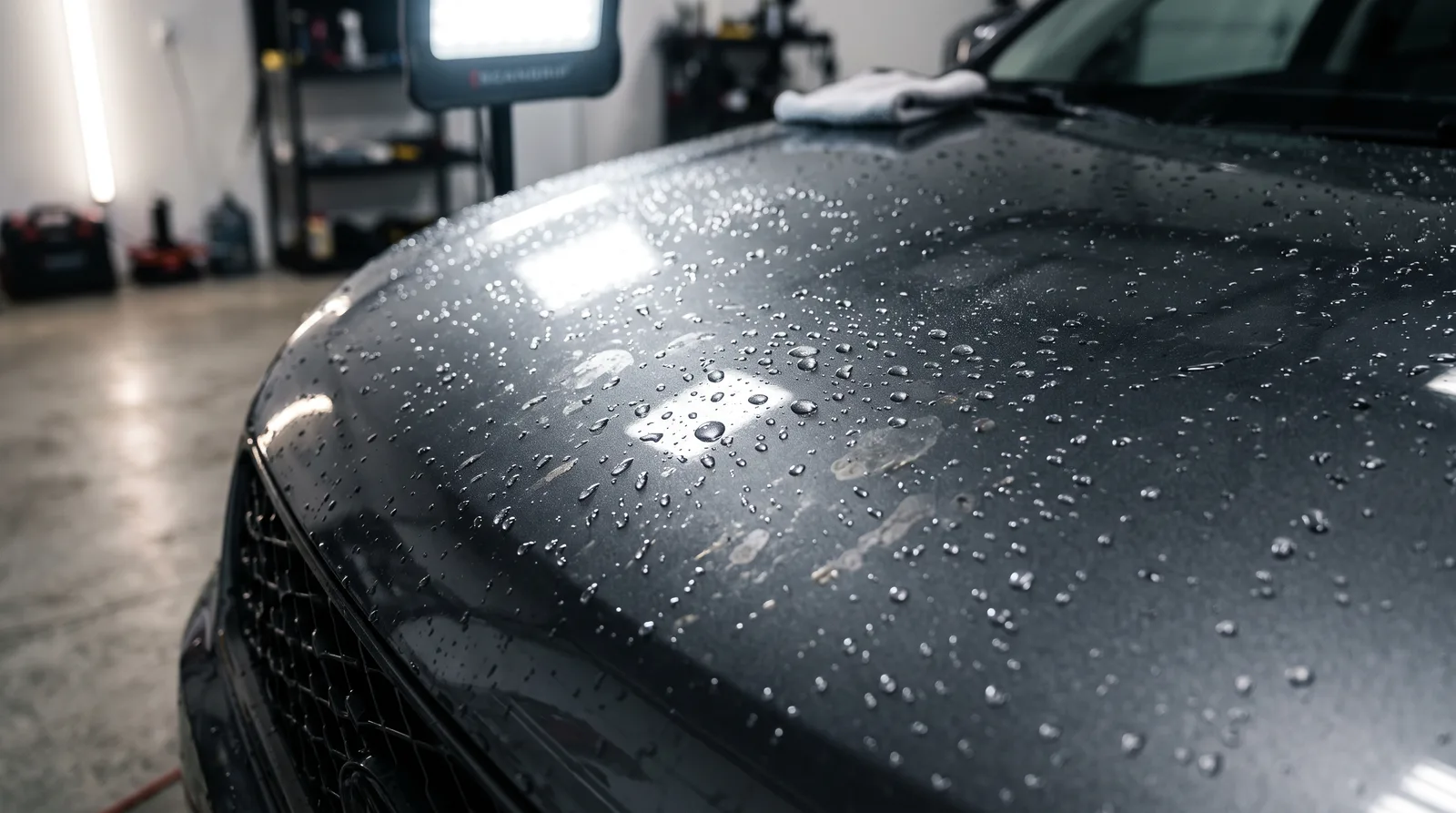
None of these is a disaster alone. The trouble is the combination: sticky residue plus grit plus sun plus a quick wipe-down. That is the formula for swirl marks and dull spots, and it is the reason a car can look great before kickoff and noticeably worse by Sunday.
Before you leave: a ten-minute pregame prep
The easiest damage to prevent is the damage you plan for. A few minutes at home saves a lot of cleanup later.
Start with a clean car
Dirt that is already on the paint is the raw material for scratches. A car that starts the day clean is easier to protect and far easier to rinse afterward. If the car is overdue for a wash, do it properly in shade, with a pH-balanced car shampoo and clean microfiber, rather than a quick dry wipe. Our breakdown of car wash versus detailing explains what a basic wash does and does not do.
Check whether your paint has any protection left
Protected paint releases spills and grease far more easily than bare clear coat. Wax adds short-term gloss, but it wears quickly in Alabama heat. A professionally applied ceramic coating creates a harder, slicker surface that makes sticky messes easier to rinse away and gives the clear coat a layer between it and the day. It does not make a car scratch-proof, and it does not mean you can skip washing, but it makes the cleanup after a tailgate noticeably less stressful.
Pack a small gameday car kit
Keep this in the trunk and replace it each season. None of it is expensive, and each item prevents a specific problem.
| Item | What it is for | Why it matters |
|---|---|---|
| Clean microfiber towels (several) | Blotting spills and wiping dust | One towel per job; a towel that touched grease should never touch paint again that day |
| Spray bottle of water or a waterless wash | Lubricating before you wipe | Wiping dry dust drags grit across the clear coat |
| Trash bags and a small bin | Containing food waste | Keeps wrappers, cups and food out of the cabin |
| Floor mats or an old towel | Protecting carpet | Muddy boots and spilled drinks hit the mat, not the carpet |
| Cooler with a drip tray or a plastic tub | Containing meltwater | Melted ice and condensation soak into cargo-area carpet and cause odors |
| Folding table or tailgate pad | A place for food and drinks | Keeps sauces, drinks and coolers off your hood and trunk lid |
| Window cleaner and a glass towel | Final touch on glass | Smoke film on the inside of the windshield is a glare problem at dusk |
One small rule applies to the whole kit: spray first, then wipe. If there is any visible dust or grit on a panel, lightly mist the surface and the towel before you touch the paint so the particles have something to slide on.
Parking and setup: where you put the car matters
You do not always get to choose your spot on a gameday, but you often get some say in how you set up around it.
- Keep the cooking upwind and away from your paint. Grill smoke and grease mist travel. If you can, set the grill, fryer or smoker well clear of the car and on the downwind side, so the haze does not settle on your hood and windshield.
- Use tables, not panels. A hood is not a buffet table. Plates, drinks, cooler lids, and sauces left on a hot hood are the single most common source of tailgate stains we see in cars brought in after a season.
- Be thoughtful about shade. Shade keeps panel temperatures down, which helps spills stay wet and easy to wipe instead of baking on. But parking under trees brings sap, bird droppings and leaves. If you cannot avoid trees, plan to check the car afterward. See our guide to bird droppings, tree sap and love bugs for how fast those can damage paint.
- Mind your neighbors. Cars parked bumper to bumper and tents set close together mean doors get opened into other doors. A small door-edge protector or simply a few inches of care when opening doors goes a long way.
- Cover or close up the cabin. Keep windows up and sunroof closed during cooking and when the crowd is heavy. Smoke and grease get into the cabin and soak into headliners and fabric surprisingly well.
- Do not sit on the car. It sounds obvious, but a tailgate that doubles as a bench is a contact point for belts, rivets and zippers. If you do use the tailgate, a clean pad or blanket helps.
How to handle spills and messes during the tailgate
Speed matters, but so does method. The goal is to remove the mess without grinding anything into the paint.
Wet spills: soda, tea, beer, sauces
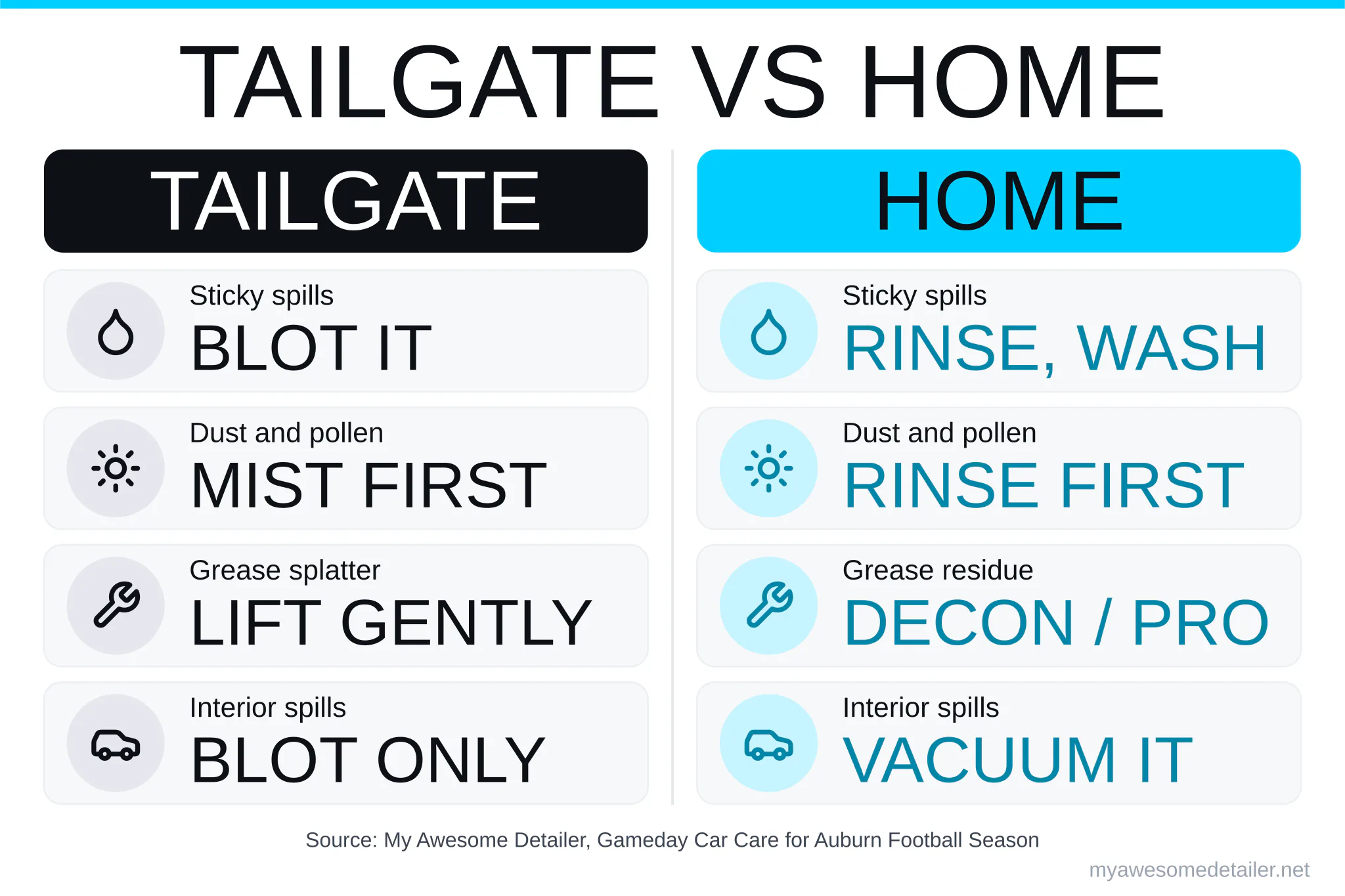
Blot, do not wipe. Use a clean microfiber towel to lift the liquid straight off, then lightly mist the area with water and blot again. Sugary spills are the priority because they stay tacky and collect grit. If a spill reaches a seam, door jamb or fuel door, check it again later; liquids tuck into those spots and turn sticky.
Grease and sauce splatter
Grease needs lubrication and a gentle touch. Mist the spot, let it soften for a few seconds, and lift it with a clean, folded microfiber towel, using a fresh face of the towel for each pass. Do not scrub. If a mark does not release easily, leave it and have it dealt with at home with the right products; a hard rub in a gravel lot is how a stain becomes a scratch.
Dust and pollen
Do not dry-wipe a dusty car. Even light pollen contains tiny hard particles. Mist, then use light pressure and a clean towel, or leave it until you can rinse the car properly.
Interior spills
Blot, do not rub, and do not soak fabric with water, which can push a liquid deeper into seat foam and carpet padding. Pick up as much as you can with a dry towel, then dab with a damp one. Take note of where it happened so it can be properly treated later. Sugary drinks left in carpet are a common cause of the sour smell that appears a few days after a game.
Skip these common mistakes: kitchen paper towels and shop rags (they can scratch), household cleaners and dish soap on paint (they can strip protection and dry out trim), wiping a dusty car with your shirt, and scraping dried food with a fingernail or a card.
The post-game reset: what to do when you get home
The hours right after a tailgate are when you can prevent most of the lasting damage. Whether you do it yourself or schedule a professional, the sequence matters.
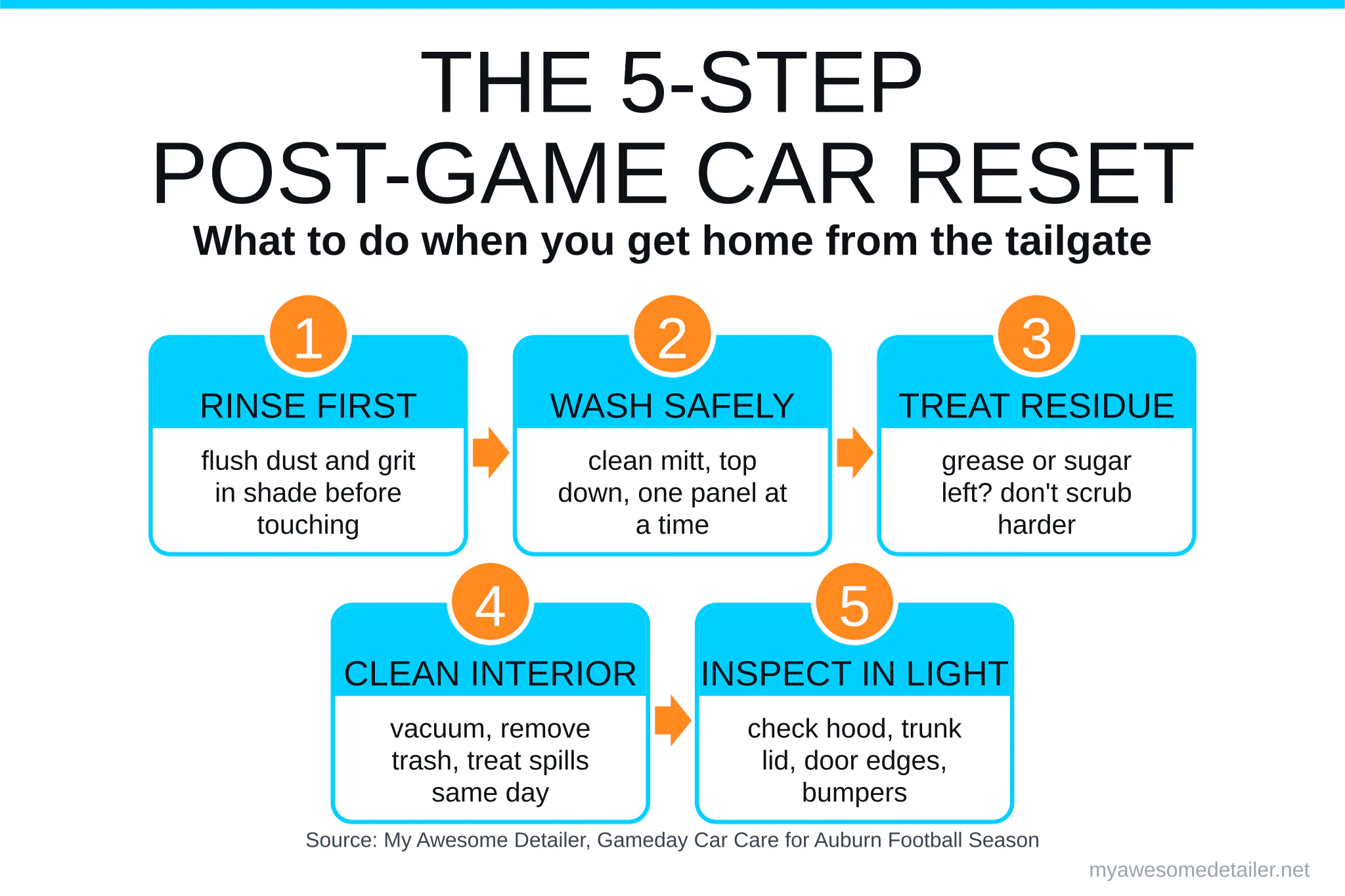
Step 1: Rinse before you touch
Start with a thorough, gentle rinse in shade to flush dust, pollen, soot and loose grit off the surface. Work from the top down and pay attention to the lower panels, wheel wells, and any area where food or drinks landed. The idea is to remove as much abrasive material as possible before a wash mitt ever touches the paint. Avoid washing in direct sun, because the water dries too fast and leaves mineral spots; we cover that in our guide to water spot removal.
Step 2: Wash with a safe method
Use a quality car shampoo and a clean wash mitt, working in straight lines, one panel at a time, and rinsing the mitt often. Do the cleanest areas first (roof, hood, glass) and the dirtiest last (lower doors, bumpers, wheels). Dry with a clean microfiber drying towel rather than letting the car air dry, which leaves spots.
Step 3: Deal with stuck-on residue
If grease film, tar-like smoke residue or sugary spots remain after a normal wash, do not scrub harder. This is where a dedicated cleaner or a decontamination step is appropriate, and where it is easy to cause damage at home. If you are not sure, leave it for a professional.
Step 4: Clean the interior while it is still fresh
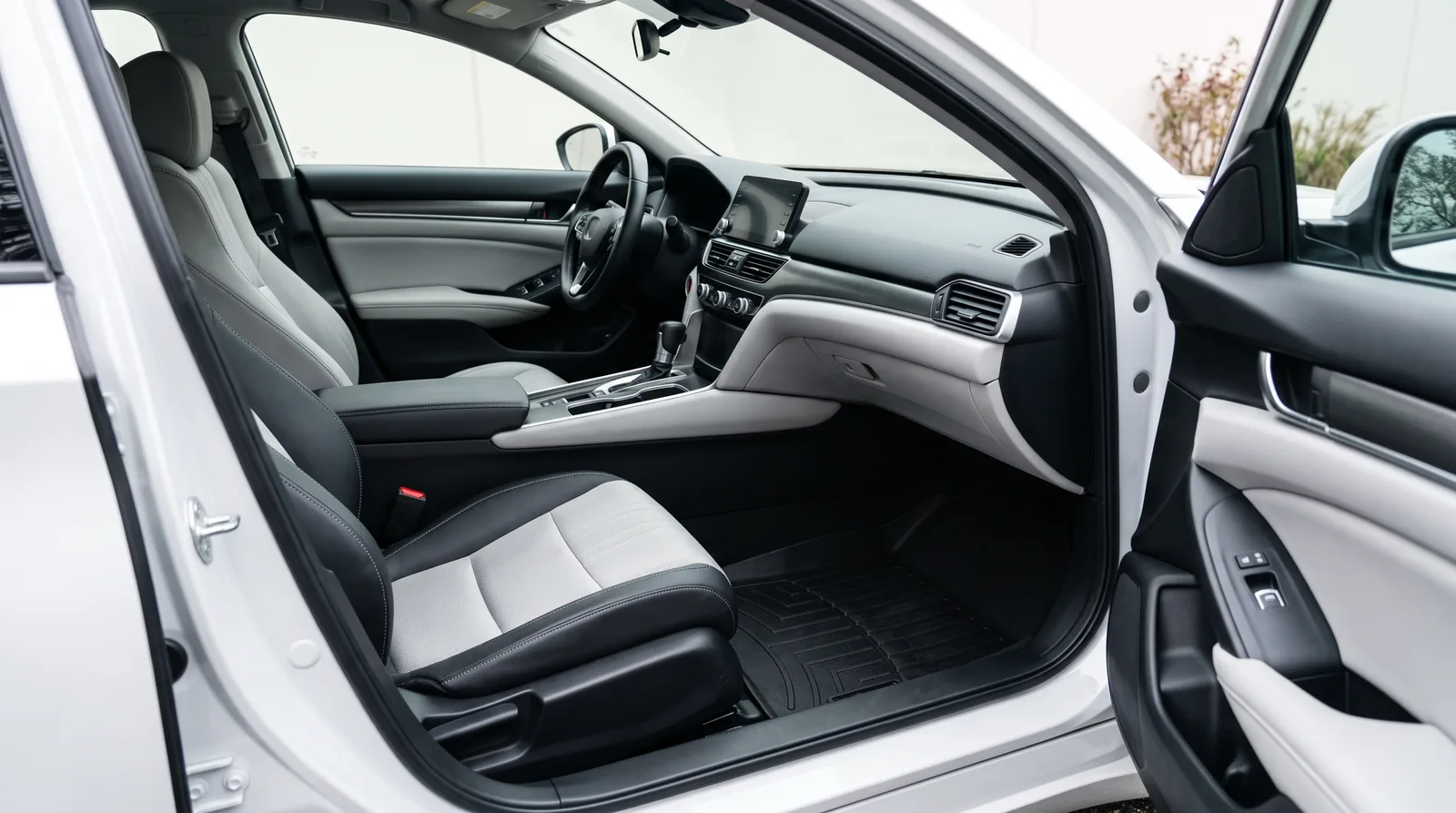
Vacuum the carpets and mats, remove trash, and treat any spill promptly. Open the doors and let the cabin air out. A spill treated the same day is usually a minor job; a spill left for a week in Alabama humidity is usually a deep-cleaning job. Our interior detailing guide explains what a professional interior detail covers.
Step 5: Inspect in good light
Walk around the car in daylight or under a bright light. Look at the hood, the tailgate or trunk lid, door edges, and the bumper corners. Check for scratches, sticky patches, dull spots and stains. If you see anything, photograph it. It helps you decide whether it is a cleaning job or a correction job.
Quick reference: gameday car care at a glance
| Problem | What causes it | What to do right away | When to call a pro |
|---|---|---|---|
| Sticky spots on paint | Soda, tea, sauce, beer | Blot, mist, blot again; rinse at home | If a mark remains after washing |
| Greasy haze on glass and paint | Grill and fryer mist | Rinse first, then wash in shade | If film returns or glass smears |
| Fine scratches and swirls | Dry wiping, rivets, belt buckles | Stop wiping; photograph it | For paint that looks hazy in the sun |
| Water spots | Washing or rinsing in direct sun | Move to shade; re-rinse | If spots feel etched into the clear coat |
| Sour or musty cabin smell | Spilled drinks, food, damp carpet | Blot, ventilate, vacuum | If the smell lasts more than a few days |
| Dull, chalky look | Sun, heat, no protection | Wash and shade-park when possible | For protection and polishing |
Why paint scratches more on gameday than you expect
Most paint damage on a tailgate day does not come from one big event. It comes from tiny, repeated contact with hard particles. A gravel lot throws fine grit onto the paint. Someone wipes a drink spill off the hood with a napkin. A jacket brushes the fender. Each one leaves a hairline scratch that is invisible indoors. In direct sun the cluster of scratches shows up as a swirled, hazy look, especially on dark paint. That is why dark colors tend to show the effect first, though every color is affected. If your car already has swirls, it is worth understanding how paint correction works, because polishing removes that fine scratching by leveling the clear coat rather than hiding it.
Protection helps in a different way. A coating or film does not stop scratches from being possible, but it adds a harder, more slippery surface that dirt slides across rather than sticks to. Cars with protection are generally easier to rinse clean, which means less touching and less chance of grinding grit into the paint. If you have been considering protection and want to understand the difference between a coating and wax, our ceramic coating vs PPF vs wax comparison lays out the tradeoffs.
Red clay, leaves and the fall factor
Football season in east Alabama lines up with the time of year when leaves drop, pollen lingers and dry fields kick up fine dust. Red clay is its own problem: it is fine, abrasive and stains light-colored carpet and mats. A rainy week before a game turns a grass lot into mud, and that mud ends up in your wheel wells, door sills and cabin floor. If you tailgate regularly, rubber floor liners in the footwells and a quick rinse of the lower panels after each game make a visible difference. For a closer look at what clay does to paint and carpet, read our guide to red clay and your car.
Is a pre-game or post-game detail worth it?
It depends on how you use the car and how much you care about its finish. Here is how we usually think about it with customers.
- Before the season: A clean, corrected and protected car is the best starting point. Protected paint releases mess more easily all fall, and any existing swirls get dealt with before a season of foot traffic adds more.
- After a heavy tailgate day or a stretch of games: A professional detail resets the car. That means a proper decontamination wash, interior deep clean, spill and stain treatment, and glass cleaning, all done indoors out of the sun.
- End of season: Before winter, it is a good time to deal with accumulated grime, check the paint for scratches and set the car up for the cold months with some form of protection.
A detail is not a substitute for careful tailgating, and careful tailgating does not replace a detail now and then. They work together. If you are curious what a professional visit looks like from start to finish, see what to expect when you drop off your car for detailing.
Ready to get your car gameday-ready (or reset after it)?
Tell us about your vehicle in a short interview, typically 3-5 minutes, and we text you a code. The exact price for your car is on the screen. No guessing, no surprise.
What a professional detail covers (and what to ask for)
"Detail" can mean a lot of things, and it is fair to ask exactly what is included before you book anywhere. In general, a thorough exterior detail will include a careful wash, chemical and physical decontamination to remove bonded grime that a normal wash leaves behind, and drying and finishing. An interior detail typically includes thorough vacuuming, cleaning of hard surfaces, treatment of seats and carpets, and glass. Anything involving polishing, paint correction or protection is a separate step with its own time and cost. Our auto detailing page lists the services, and you can see the process explained in more detail in our guide to auto detailing packages.
When you talk to any detailer, these questions help:
- Is the work done indoors, in a controlled space, and not in a driveway or parking lot?
- What exactly is included in the service, and what is extra?
- How do you handle stains, odors and sticky residue?
- Will the paint be inspected under proper lighting before and after?
- What protection options do you offer, and how do I maintain them?
Because My Awesome Detailer is a shop-based studio, your vehicle is inspected and worked on indoors under controlled lighting. That matters on a car that has just come off a tailgate, because stuck-on grease and sugary residue are easier to see and to remove properly in good light than they are outside.
Gameday car care for different vehicles
Trucks and SUVs
Truck beds and cargo areas take the worst of the cooler meltwater, spilled food and dirt. A bed liner or a simple mat, a cooler with a drip tray, and a quick rinse after the game save a lot of trouble. If you use your truck for work as well, our guide to truck detailing in Auburn covers the extra considerations.
Dark-colored cars
Black, dark blue and dark gray show every swirl, water spot and fingerprint, and they run hotter in the sun. If you drive a dark car to a tailgate, shade, soft towels, and careful rinsing matter even more.
Light-colored cars
White and silver hide scratches better but show red clay, grease and smoke film clearly. Pay attention to lower panels and wheel wells after each game.
Leather and light interiors
Light seats and carpets stain easily from dye transfer (jeans), sauce and drinks. Wipe spills promptly, and consider a professional interior treatment before the season if the car has light upholstery.
Common gameday car care mistakes
- Dry-wiping a dusty car. It is the fastest way to add swirl marks.
- Using household products. Dish soap, glass cleaner on paint and multi-surface sprays can strip protection and damage trim.
- Washing in direct sun. Water dries too fast and leaves spots that can etch.
- Letting spills sit. A spill that is easy to blot at 1 p.m. can be stuck by Sunday.
- Ignoring the cabin. People focus on the paint and forget the carpet, then wonder where the smell is coming from.
- Using a pressure washer too close. High pressure up close can lift edges of paint, trim and film. Keep a safe distance.
- Waiting until the end of the season. Small problems are cheaper and easier to fix early than after months of buildup.
Your gameday car care checklist
- Before: wash the car, pack your microfiber kit, put down floor mats or liners.
- During: keep food and drinks off the panels, blot spills, keep the grill away from the car, and keep the windows up.
- After: rinse first, wash in shade, vacuum the cabin, and inspect the paint in good light.
- Seasonally: schedule a professional detail and consider paint protection so each game is easier on the finish.
Want a clean, protected car for the rest of the season?
Start the short interview about your vehicle and see your exact price. Prefer to talk it through? Call the shop.
Questions about your own car? Call (334) 650-6499, visit us at 2709 Frederick Road in Opelika, or see the full list of services. We serve Auburn, Opelika and the Lee County area, including drivers from Phenix City and Columbus, GA.
Frequently asked questions
These are the questions we hear most from Auburn and Opelika drivers around football season. You will also find them marked up as FAQs at the bottom of the page.
How do I protect my car at a tailgate?
Start with a clean car, keep food, drinks and coolers off the hood and trunk, keep grills and fryers away from the paint, and blot spills instead of wiping. Bring clean microfiber towels and a spray bottle of water so you can lubricate before you wipe anything. Afterward, rinse the car in shade before you wash it.
Can grill smoke and grease damage car paint?
Smoke and grease mist leave a film that holds dust, and on a hot panel that film can bake on. A normal wash usually removes it if you rinse first and use a safe method. Heavy or repeated buildup may need a decontamination step that is best handled by a professional.
How do I get sticky soda or sauce off my car?
Blot the spill with a clean microfiber towel, mist the area with water to soften the residue, and blot again. Rinse the area thoroughly at home. Do not scrub or use household cleaners. If a mark remains after washing, have it checked rather than rubbing harder.
How often should I detail my car during football season?
There is no single rule, because it depends on how often you tailgate and where you park. A good approach is to start the season with a clean, protected car, wash it after each game, and book a professional detail after a heavy tailgate or when the interior needs a reset.
Does ceramic coating help with tailgate messes?
A ceramic coating makes the surface slicker and more resistant to staining, so sticky spills, grease and dust are easier to rinse away. It does not make the paint scratch-proof and it does not replace washing. It makes cleanup easier and safer.
Is it okay to wash my car in a parking lot or at a gameday site?
It is better to wait until you are home and can rinse in shade with clean water and clean tools. Washing in a hot, dusty lot invites water spots and scratches. If you must act at the tailgate, blot and spot-clean only.
Do you come to my home or tailgate to detail my car?
No. My Awesome Detailer is a shop-based studio at 2709 Frederick Road in Opelika. Customers bring their vehicles to us, and all the work is done indoors.
How do I get a price for a detail?
Start the short vehicle interview at our service builder. It typically takes 3-5 minutes, then we text you a code and the exact price for your vehicle appears on the screen. You can also call (334) 650-6499.