Quick answer: If you just moved to Auburn or Opelika, your car now lives in a climate that is harder on paint, glass and interiors than most of the country: long, hot, humid summers with strong UV, a heavy spring pollen season, red clay that gets everywhere, and love bug swarms in May and September. A simple first-90-days plan handles nearly all of it: get a thorough decontamination wash and paint inspection in the first couple of weeks, protect the paint with a coating or film before the first full summer, add quality window tint for heat and UV, and then keep up a light maintenance routine. You don't need to do everything at once, but the order matters, and starting early costs far less than repairing sun-damaged paint later.
Auburn University brings thousands of new faces to Lee County every year, and Fort Moore, the Columbus area and the growing job base across Opelika bring plenty more. If you moved from the Midwest, the Northeast, the West Coast or even another part of the South, your old car-care habits may not fit here. This guide from My Awesome Detailer LLC in Opelika explains what is actually different about East Alabama, what each hazard does to a vehicle, and how to build a protection plan in the first 90 days that fits your car and your budget.
What is different about caring for a car in East Alabama
The short version: more sun, more heat, more moisture and more organic fallout than most newcomers are used to, and almost all of it is hardest on cars that live outside. A car that spent its life in a dry climate faces humidity, and a car from a snowy climate faces strong sun it never saw in winter. Each place has its own hazards, and Alabama's are mostly about the sky and the trees rather than road salt.
- Heat and UV. Summer sun beats on hoods, roofs and trunk lids for hours, and the clear coat slowly oxidizes and dulls. Dashboards, leather and plastics fade and crack too. See our deeper look at how Alabama heat damages car paint.
- Humidity. Moisture lingers on a car, helps water spots form and makes interiors prone to musty smells if wet items get left inside.
- Pollen. A yellow-green film covers everything in spring, and it is acidic enough that leaving it to bake on paint is a bad idea.
- Red clay. Fine clay dust sticks to lower panels and wheel wells and can stain and abrade if it is wiped dry. We cover it in red clay and your car.
- Bugs and sap. Love bugs, other insects, bird droppings and tree sap all leave acidic residue that etches clear coat if it sits.
- Sudden storms. Heavy rain, hail risk and falling debris are part of life here, which is one reason film and quality glass tint are popular.
What you won't need to worry about as much is winter road salt, which was likely the biggest threat in your old home if you came from the north. That changes your priorities: out here it is less about undercoating and more about protecting the surfaces you can see from the sun.
The Alabama hazards, one at a time
Summer heat and UV
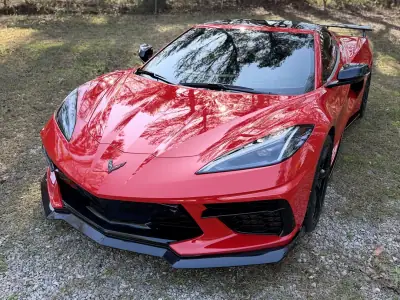
Ultraviolet light is the slow killer of automotive paint. The clear coat is the protective layer over the color, and sustained UV breaks it down over years, which shows up as dull, hazy, chalky patches, usually first on horizontal panels like the roof and hood. Reds, blacks and other dark colors show the damage earliest. Heat also bakes contamination into the finish and softens or ages rubber and plastic trim. In an East Alabama summer, a parked car's interior can get very hot, which stresses the dashboard, steering wheel and leather.
Spring pollen
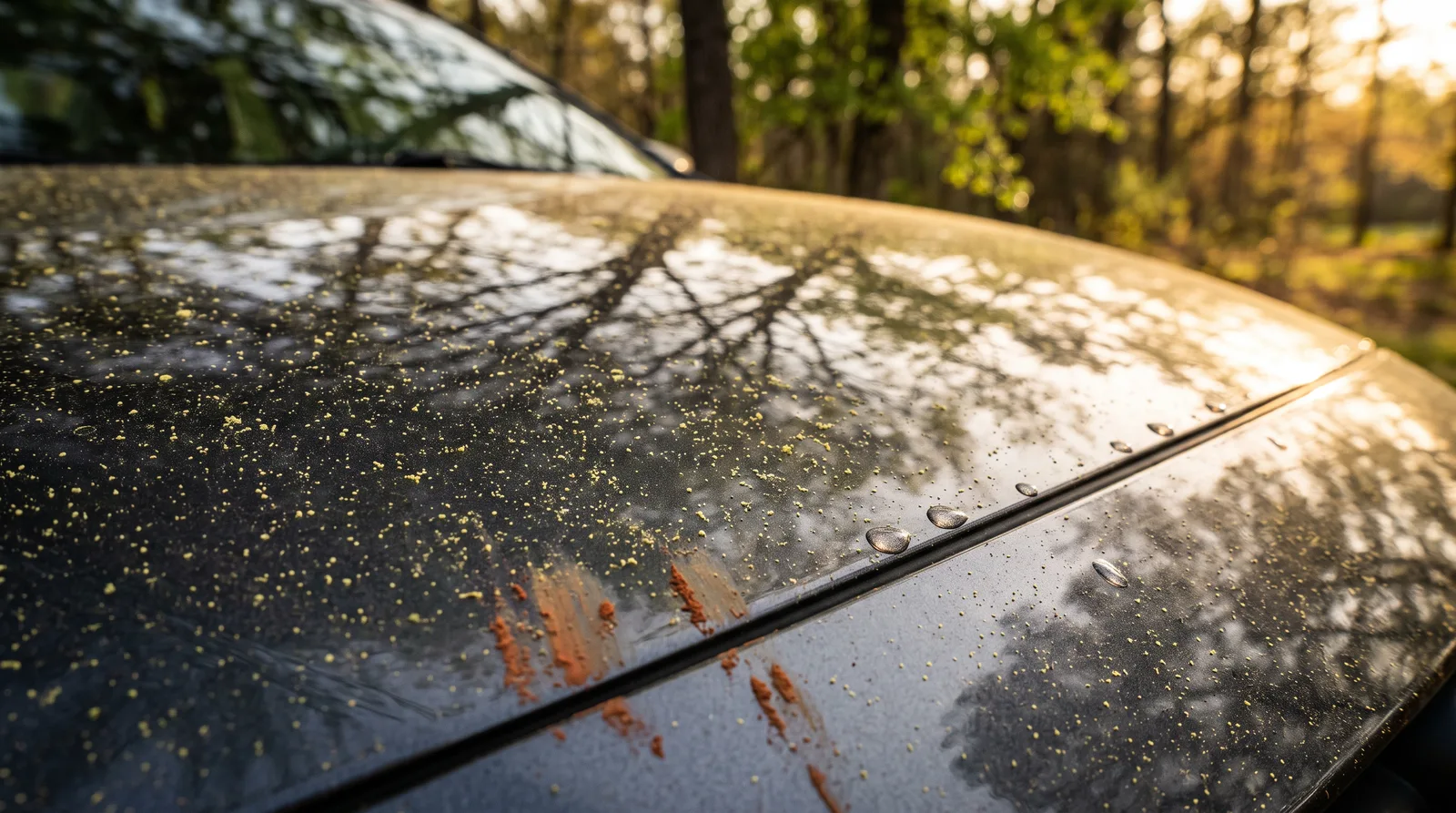
Pine and oak pollen arrives in a thick layer each spring. Pollen alone is mostly a nuisance, but pollen plus morning dew or rain becomes a damp, slightly acidic film that can etch if it dries on hot paint. The right move is regular rinsing and a proper wash, never a dry wipe, which drags grit across the clear coat. Our spring protection guide covers the seasonal timing.
Red clay
Alabama's red clay is fine, iron-rich and stubborn. It gets on the car from unpaved lots, construction sites, tailgate fields and rain-splashed roadsides. It collects in door jambs, behind wheels and along lower panels, and it can leave orange staining on light-colored paint and carpet. Rinse thoroughly before touching the paint with a mitt.
Love bugs, bird droppings and tree sap
Love bugs fly in two big seasons, roughly May and September, and the front bumper, hood and mirrors take the brunt. Their remains are acidic, and sitting in the sun they can start to etch paint within days. Bird droppings and sap do the same. If this is a new problem for you, our guide to bird droppings, sap and love bugs explains what to do and how a protective layer helps.
Humidity and interior odors
Humid air, wet gym bags, spilled drinks and food left in a hot car are a recipe for stubborn smells. If you already notice a musty or sour odor, read why a car interior smells bad before it sets in.
Not sure where your car stands right now?
The Service Builder is a short interview about your vehicle, typically 3-5 minutes. Then we text you a code, and the exact price for your car is on the screen.
Your first-90-days car protection plan
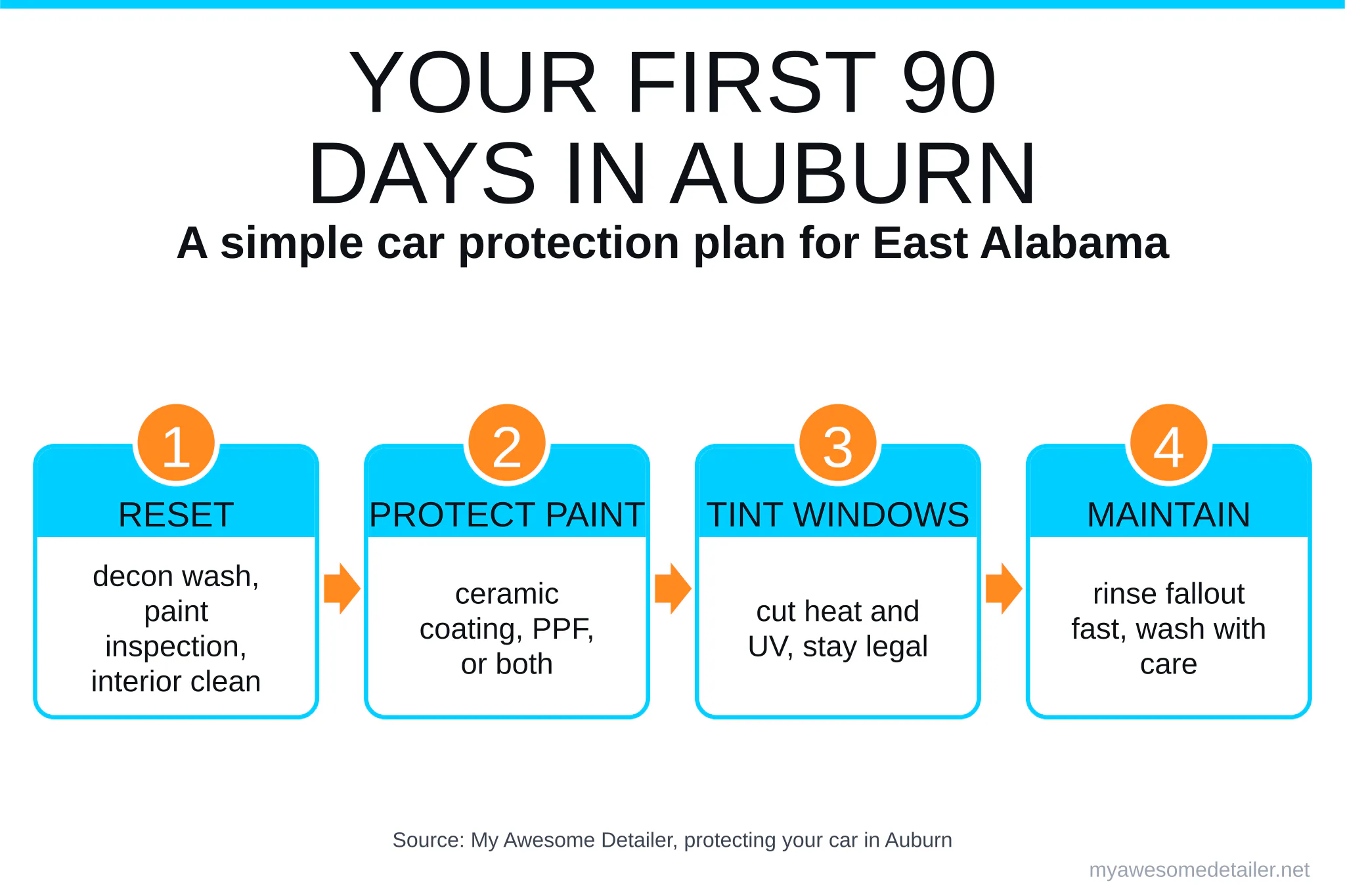
Think of the first three months as three phases: reset, protect and maintain. You don't have to finish them in order of cost, but doing the reset first makes everything after it work better, because coatings, film and tint all bond better to clean, inspected surfaces.
| When | What to do | Why it matters here |
|---|---|---|
| Weeks 1–2 | Full decontamination wash, paint inspection, interior deep clean | Removes whatever the car picked up on the move and shows you what needs attention |
| Weeks 2–4 | Decide on paint protection: ceramic coating, paint protection film, or both | Gets a protective layer on before peak summer sun, or before the next pollen and love bug season |
| Month 2 | Window tint, if the car has none or has old film | Cuts heat and UV inside the car and protects the interior |
| Month 2–3 | Set a wash routine and a check-in schedule | Protection lasts longer with correct upkeep |
| Ongoing | Quick rinse after pollen, bugs and storms; periodic professional detail | Small habits prevent the damage that is expensive to fix |
Phase 1: Reset (weeks 1–2)
If you drove across the country, the car has seen road tar, bugs, brake dust and possibly salt. If you bought a used car here, it carries its previous owner's habits. Either way, a professional wash and decontamination (clay bar or equivalent) removes bonded contamination that a normal wash can't. This is also when a proper paint inspection under good light is worth the time: swirl marks, fading, chips and rock damage are easier to deal with early. If paint shows swirls or haze, paint correction restores the finish before anything gets sealed over it. Our auto detailing services cover the wash, decon and interior side of this reset.
Phase 2: Protect the paint (weeks 2–4)
This is the biggest decision. You have three real options, and you can combine them:
- Ceramic coating forms a hard, slick, hydrophobic layer on top of the clear coat. It resists UV, makes pollen, bugs and clay release much more easily and turns washing from a chore into a rinse. See ceramic coating for how we do it.
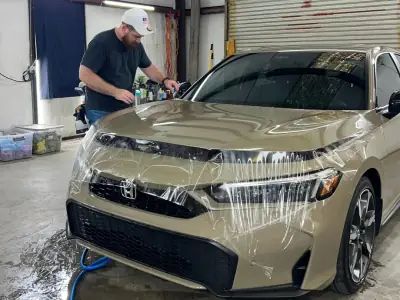
- Paint protection film (PPF) is a clear urethane film that physically absorbs rock chips, scratches and road debris. It is the choice for high-impact areas like the front bumper, hood and mirrors. See paint protection film.
- Both together. Film on the impact zones with ceramic over the whole car is the most complete setup. Read ceramic coating over PPF for how they work as a team.
Wax and spray sealants are a lower-effort option, but in this climate they wear off quickly, which makes them a maintenance task rather than a long-term solution. If you bought a brand-new vehicle, our new car protection guide explains why doing this before the first summer is ideal. Final pricing depends on the vehicle, and we give you an exact figure through the Service Builder rather than a ballpark.
Phase 3: Window tint (month 2)
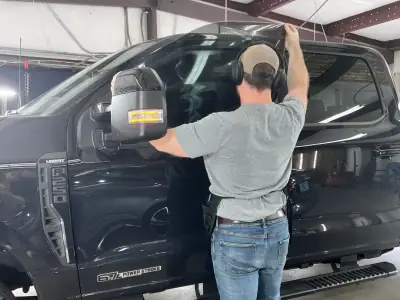
Quality window tint is one of the most noticeable comfort upgrades in a Southern climate, and it protects the interior at the same time. Ceramic window film blocks a large share of infrared heat and UV, which keeps the cabin cooler, protects the dash and seats from fading and makes the sun easier on your eyes. Our post on heat rejection and IR explains how the film works, and the page on window tint covers the options. Because Alabama has legal limits on how dark the windows may be, check Alabama window tint laws before choosing a shade. If you moved from another state, the rules you remember may not apply here.
Phase 4: Maintain (month 3 and beyond)
Protection only works if you keep it clean. The basics are simple: rinse pollen and bugs off promptly, wash with a clean mitt and proper soap instead of automatic brush washes, dry with a clean microfiber towel, and have the car looked over by a professional on a schedule. Our guide to how often to detail your car helps you pick a rhythm.
Match the plan to your situation
Not every newcomer needs the same plan. The right mix depends on the car, how long you'll keep it and where it parks.
| Your situation | Smart priorities |
|---|---|
| Brand-new car, long-term owner | Paint protection film on high-impact areas, ceramic coating over the whole car, quality tint |
| Used car, unknown history | Full reset and inspection first, correction if needed, then ceramic coating and tint |
| Student or short-term resident | Reset, a durable but simple protection layer, tint for heat; skip anything beyond your ownership horizon |
| Parks outside, no garage | Prioritize paint protection and tint, since the car takes full sun and fallout every day |
| Garage or covered parking | Lighter plan, with emphasis on pollen and bug cleanup and interior care |
| Truck or SUV that sees dirt roads and job sites | PPF on the front end and lower panels, coating for easy cleanup |
If you drive a truck, our posts on PPF for trucks and truck detailing go deeper. If you aren't sure how long you'll stay, ask yourself how many years you'll realistically keep the car. A protective layer is most worthwhile on a vehicle you'll keep a few years or sell where appearance affects the price.
Protecting the inside of your car in a hot, humid climate
Most newcomers think about paint first, but in East Alabama the interior takes just as much punishment. Sunlight through the glass heats the dashboard, door panels and seats for hours each day. Over time that fades plastics, dries and cracks leather, and warps or discolors trim. Humidity adds a second problem: moisture trapped in carpet and fabric can leave a musty smell that is hard to remove once it settles in.
Seats and leather
Leather needs to be cleaned gently and conditioned so it stays supple. Dark leather can get extremely hot in summer, so a sunshade and window tint make a real difference to how long it looks good. Fabric seats hold spills, sweat and humidity, so periodic deep cleaning keeps odors from building up.
Dashboard and plastics
The dash is the most sun-exposed surface in the cabin. Use a gentle interior cleaner, avoid greasy shine products that attract dust and glare, and keep a reflective windshield shade in the car on hot days. Window tint also reduces how much UV reaches these surfaces.
Carpets and floor mats
Red clay, mud and moisture come in on shoes. Quality rubber mats catch most of it and are easy to rinse. Underneath, carpet should be vacuumed regularly and allowed to dry fully after any spill. If you have kids, pets or a long commute with takeout in the cart, an interior detail each season is a good habit. Our interior car detailing guide explains what a thorough interior service actually covers.
Glass, wheels and trim: the details people overlook
Paint gets the attention, but glass, wheels and exterior trim age in the same sun and weather, and each has its own simple fix.
- Glass. Pollen, love bug residue and hard-water spots collect on the windshield and make nighttime and low-sun driving harder. Clean glass regularly and replace worn wipers before they scratch it.
- Wheels. Brake dust and road grime bake onto wheels in summer heat. A dedicated wheel cleaner and soft brush keep them clear, and a protective layer makes cleanup easier. See ceramic coating for wheels, glass, trim and interior.
- Plastic trim. Black trim fades to gray under strong UV. Protecting it early is easier than trying to bring it back.
- Headlights. Sun clouds and yellows plastic headlight lenses over time, which reduces night visibility. If yours have started to haze, read about headlight restoration.
Does paint color change the plan?
Yes, color changes what you notice, though not what the sun does to the paint. Dark colors show swirl marks, dust and water spots more easily and run hotter in the sun. White cars hide dust but can show yellowing, rust-colored clay stains and bug marks. Silver and gray hide a lot but can look dull when the finish is oxidized. None of them are immune to UV, so every color benefits from protection, and the right care routine simply emphasizes different things. If you own a specific color, these posts may help: white cars and silver and gray cars.
A rough calendar for your first year in Lee County
Knowing the seasons helps you time protection so it's working before the worst of each one. This is a general guide, since weather varies from year to year.
| Season | What the car faces | What to do |
|---|---|---|
| Late winter to spring | Heavy pollen, spring storms, first love bug flights | Rinse often, decontaminate after pollen, check coating or film |
| Early summer | Intense sun, heat, humidity | Have paint protection and window tint in place; use a sunshade |
| Late summer | Second love bug season, afternoon storms, water spots | Rinse bugs promptly, dry the car after rain, protect glass |
| Fall | Football gamedays, leaf and sap fall, red clay on wet days | Clean tailgate mess quickly, wash lower panels, interior reset |
| Winter | Milder weather, occasional cold snaps, less sun | Good time for correction, coating or film installs and interior deep clean |
Because winter is typically milder, it is a very practical time to schedule bigger protection jobs so the car is ready before the next pollen and heat cycle begins. Our gameday car care and spring protection posts line up with the busy parts of the local calendar.
Questions newcomers ask us most
Do I really need protection if my car is brand new?
A new car has fresh, healthy paint, which is exactly when protection works best. It prevents the damage rather than hiding it afterward. Many of our customers protect a new car within the first weeks of owning it.
Is a garage enough?
A garage is a big help against sun, pollen, sap and bird droppings, but you still drive the car. Highway debris, bugs, rain and red clay reach it anyway, so protection still pays off, just with less urgency.
How soon should I tint?
As soon as the car's paint and interior are in good shape and you've picked a legal shade. Earlier tint means less cumulative sun exposure on the interior.
Can I do all of this myself?
Washing and routine upkeep, absolutely. Paint correction, coatings, film and tint need a controlled space, specialized tools and experience. Mistakes can be costly. Our post on DIY vs. professional window tint shows how that plays out.
What if I only live here a year or two?
Focus on a good reset, regular washing, window tint for comfort and a protection level that matches how long you will keep the car. You can always scale up if your plans change.
Common mistakes newcomers make
Waiting until the paint looks bad
Sun damage is gradual and mostly invisible until it isn't. By the time paint looks chalky, the fix is correction, and in the worst cases a repaint. Protecting good paint is much cheaper than repairing damaged paint.
Wiping dry dust and pollen
Dry wiping drags grit across the finish and creates fine scratches, called swirl marks. Always rinse first.
Using automatic brush washes as the main routine
Spinning brushes hold dirt from hundreds of earlier cars. A touchless rinse in a pinch is fine, but a careful hand wash is far kinder to paint, and coated paint is easy to hand wash.
Ignoring love bugs and bird droppings
Leaving them for a week in the sun is how etching starts. Rinse them off soon and soak stubborn residue with water or a proper bug remover rather than scrubbing.
Choosing tint by the darkest look instead of the law and the heat performance
Darkness and heat rejection are not the same thing. A lighter, high-quality ceramic film can reject more heat than a cheap dark one, and the legal limits apply regardless.
Leaving things in a hot, humid car
Food, wet items and drinks in a closed car cause odors fast. Clear the cabin regularly and consider an interior clean every season.
Relying on DIY products meant for another climate
Many products and routines were designed for places with milder sun. Professional-grade products tuned for strong UV hold up better here. If you are weighing it, read professional vs. DIY ceramic coating.
A simple monthly and seasonal routine
Good upkeep is a few small habits, not a big weekend project.
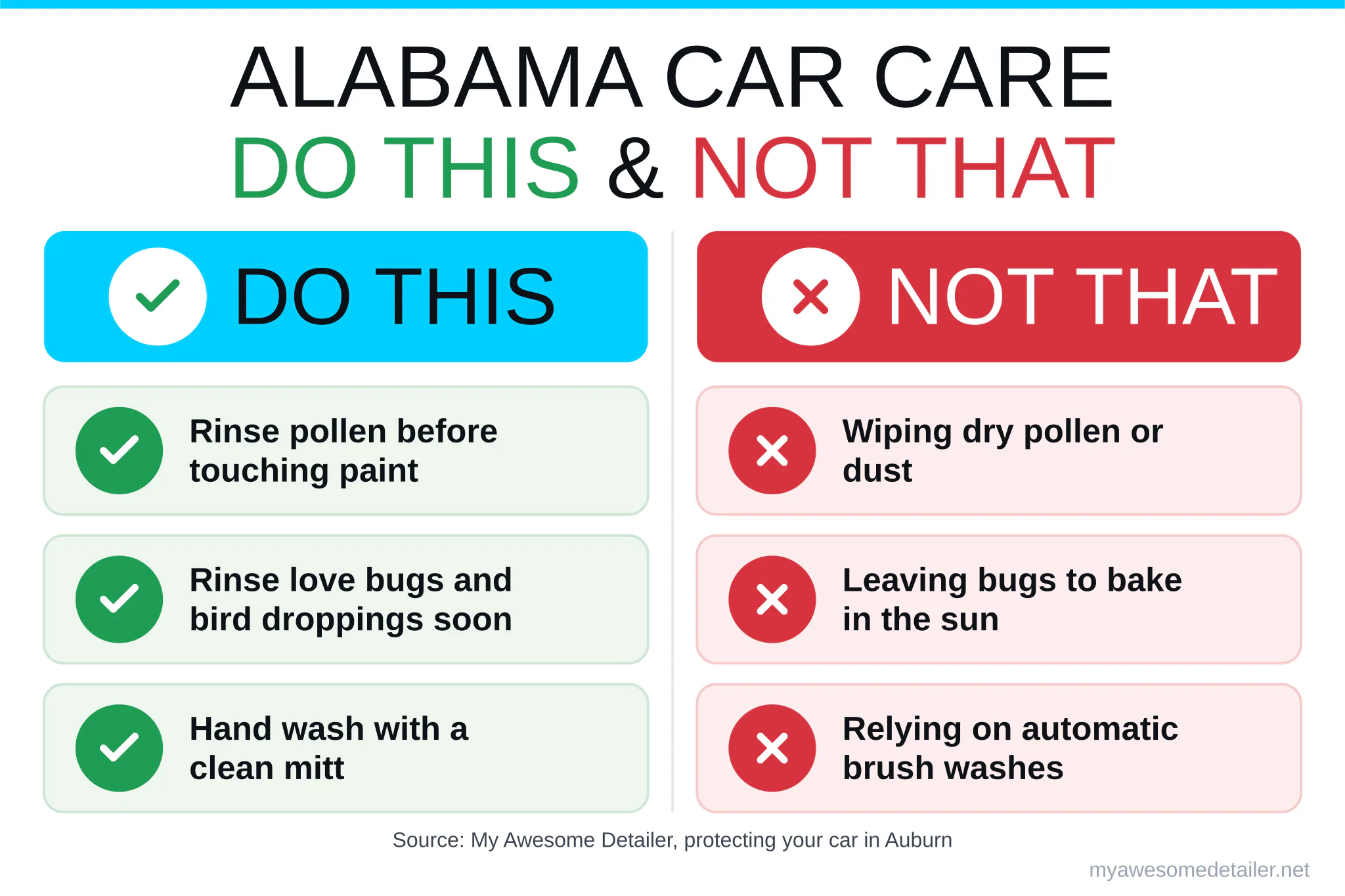
- Weekly or after heavy fallout: rinse off pollen, bugs, sap and bird droppings promptly.
- Every two to four weeks: a careful two-bucket hand wash, with a clean mitt and soft microfiber towel.
- Each season: quick interior wipe-down and vacuum; check wiper blades and tires after the heat.
- Spring: a decontamination wash after pollen season and a check of any coating or film.
- Before football season: if you tailgate, see our gameday car care tips.
- Yearly: a professional inspection and detail, especially if the car is coated, filmed or tinted, so small issues are caught early.
Ready to set up your car for East Alabama?
Start the Service Builder, tell us about your vehicle, and get your exact price on screen. Prefer to talk it through? Call the shop.
What to expect when you bring your car to our shop
Everything happens at our Opelika studio, so your car is in a controlled, indoor environment while we work on it. We inspect the vehicle with you, talk about what it needs and explain the timeline before anything starts. Because we are a shop, not a roving service, we can control dust, light and temperature for coatings, film and tint, which matters in a climate with this much pollen and humidity. Our guide on what to expect when dropping off your car walks through the day.
We're at 2709 Frederick Road, Opelika, AL 36801, and we serve drivers from Auburn, Opelika and across Lee County, with Phenix City and Columbus, GA close by. We're an Owner's Pride Select installer, one of the top shops in the country in that program, and we're rated 4.9 stars from 200+ reviews. You can also read about our warranty and who we are.
Why it pays to ask a local shop
Products and routines that work in one climate can underperform in another, which is why local experience matters. A shop in Opelika sees how the same coating, film and tint hold up through Lee County's summers, pollen seasons and love bug swarms, year after year. That experience shapes the advice we give: which areas of a car take the most abuse here, how often a coated vehicle should be maintained, and which shades of tint are both legal and comfortable.
It also means we can tell you honestly what your car does not need. Some vehicles need only a reset and a regular wash routine, and others benefit from a full protection package. Either way, you should leave knowing why we recommend what we do, how to care for it afterward and what to watch for as the seasons change. If you are new to the area, that kind of straight local guidance is often the most useful thing a shop can offer, and it costs nothing to ask.
The bottom line
Moving to Auburn means your car is about to face a different set of conditions than it did before, and a small amount of planning in the first 90 days prevents most of the damage. Start with a deep clean and an honest paint inspection, put a protective layer on the paint before the full force of summer, add quality window tint for heat and UV, and then keep up with simple, regular washing. It is the same advice we give longtime locals, delivered at the moment it is easiest to follow: before the damage starts.
When you're ready, the quickest next step is the Service Builder. And if you'd like to talk to a person first, call us at (334) 650-6499 or stop by the shop in Opelika. Welcome to town.