Quick answer: The best window tint for an SUV or truck in Alabama is nano-ceramic film. Run a legal film on the front doors (Alabama's floor is 32% VLT, so most owners choose around 35%), and go as dark as you like on the rear side windows and rear glass, because SUVs and trucks are classed as multipurpose vehicles with no darkness limit behind the driver. Keep the windshield to a non-reflective strip above the AS-1 line. Big glass collects a lot of Alabama sun, and ceramic film is what keeps a large cabin comfortable without going illegal up front. My Awesome Detailer LLC installs it in our Opelika shop for drivers across Auburn and Lee County.
Tinting a sedan and tinting a three-row SUV or a crew-cab pickup are different jobs. There is more glass, more of it faces the sun at the wrong time of day, the cargo area changes what you need for privacy, and the legal rules treat these vehicles differently from a car. This guide walks through the choices that matter most for SUV and truck owners in Auburn and Opelika: which film, what shade on which window, what the law allows, how to handle a cargo area full of gear, and how to take care of the glass afterward.
Everything here is general guidance. Tint statutes change and enforcement varies, so confirm the current rules before you book. Our full breakdown is in the Alabama window tint laws guide, and the shade-by-shade look at percentages is in our window tint percentages explained article.
Why SUVs and trucks need tint more than most vehicles
SUVs and trucks have more glass, more upright glass, and more of it behind the driver than a typical sedan, so they take on more solar heat and glare per vehicle. That is the short version of why owners of these vehicles are the ones who notice tint the most.
More surface area means more heat
A midsize SUV carries far more side and rear glass than a compact sedan once you count the third row, the cargo-area quarter windows, and a tall liftgate. Every square foot of glass is a place for sunlight to come in. In an Alabama summer, the sun sits high and hot for hours, and a cabin with a lot of glass behaves a bit like a greenhouse. A pickup is different again: the glass is smaller, but the cab is compact, the rear window sits close to the seats, and the dark bed behind it radiates heat as well.
Upright glass catches the low sun
Sedan windshields and rear windows are laid back at a steep angle, which reflects some light. The upright side and rear glass on an SUV or truck sits closer to vertical, so the morning and late-afternoon sun hits it squarely. Anyone who has driven toward a setting sun on Interstate 85 out of Auburn knows how fast glare and heat build when it comes straight through the side glass.
Cargo areas and back seats have their own needs
Whether it is a dog crate, a case of tools, a child seat, or a weekend's worth of luggage, the back of an SUV or truck cab is where people leave things. Sun fades and cracks dashboards and cargo trim, bakes whatever is sitting on the seat, and draws attention to what you are carrying. Film on the rear glass addresses all three at once.
What is legal for SUV and truck tint in Alabama?
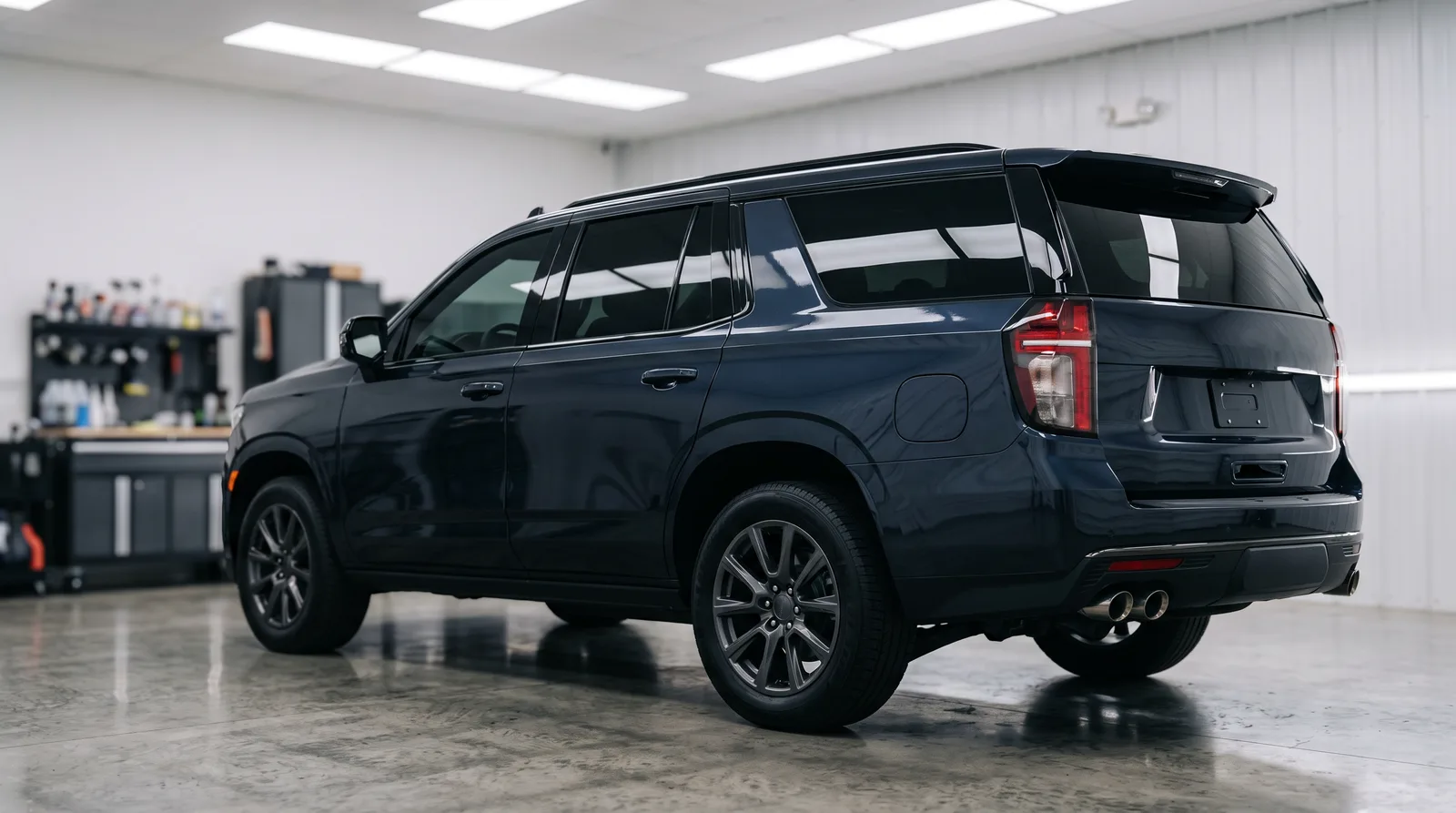
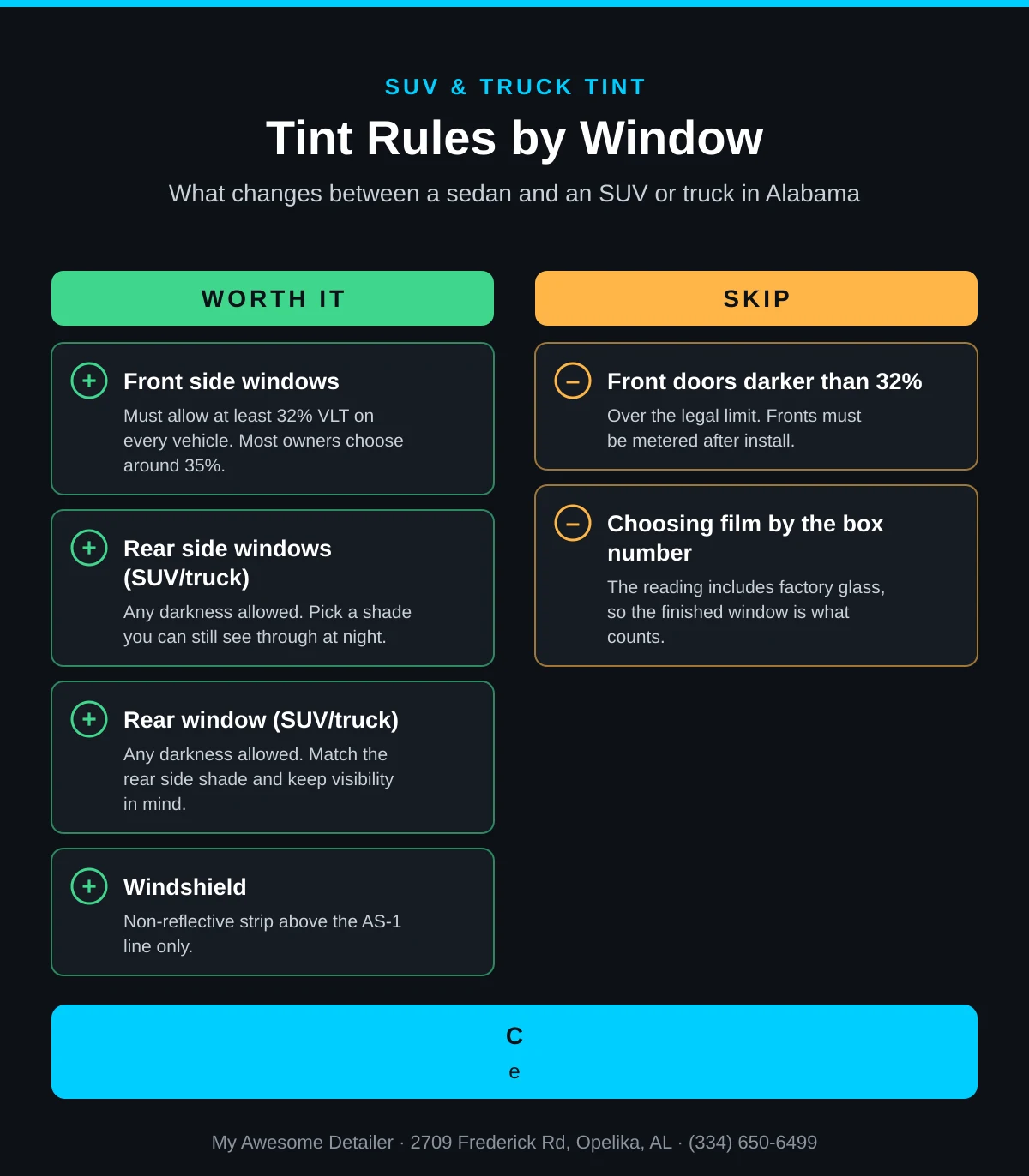
In Alabama, the front side windows must allow at least 32% of visible light through on every passenger vehicle, while on an SUV, truck, or van the rear side windows and rear glass can be any darkness. A sedan has to hold every window to 32%, which is the biggest legal difference between a car and the vehicles this article covers.
Alabama measures darkness as Visible Light Transmission, or VLT: the share of visible light that makes it through the glass and film together. A lower number is darker. Because the reading includes the factory glass, a film that reads 35% on the box can meter lower once it is on the window, which is why we check the finished fronts with a VLT meter rather than trusting a label.
| Window | Sedan | SUV / truck / van |
|---|---|---|
| Windshield | Non-reflective tint above the AS-1 line only | Non-reflective tint above the AS-1 line only |
| Front side windows | At least 32% VLT | At least 32% VLT |
| Rear side windows | At least 32% VLT | Any darkness |
| Rear window | At least 32% VLT | Any darkness |
| Reflectivity | Side windows may not be more than 20% reflective | |
Two details trip up SUV and truck owners. First, "any darkness" in back is permission, not a recommendation. Very dark film on the rear glass changes what you can see out of the back at night, especially when you are backing up a tall vehicle or trailer. Second, how your specific vehicle is classified drives the no-limit rear rule, so confirm the current statute for your vehicle before assuming it applies. We talk through your vehicle with you before any film goes on. For more on the legal side, including exemptions and what happens if you are stopped, read our 2026 Alabama window tint laws guide.
The best film type for an SUV or truck
Nano-ceramic film is the best choice for most SUVs and trucks because it rejects far more infrared heat than dyed or carbon film at the same visible darkness, blocks about 99% of UV, and does not interfere with phones, GPS, or key fobs.
Film comes in a few families, and the difference between them matters more on big-glass vehicles because they have more heat to deal with. Here is how they compare in practice.
| Film type | Heat rejection | UV blocking | Signal interference | Best for |
|---|---|---|---|---|
| Dyed film | Low | Moderate to high | None | Privacy on a tight budget; tends to fade over time |
| Carbon film | Moderate | High | None | A matte look at a mid-range level of performance |
| Nano-ceramic film | High | About 99% | None | Daily drivers and family vehicles in hot climates |
The reason ceramic wins on a large vehicle is that it cuts infrared, the part of sunlight you feel as heat on your skin, without needing to be dark to do it. That means you can run a legal, easy-to-see-out-of film on the front doors and still get a real difference in cabin comfort. If you want the science behind that, our guide to how window tint rejects infrared heat goes deeper, and our ceramic vs. regular tint comparison lays out the trade-offs side by side.
The ceramic film we install carries a lifetime manufacturer warranty against bubbling, peeling, fading, and delamination. Details are on our warranty page.
Choosing a shade for each window
Match the shade to the job each window has: legal and clear up front, as dark as you like for privacy and heat on the rear side glass, and a deliberate, safe choice on the rear window. Here is how most SUV and truck owners in Auburn and Opelika decide.
Front doors: stay legal, stay clear
The front doors are where the law is firm and where your visibility matters most. A film around 35% VLT is the common choice, since it sits just above the 32% legal floor once the film and factory glass are combined. It looks like a clean factory shade, takes the squint out of the afternoon, and still lets you read mirrors and see pedestrians at night.
Rear side windows: where you decide on privacy
Behind the driver, an SUV or truck is free to go darker. Many owners pick a shade somewhere in the 20% range for a balanced look that matches the fronts closely enough to look intentional. Others want maximum privacy and go much darker. There is no wrong answer legally, but there is a practical one: a darker rear side window is harder to see through when you are checking a blind spot at dusk. Dark enough to hide a bag on the seat is usually plenty.
Rear window or tailgate glass
The rear glass is the one that most affects safety. Tint on it is legal at any darkness on an SUV or truck, but you look through it in the rearview mirror every time you drive, and you look through it constantly when you reverse. Many drivers choose a shade close to the rear side windows so the whole back of the vehicle looks uniform. Pickup owners with a sliding rear window or a defroster grid should talk with the installer first, since those details affect the film and how it is applied.
A simple starting setup
- Front doors: ceramic, around 35% VLT, metered to confirm it is legal.
- Rear side glass and cargo windows: ceramic, a darker shade for privacy and heat.
- Rear window: ceramic, close to the rear side shade, with visibility in mind.
- Windshield: a non-reflective strip above the AS-1 line, or a clear ceramic option if you want the heat benefit without darkening your view.
SUV vs. truck: what changes?
The legal rules are the same for an SUV and a pickup, but the glass is different, so the planning is different. Here is what changes between the two.
Three-row SUVs and crossovers
These have the most glass. The second and third rows usually come with factory privacy glass, which is dark but is tinted in the glass itself and does not reject much heat. Film over factory privacy glass is common and is the most noticeable upgrade for many families, because it adds heat and UV protection without much change in how the glass looks. Quarter windows and curved liftgate glass take more skill to film, which is one reason to use an experienced installer in a clean, enclosed shop. Our minivan and family SUV tint guide covers the family-vehicle angle in more detail.
Crew-cab and extended-cab pickups
A pickup has less glass, but what it has is close to your head and shoulders. Rear door glass on a crew cab is the same free-darkness category as an SUV, while a regular cab has only the front doors and the back window to consider. Many owners tint the back window and the rear doors dark and keep the front doors at the legal level. If you also care about protecting the front end from rocks and debris, our paint protection film for trucks guide is a useful companion.
Off-road and open-air vehicles
Vehicles like Jeeps and Broncos have removable parts, flatter glass, and less insulation, so heat rejection matters even more than darkness. We cover those specifics in our Jeep Wrangler window tint guide.
Planning tint for your SUV or truck?
We'll show you ceramic samples on your own glass, explain what is legal on every window, and meter the fronts before you leave our Opelika shop.
Heat, UV, and what tint does for the inside of your vehicle
Quality ceramic film blocks about 99% of UV and rejects a large share of infrared heat, which keeps the cabin cooler and protects seats, dashboards, and trim from sun damage. In a climate like ours, the sun is the thing that ages the inside of a vehicle fastest.
- A cooler cabin. Less infrared coming through the glass means the air conditioning has an easier job. Large SUV cabins in particular take a long time to cool down after sitting in the sun.
- Less fading and cracking. UV is what bleaches leather and fabric and dries out dashboards. Blocking nearly all of it on every window slows the damage.
- Less glare. Cutting visible light at a legal level makes long drives less tiring, especially in the low-sun hours.
- A more comfortable back seat. Passengers and pets in the second and third rows feel the difference first.
For the bigger picture on why this matters in our region, see our article on why window tint is a necessity in Alabama's climate.
Privacy and security for cargo areas
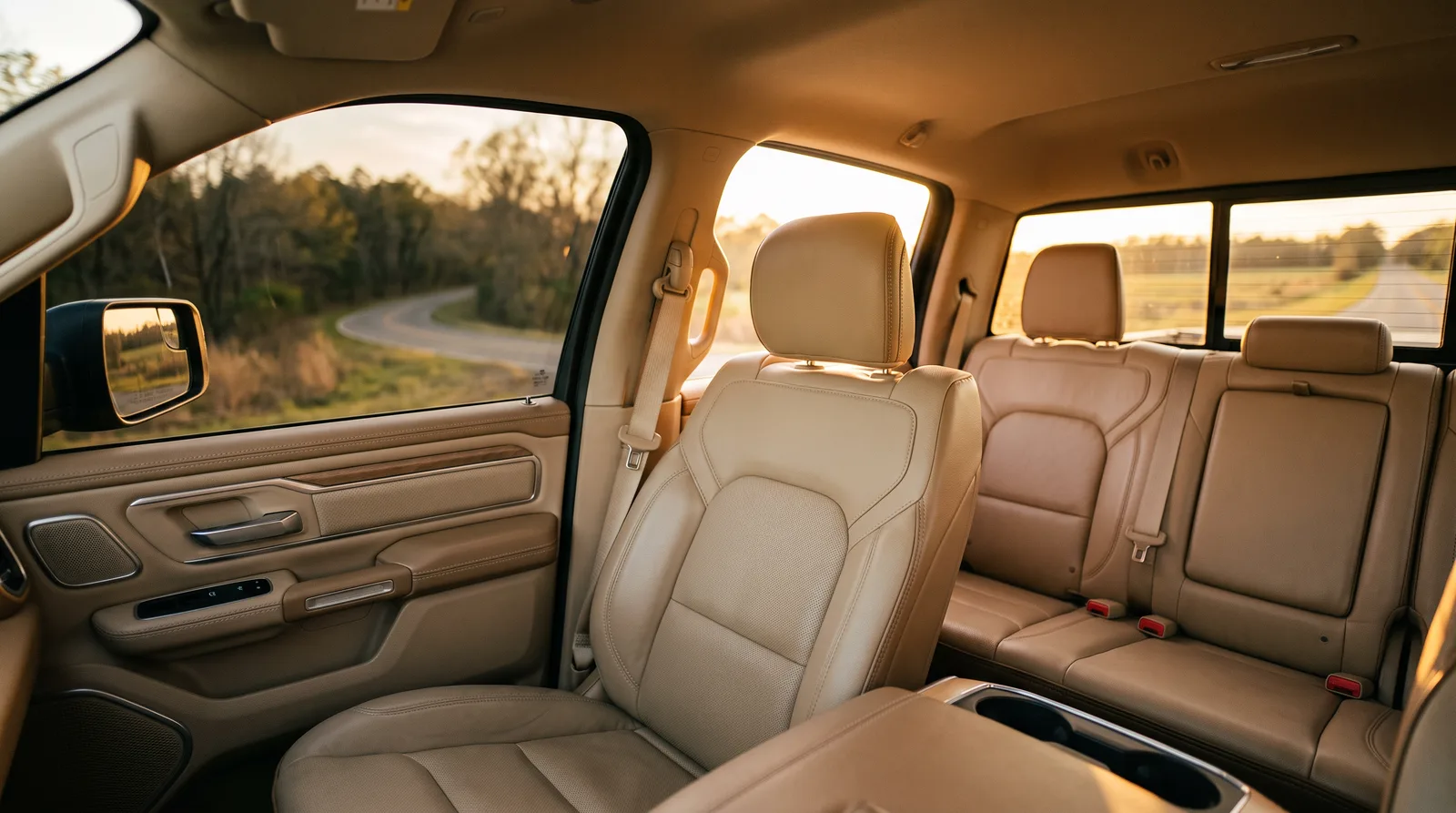
Darker rear glass keeps what you carry out of sight, which is one of the most practical reasons SUV and truck owners tint. A visible laptop bag, a toolbox, or camera gear on the back seat is an invitation. Tint does not make a vehicle burglar-proof, and it is not a replacement for locking up and taking valuables with you, but it removes the easy look-in.
Truck owners with a cab-mounted rack or a tonneau cover also tend to tint the rear glass so that whatever is in the cab stays private. If you often carry work equipment, a darker rear shade is a sensible call. Just keep the rear-window decision grounded in how well you can see out of it at night.
Common mistakes with SUV and truck tint
- Copying the rear shade onto the front doors. What is legal on the back glass of an SUV is not legal up front. Fronts must allow 32% VLT or more.
- Buying film by the number on the box. The legal reading includes the factory glass. Always have the finished front windows metered.
- Choosing the darkest shade for the rear window without checking visibility. You have to see out of it.
- Skipping heat rejection. A dark film that is not ceramic can look good and still let a lot of heat through.
- Going cheap on large glass. Big panels and curved liftgate glass show flaws more, and a poor install usually means a second install later. Our guide to why window tint bubbles and peels explains what goes wrong.
- Tinting over damaged or old film. Old film needs to come off first. See when to remove old window tint.
How to care for tint on a big vehicle
Care is simple: clean with an ammonia-free glass cleaner and a soft microfiber towel, and keep sharp objects, suction cups, and stickers off the film. Cargo areas make that harder than usual, so these habits matter more.
- Use ammonia-free cleaner. Ammonia can attack the adhesive and the film over time.
- Wipe with a soft microfiber, not a paper towel or an abrasive pad.
- Be careful loading the cargo area. Ladders, tool handles, and sports gear can scratch the inside of rear glass.
- Avoid suction-cup mounts and adhesive stickers directly on the film.
- Take care around the defroster lines on the rear window; scraping across them can lift the film.
Our installs are ready to go the moment you leave: you can roll your windows down right away, with no waiting period. For the full routine, see our window tint care and maintenance guide. Some haze or small moisture pockets are normal in the first stretch while the film settles, and we'll tell you what to expect before you drive off.
What does SUV and truck tint cost?
Pricing depends on the vehicle, how much glass it has, and the film you choose, so we quote each SUV and truck for its own glass rather than from a standard chart. A three-row SUV with a large liftgate is a bigger job than a regular-cab pickup, and ceramic film costs more than basic film. Old tint removal is a separate line item when it applies.
To see how the factors add up, read our window tint cost guide for Auburn and Opelika. When you create a free account on our site, you can build your service and see the pricing for your own vehicle, or call (334) 650-6499 and we'll walk you through it.
Towing, trailers, and night driving
If you tow, back up with a trailer, or drive rural Lee County roads after dark, pick a rear shade you can still see through comfortably. Truck and SUV owners spend more time than sedan drivers checking mirrors, reversing to a hitch, and watching a trailer track behind them. Very dark film on the rear glass and rear side windows works against you in exactly those moments, because your mirrors and backup camera are doing most of the seeing and the glass is a backup.
A good rule of thumb is to make the rear shade a notch lighter than the darkest you would consider. If you regularly drive in low light, sit in the vehicle in the evening before you choose and look through the sample on your own glass. That five-minute test tells you more than any percentage chart. It is the same reason we put film samples on your actual windows at our shop instead of asking you to choose from a brochure.
Sensors, antennas, and factory features
Modern SUVs and trucks pack a lot of technology into and around the glass: rain sensors, camera housings, heated rear-window grids, embedded radio antennas, and toll or garage transponders. Nano-ceramic film is non-metallic, so it does not block cell, GPS, radio, or key fob signals the way older metallic films could. We still plan around the details:
- Windshield sensors and cameras. Anything near the rearview mirror mount is left alone so driver-assistance features keep a clear view.
- Defroster and antenna lines. Rear glass with printed grids needs careful application so the film lies flat over the lines.
- Transponders and decals. If you have a sticker or toll tag on the glass, tell us before your visit so we can plan where it goes.
What to expect at your tint appointment
- Talk through the vehicle. We look at your glass, ask how you use the vehicle, and explain what is legal on each window.
- See samples on your glass. You compare shades in person so there are no surprises.
- Install in the shop. The work happens in a clean, enclosed space at 2709 Frederick Road in Opelika, which keeps dust and debris away from the adhesive.
- Meter and review. We check the front windows with a VLT meter and walk around the vehicle with you before you leave.
It is a shop visit, so plan to bring your SUV or truck to us in Opelika. Nothing about this service happens at your home or workplace.
A quick way to decide
| If your top priority is… | Lean toward… |
|---|---|
| Staying cooler on Alabama afternoons | Ceramic film on every window, legal shade up front |
| Privacy for what is in the cargo area | A darker ceramic shade on the rear side glass and rear window |
| Easy night driving, towing, or backing a trailer | A lighter rear shade and a clear windshield strip |
| Protecting the interior from fading | Ceramic film on all glass, including the windshield option |
| Matching the look of a factory-tinted vehicle | Ceramic film over the privacy glass, matched to the front shade |
Pairing tint with other protection
Since your SUV or truck is already in the shop, many owners add protection for the exterior and interior at the same time:
- Paint protection film on the hood, bumper, and mirrors takes the hits that come with highway miles and gravel roads.
- Ceramic coating makes red clay, pollen, and bugs rinse off more easily.
- Auto detailing resets the interior after a season of kids, tools, and dogs.
You can see the full list on our services page, or read more about film options on our window tint page.
Why SUV and truck owners choose My Awesome Detailer
My Awesome Detailer LLC is a shop-based detailing and protection studio at 2709 Frederick Road in Opelika, serving Auburn, Opelika, and the rest of Lee County, with customers also coming from Phenix City and Columbus, GA. We hold a 4.9-star rating from more than 200 reviews and are a Top 40 ceramic installer nationwide.
- Straight advice on every window, including what is legal up front and what shade makes sense in back.
- Premium nano-ceramic film that blocks about 99% of UV and rejects heat without interfering with phones or navigation.
- Metered front windows, so your install meets Alabama's 32% VLT rule.
- Careful work on curved liftgates, quarter windows, and defroster lines, done in a clean, enclosed shop.
- A lifetime manufacturer warranty on the ceramic film against bubbling, peeling, fading, and delamination.
Get your SUV or truck tinted right the first time
Create a free account, pick your service, and we'll take it from there at our Opelika shop.
Frequently asked questions
The best window tint for an SUV or truck in Alabama comes down to three decisions: ceramic film for heat and UV protection, a legal film of around 35% on the front doors, and a rear shade that balances privacy against how well you can see out the back. Get the fronts metered, choose the rear glass with night driving in mind, and keep the film clean and unscratched. When you are ready, create your free account or call (334) 650-6499 and we'll get your vehicle scheduled at our Opelika shop.