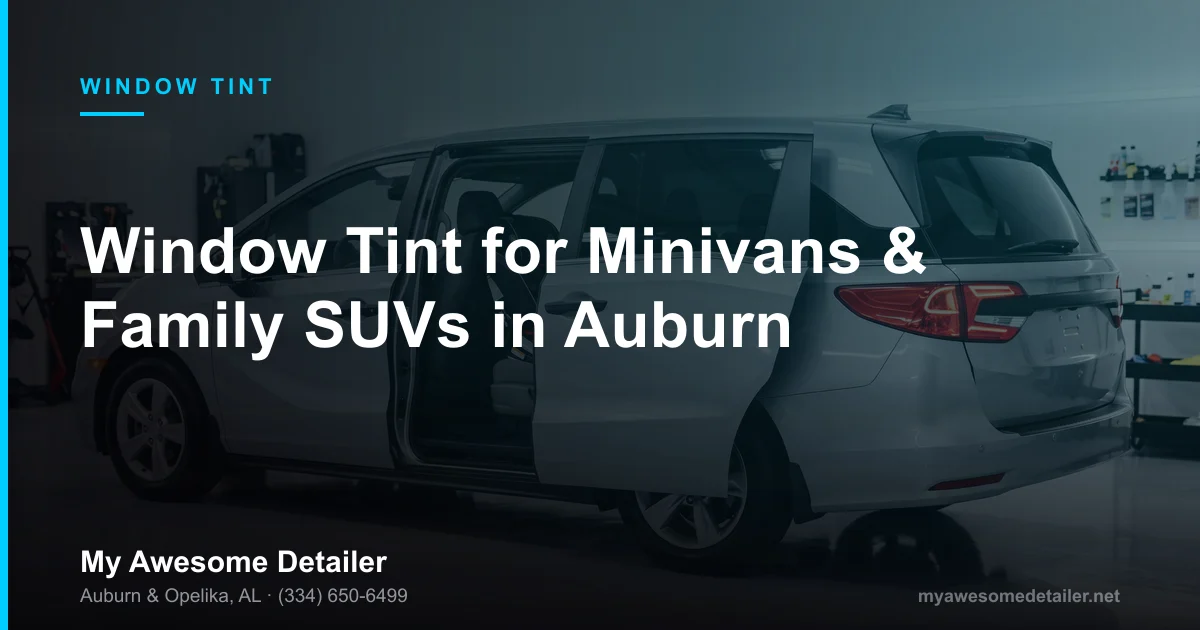
Quick answer: The best window tint for a minivan or family SUV in Alabama is nano-ceramic film: a legal ~35% on the front door glass (Alabama's floor is 32% VLT), a darker ceramic shade on the second-row, third-row, and rear glass (minivans and SUVs are multipurpose vehicles, so there's no darkness limit behind the driver), and a non-reflective visor strip above the windshield's AS-1 line. Ceramic film blocks about 99% of UV rays and rejects a large share of infrared heat without interfering with phones or tablets, which is exactly what a kid in a back-row car seat needs on an Alabama afternoon. In Auburn and Opelika, a full minivan or family SUV tint job generally falls in our $350–$600 SUV and van range, with ceramic toward the upper end.
If you drive a minivan or a three-row SUV around Auburn and Opelika, you already know the back seat is a different climate zone from the front. You can have the A/C on high and feel fine behind the wheel while the kids in the second and third rows are red-faced, squinting, and asking why it's so hot back there. The sun comes through big sliding-door glass and wide third-row quarter windows, and the vents that are supposed to cool the back often can't keep up in July.
This guide from My Awesome Detailer LLC is written for parents and family drivers. We'll walk through why rear-seat glass matters so much, what Alabama law allows on each row of a minivan or SUV, which film we recommend for a kid's car, how to choose shades, what a family hauler costs to tint in 2026, and how to take care of new tint when there are car seats, sippy cups, and sticky fingers involved. If you'd like the technical background on film types first, our ceramic tint vs. regular tint comparison is a good place to start.
Why window tint matters more in a family vehicle
Every car benefits from quality tint in Alabama, but minivans and family SUVs have a few traits that make the difference especially noticeable.
The people in the back can't move out of the sun
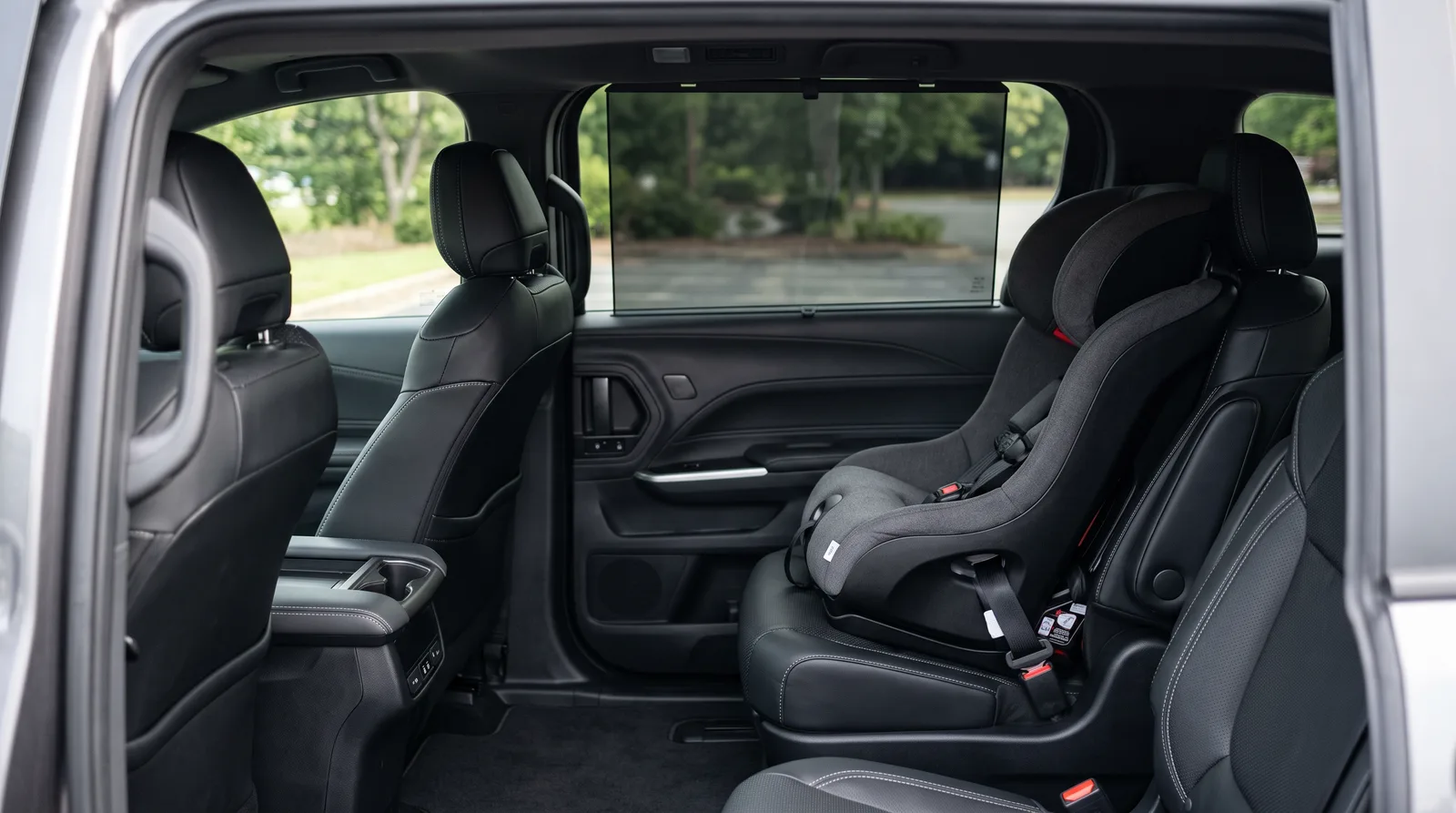
An adult in the front seat can flip down a visor, lean away from the window, or adjust a vent. A toddler strapped into a five-point harness can't do any of that. A rear-facing infant seat puts a baby's face toward the back glass, and a booster seat puts an older child's arm and shoulder right against the door glass for the whole ride. The kids are the passengers with the least control over their own comfort, and they're sitting next to the largest windows in the vehicle.
There's a lot of glass behind the driver
A minivan has sliding-door glass on both sides, large third-row quarter windows, and a big rear liftgate window. Three-row SUVs like the Tahoe, Suburban, Expedition, Explorer, Highlander, Telluride, Palisade, and Pilot have similar layouts. All that glass is great for visibility and for keeping kids from feeling closed in, but every square foot of it lets in sunlight, UV, and infrared heat.
Rear A/C has to fight a bigger space
Family vehicles are long, and the air conditioning has to cool a much larger cabin than a sedan's. Rear vents help, but when the sun is heating the back glass and everything it shines on, the third row can stay warm long after the front feels comfortable. Film that stops heat at the glass takes a big part of that load off the A/C.
Long rides and lots of parking
Family vehicles spend hours parked in open lots at school pickup lines, ball fields, church, the grocery store, and Auburn game days. They also make long trips: down to the Gulf, up to Atlanta, or over to Lake Martin. A cabin that starts out cooler and stays cooler makes every one of those trips easier on everyone.
Factory privacy glass isn't heat control
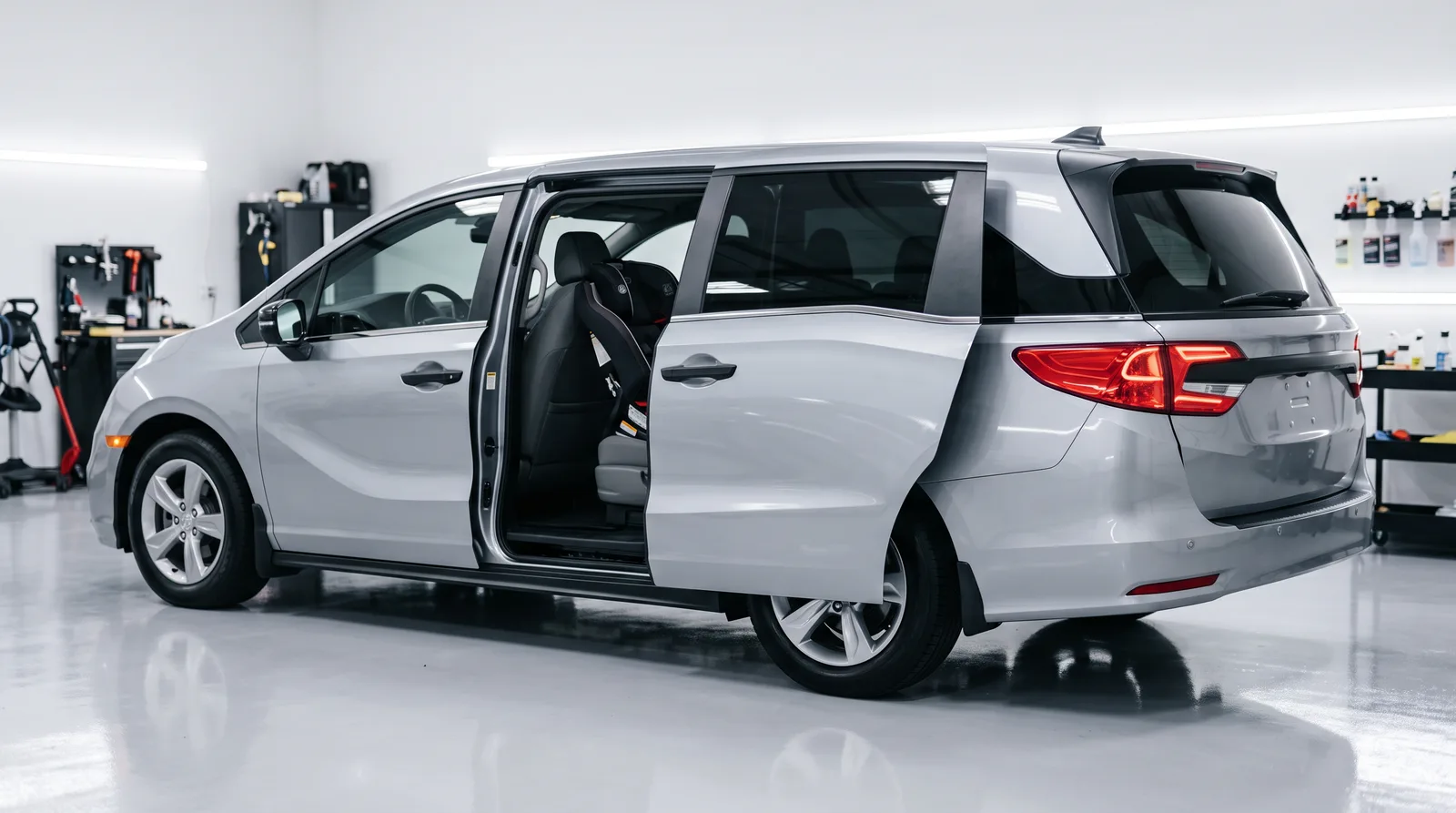
Most minivans and SUVs come with darkened rear glass from the factory. Many parents assume that means the back is already protected. It isn't, at least not from heat. Factory privacy glass is tinted in the glass itself to cut visible light and add privacy, but it isn't a heat-rejecting film. That's why the third row can still feel like an oven even though the windows look dark. Adding ceramic film over factory privacy glass is common, legal on a minivan or SUV, and usually where families notice the biggest improvement.
Alabama window tint law for minivans and family SUVs, row by row
Alabama measures tint by VLT (Visible Light Transmission): the percentage of visible light that passes through the glass and film together. Lower numbers are darker. The good news for families is that minivans, SUVs, trucks, and vans are treated as multipurpose vehicles, which means the rules loosen up behind the driver.
| Window on a minivan or family SUV | Alabama rule | What most families choose |
|---|---|---|
| Windshield | Non-reflective tint above the AS-1 line only | Ceramic visor strip across the top |
| Front door glass (driver and passenger) | Must allow at least 32% VLT | Ceramic film metered to a legal ~35% |
| Second-row door glass (sliding or hinged) | Any darkness allowed on a minivan or SUV | Ceramic, usually ~20% or darker for shade and privacy |
| Third-row quarter windows | Any darkness allowed on a minivan or SUV | Ceramic to match the second row |
| Rear liftgate glass | Any darkness allowed on a minivan or SUV | Ceramic to match, installed around the defroster lines |
| Reflectivity (side windows) | No more than 20% reflective | Non-mirrored ceramic film |
The most common mistake we see on family vehicles is dark film on the front doors to match the factory-dark rear glass. It looks uniform, but anything below 32% VLT on the front doors is illegal in Alabama. Because a meter reads the glass and the film together, and factory glass isn't perfectly clear, the film itself often needs to be rated a little lighter than 32% for the finished window to pass. That's why we meter every front window after the install instead of trusting the number on the box.
For the full picture, including medical exemptions and what happens if you're stopped with illegal film, read our guide to Alabama window tint laws in 2026. If you want to see what 35%, 20%, and 5% actually look like, our VLT percentages guide walks through each shade.
Minivans and SUVs vs. sedans
The rear-glass freedom applies to multipurpose vehicles, not to cars. If your family also has a sedan, every window on that sedan, front and back, is held to the 32% VLT standard. We often tint a family's minivan and sedan on the same visit, and it surprises people that the same "back window" shade can be legal on one and illegal on the other.
The best tint for a kid's car: row by row
When parents ask us for the best tint for a kid's car, our answer is almost always the same: ceramic film on every piece of glass, with the front shade set by the law and the rear shade set by how much shade and privacy you want. Here's how we approach each row on a minivan or three-row SUV.
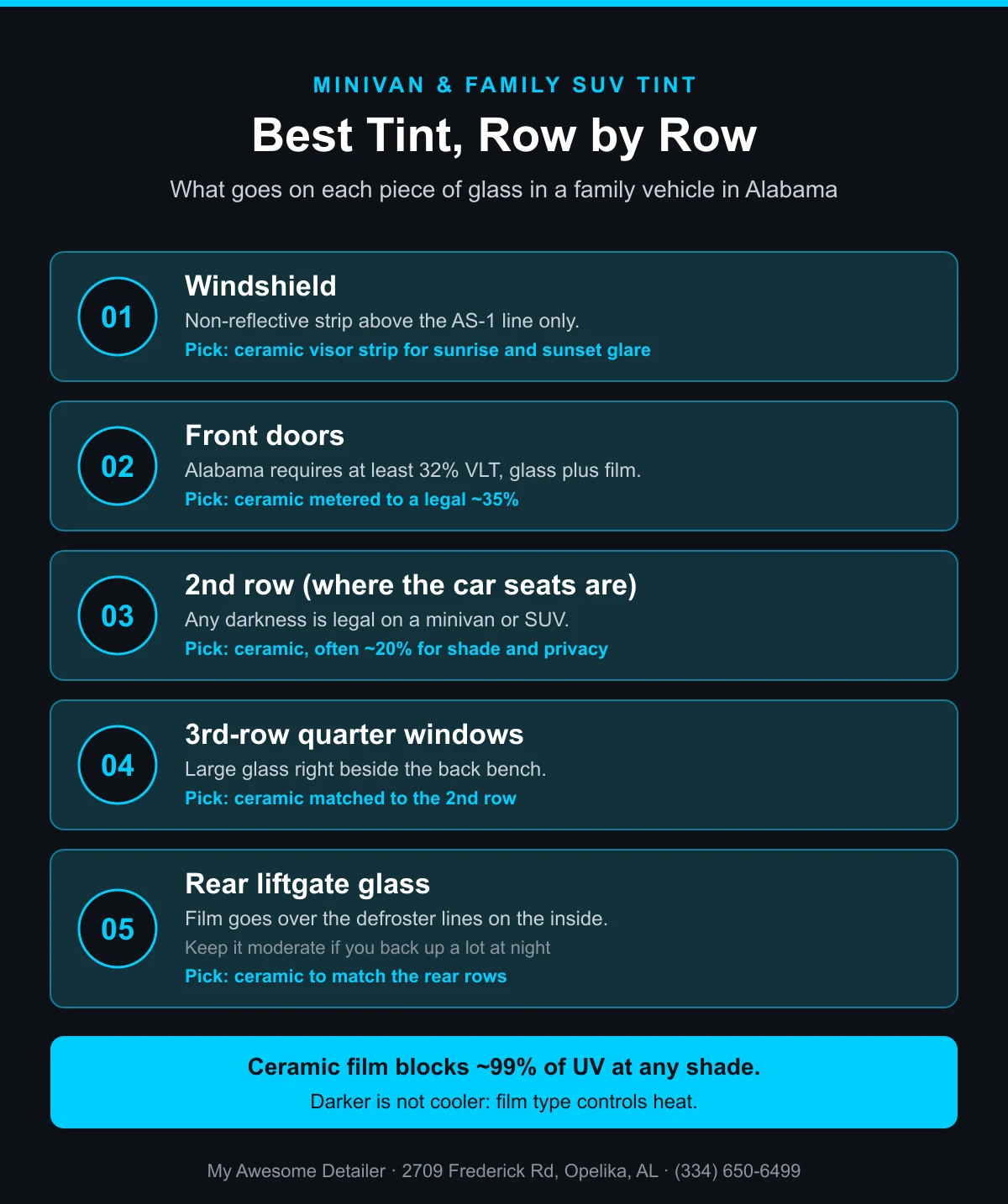
1. Windshield: a ceramic visor strip
Alabama allows a non-reflective strip above the AS-1 line etched near the top corner of the windshield. A ceramic visor strip cuts the low sun heading east on I-85 in the morning or west on US-280 in the evening, which is when the school run and ball practice traffic tend to happen. It doesn't touch your view of the road, and it keeps a little overhead heat off the front seats.
2. Front door glass: ceramic at a legal shade
The driver and front passenger windows are the only side glass held to Alabama's 32% VLT minimum, and they're also the windows you look through to check mirrors and merge. A ceramic film metered to about 35% gives a rich, factory-style look, reduces glare, and blocks heat on your arm and shoulder while keeping night visibility safe. For more on how tint affects your view of the road, see our article on window tint, driving safety, and glare.
3. Second-row glass: where the kids sit
This is the most important window on a family vehicle. On a minivan it's the sliding-door glass; on a three-row SUV it's the rear door glass. Most car seats and boosters live in this row, and the child sits right beside the glass for every trip.
Since Alabama allows any darkness on the rear glass of a minivan or SUV, families have a lot of freedom here. Many choose a ceramic shade around 20% for noticeable shade and privacy without making the cabin feel like a cave. Some go darker. Either way, the heat rejection comes from the ceramic technology, not the darkness, so even a medium shade makes a big difference in how hot the seat and the child's skin get.
On most minivans, the sliding-door glass rolls down only partway or pops out slightly instead of rolling down fully. That affects how the film is cut at the top edge and how long you should leave the windows alone after install. We'll cover that in the aftercare section.
4. Third-row quarter windows
Third-row windows are often large, fixed, and positioned right where a child's head sits in the back bench. Kids back there sometimes get the worst of the afternoon sun because the rear vents are farthest away. Matching ceramic film to the second row gives the whole back of the vehicle an even look and even comfort.
5. Rear liftgate glass
The rear window on a minivan or SUV is big and usually has defroster lines and sometimes a rear wiper. Film goes on the inside of the glass, over the defroster grid, and a careful install doesn't interfere with either. This window matters for two reasons on a family vehicle: it heats the cargo area where groceries, strollers, and sports bags ride, and it's part of your rear view when backing out of a crowded school lot. We'll talk about balancing privacy and visibility in the shade section below.
Want the back seat as cool as the front?
We'll spec a legal ceramic film for every row of your minivan or family SUV and meter the fronts before you leave our Opelika shop.
Family SUV window tint: ceramic vs. other film types
When you search for family SUV window tint, you'll see dyed, carbon, metallized, and ceramic films all offered at very different prices. For a vehicle that carries kids through Alabama summers, the differences matter more than they do on a commuter car.
| Film type | Heat (IR) rejection | UV protection | Fading / color change | Signal interference | Fit for a family vehicle in Alabama |
|---|---|---|---|---|---|
| Dyed | Low (~15–25% IR) | Partial | Can fade and turn purple in a few summers | None | Budget only; weak where it matters most |
| Metallized | Moderate | Good | Resists fading | Can affect phones, GPS, and radio | Not recommended; shiny look and signal issues |
| Carbon | Good (~40–55% IR) | Good | Color-stable | None | Solid mid-tier choice |
| Nano-ceramic | Best (up to ~99% IR on top film lines) | About 99% UV blocked | Color-stable | None | Best overall; strong heat rejection at any shade |
IR rejection varies by film line and shade, so ask for the spec sheet on the specific film you're considering. We're glad to show ceramic and dyed samples side by side on your own glass so you can feel the difference with your hand.
Why signal-friendly film matters with kids on board
Family vehicles run a lot of electronics: phone navigation, Bluetooth, satellite radio, toll transponders, built-in Wi-Fi hotspots, and tablets streaming shows in the back seat. Metallized film can interfere with those signals. Nano-ceramic film is non-metallic, so it doesn't. That's a quiet but real benefit on a long drive when the tablet is the only thing keeping the peace in the third row.
Darker isn't the same as cooler
A lot of parents assume the darkest film will keep the back seat the coolest. It doesn't work that way. Visible darkness and heat rejection are separate properties. A lighter ceramic film can reject more infrared heat than a very dark dyed film. Choose your film type for heat and UV, then choose your shade for looks, privacy, and visibility.
UV protection for kids: what tint does and doesn't do
Rear-seat UV protection is one of the main reasons families come to us, so it's worth being clear about what film can and can't do.
Side and rear glass let in more UV than the windshield
Windshields are laminated glass, which already filters much of the UV coming through the front. Side and rear windows on most vehicles are tempered glass, which lets more UV through, especially the longer-wave UVA that penetrates deep into skin and causes fading on interiors. Those side and rear windows are exactly where kids sit. Quality window film blocks about 99% of UV, bringing the side glass up to a much higher level of protection.
Tint is one layer, not the whole plan
Window film reduces UV exposure through the glass, but it isn't a substitute for sunscreen, hats, or your pediatrician's advice, especially for kids with sensitive skin or on long road trips where the windows may be down. Think of ceramic tint as a steady, always-on layer of protection that works every time the car moves, without anyone having to remember it.
Protecting the interior, too
The same UV that reaches the back seat also dries out and fades dashboards, seats, leather, and car seat fabric. Blocking about 99% of it slows that aging. On a family vehicle that gets traded or handed down to a teen driver, a cabin that still looks good is worth something. If the interior already needs attention, our interior car detailing guide explains what a deep clean can bring back.
Picking a shade: common family tint setups
There's no single right answer, but most families we work with land on one of these combinations. All of them keep the front doors legal.
| Setup | Front doors | 2nd row, 3rd row + liftgate | Best for |
|---|---|---|---|
| Uniform and light | Ceramic ~35% | Ceramic ~35% | An even look all around with the best night rear visibility |
| Classic family setup | Ceramic ~35% | Ceramic ~20% | Noticeable shade and privacy for kids without feeling closed in |
| Max shade in back | Ceramic ~35% | Ceramic ~5% | Napping infants, strong privacy, hiding gear in the cargo area |
| Over factory privacy glass | Ceramic ~35% | Light ceramic over factory dark glass | Adding heat and UV rejection without making the back much darker |
Balance privacy with backing-up visibility
Very dark rear glass looks great and keeps the cargo area private, but it can make it harder to see out the back at night, especially in a dim parking lot or a driveway without lights. Most modern minivans and SUVs have backup cameras, which helps a lot, but a quick over-the-shoulder look is still part of safe driving. If you do a lot of night driving or backing into tight spaces, the "classic family setup" at around 20% is a good middle ground.
Rear-facing car seat mirrors
If you use a mirror on the rear headrest to watch a rear-facing baby, you look through the rear glass to see it. A moderate rear shade keeps that mirror visible; extremely dark rear glass can make it a little harder to see at night. It's a small thing, but it's worth thinking about if you have an infant.
Factory privacy glass stacks with film
Remember that film goes on top of whatever the factory glass already is. If your rear glass is already dark from the factory, adding a dark film on top can make the combined result much darker than the film's rating suggests. We'll show you samples against your actual glass so there are no surprises.
How much does minivan and family SUV window tint cost in Auburn and Opelika?
Every family vehicle is quoted individually. A minivan or three-row SUV has more glass than a sedan, and the quarter windows and liftgate on some models are large or curved. Old film removal adds time too. As a general guide for 2026, using the same ranges from our Auburn and Opelika window tint cost guide:
| Family vehicle tint job | Typical 2026 range | What's included / what affects it |
|---|---|---|
| Front doors only | About $99–$150 | Driver and passenger door glass metered to a legal shade; common when the rear already has factory privacy glass |
| Full minivan or three-row SUV | About $350–$600 | All side glass, third-row quarters, and liftgate glass; ceramic sits toward the top of the range |
| Windshield visor strip | Quoted with the job | Non-reflective strip above the AS-1 line |
| Old tint removal | About $25–$50 per window | Depends on film age, leftover adhesive, and defroster lines on the rear glass |
These are ranges, not fixed quotes. The fastest way to an exact number is to call us at (334) 650-6499 or request a free quote with your vehicle's year, make, and model.
Is ceramic worth it on a family vehicle?
For families in East Alabama, we think it's the easiest upgrade to justify. You're buying the film for the people in the back, and those are the people dyed film does the least for. Dyed film does little against heat, and cheap film is the type most likely to fade, bubble, and need removal in a few Alabama summers. Paying for removal and a second install usually costs more than doing ceramic once. Our ceramic installs are backed by a lifetime no-fault warranty, which you can read about on our warranty page.
Front doors only, or the whole vehicle?
Some families come in wanting only the front doors done because the rear already "looks tinted." That's a reasonable budget choice if the front seat is the main complaint. But if the goal is a cooler, more comfortable back seat for the kids, the rear glass is where the heat is coming in, and factory privacy glass alone doesn't stop it. That's why most families end up choosing the full vehicle.
What makes a minivan or SUV tint install go well
Family vehicles have a few details that separate a clean install from one that starts peeling in a year.
Sliding-door glass
Minivan sliding-door glass often drops only partway or vents outward instead of rolling down fully. The film has to be trimmed precisely at the edge so it doesn't catch on the seal or leave a gap that collects dirt. On vented windows, the edge near the latch and hinge needs particular care.
Large, curved rear glass
Liftgate glass on many minivans and SUVs is large and curved. Film has to be heat-shrunk to match that curve so it lies perfectly flat without creases. That shaping is one of the most skill-dependent parts of any tint job, and one of the biggest reasons a DIY kit on a minivan rarely looks right. Our DIY vs. professional window tint article goes into more detail.
Dot matrix borders and defroster lines
Many rear and quarter windows have a dotted ceramic border (called a dot matrix or frit) around the edges, and the liftgate has defroster lines. Film doesn't bond as easily over the dots, so those edges need careful handling for the film to lie flat instead of showing a silvery, lifted border. Removing old film from a rear window is where defroster lines most often get damaged, so if you have old, bubbled tint, let a professional take it off.
A clean, enclosed shop
Family vehicles come in with crumbs, pet hair, sand, and dust, and all of it is waiting to get under new film. We clean the glass and seals thoroughly and install in our enclosed shop at 2709 Frederick Road in Opelika, which keeps dust and pollen from getting trapped under the film.
Caring for new tint when you have kids
Kids are hard on windows. With a few simple habits, your tint will look good for years.
During the cure
New tint is installed with a slip solution and needs several days to dry and bond, sometimes longer in a humid Alabama stretch. During that cure period:
- Keep the windows up, including sliding-door and vented third-row windows. Turn on the child window locks if little ones like to play with the switches.
- Don't clean the inside of the glass yet. Small hazy spots or water pockets are normal and fade as the film cures.
- Keep sunshades and suction-cup accessories off the glass until the film has fully set.
Our window tint installation and aftercare guide explains the cure period in more detail.
Sunshades, stickers, and window clings
Once tint is on, many families find they no longer need the pull-up or suction-cup sunshades they used before. If you still want them, choose shades that hook over the door frame or cling to the glass without adhesive, and be gentle removing them. Avoid putting stickers, decals, or suction cups directly on the film, since pulling them off can lift or tear the top layer.
Cleaning fingerprints and messes
- Spray an ammonia-free glass cleaner onto a clean microfiber towel, not directly onto the window.
- Wipe gently, then follow with a dry microfiber towel.
- For dried juice or food, let a damp microfiber soften it first instead of scraping.
- Never use razor blades, scrapers, or abrasive pads on the inside of tinted glass.
For a complete list of safe products and habits, see our window tint care and maintenance guide.
Watch out for car seat buckles and gear
Hard plastic car seat parts, stroller frames, and sports equipment can scratch the inside of the glass if they're jammed against it. When installing or removing a car seat, or loading gear in the third row, try not to drag anything along the window.
Why Auburn and Opelika families care so much about heat
East Alabama is tough on family vehicles. Long, humid summers, afternoons in the 90s, strong sun most of the year, and hours parked in open lots add up fast. A minivan waiting through an Auburn football game, parked at a Lee County ball field for a doubleheader, or sitting in the school pickup line all afternoon gets hot inside quickly, and the back rows get it worst.
Ceramic tint can't make a parked car cool, but it can make the back seat much more comfortable faster once you're moving, cut the glare that makes kids squint and fuss, and protect their skin and the interior from UV every mile. For more on why tint is close to a necessity here, read why window tint is a necessity in Alabama's climate.
Bring your family vehicle to our Opelika shop
We'll show you ceramic samples on your own glass, explain what's legal on each row, and give you an exact price.
Other protection families pair with tint
Since the vehicle is already in the shop, many families add services built for how family vehicles are used:
- An auto detail to deep-clean crumbs, spills, and car seat grime from carpets, seats, and seat tracks.
- A ceramic coating on the paint and exterior glass so pollen, bugs, and road grime rinse off more easily between busy weeks.
- Paint protection film on the front end and high-wear areas like the rear bumper, where loading and unloading causes scuffs.
You can see everything we offer on our services page, or learn more about our film options on our window tint service page.
Why families choose My Awesome Detailer
My Awesome Detailer LLC is a shop-based detailing and protection studio at 2709 Frederick Road in Opelika, serving Auburn, Opelika, and the rest of Lee County, with customers also coming from Phenix City and Columbus, GA. We hold a 4.9-star rating from more than 200 reviews and are an Owner's Pride Select installer, a designation held by a small group of top shops across the U.S.
For minivan and family SUV tint, that means:
- Honest advice on each row of glass, including what's legal up front and what shade makes sense for your kids in back.
- Premium nano-ceramic film that blocks about 99% of UV and rejects heat without interfering with phones, tablets, or navigation.
- Metered front windows, so your install passes Alabama's 32% VLT rule.
- Careful work on sliding-door glass, curved liftgates, and defroster lines, done in a clean, enclosed shop.
- A lifetime no-fault warranty on our ceramic tint installs.
Frequently asked questions
The best window tint for a minivan or family SUV in Alabama comes down to three decisions: ceramic film for heat and UV protection, a legal ~35% on the front doors, and a rear shade that balances shade and privacy for your kids with your ability to see out the back. Protect the film during the cure, keep stickers and suction cups off it, and clean it gently. When you're ready to make the back seat as comfortable as the front, get in touch or call (334) 650-6499 and we'll get your family vehicle scheduled at our Opelika shop.