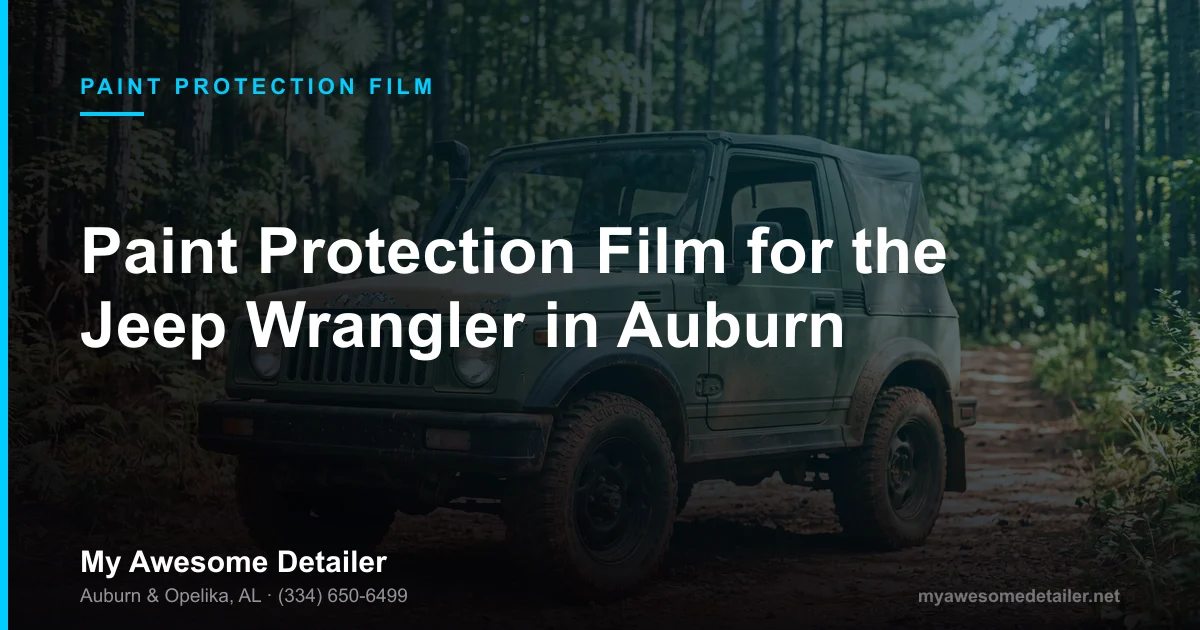
Quick answer: Yes, PPF on a Jeep Wrangler is one of the best-value film jobs there is. The Wrangler's flat hood, flat fender tops, and upright windshield frame take rock chips head-on, and those simple, flat panels are also some of the easiest surfaces to cover cleanly with paint protection film. For most Wrangler owners in Auburn and Opelika, full-front PPF (full hood, painted fenders and flares, cowl, windshield frame, mirrors, and any painted bumper surfaces) is the right baseline, typically in the $1,500 to $2,500 range depending on trim and which panels are painted. If you run trails or gravel roads, add the lower doors, rocker areas, rear corners, and door edges, or go full body.
Few vehicles get used the way Wranglers do. The doors come off in April, the top comes off on the first warm weekend, and the tires spend at least part of their life on red clay, chert gravel, or a creek crossing somewhere in east Alabama. That's the whole appeal. It's also why a Wrangler's paint wears out faster than almost anything else in a Lee County parking lot.
At My Awesome Detailer LLC, 2709 Frederick Road in Opelika, we install paint protection film in our shop on daily drivers, trucks, and a lot of off-road SUVs. This guide is written for Wrangler owners specifically: where Wrangler paint gets hurt, why its flat panels are ideal for film, how the removable doors and top affect the install, which coverage fits how you drive, and what it typically costs. If you want the general pricing picture first, start with our PPF cost guide for Auburn.
Why the Jeep Wrangler is a near-perfect PPF candidate
The Wrangler combines two things that make paint protection film worth it: a front end that catches debris head-on, and panel shapes that let film go on cleanly with minimal seams. Most vehicles have one or the other. The Wrangler has both.
Flat hood, flat fenders, upright windshield
The Wrangler's design hasn't strayed far from its roots. The hood is broad and mostly flat, the grille stands nearly vertical, and the windshield frame sits upright instead of laid back. On a modern crossover, a lot of gravel glances off the sloped hood and raked glass. On a Wrangler, it hits square. The leading edge of the hood, the front edge of the fenders, the hood hinges area, and the windshield frame take the worst of it, and on a dark color every chip shows up as a bright white dot.
Why flat panels are ideal for film
Here's the good news: those same flat, simple panels are exactly what paint protection film likes best. Film has to stretch to follow compound curves, deep body lines, and tight recesses. The more it stretches, the harder it is to install without visible relief cuts, seams, or lifting edges. A Wrangler hood or fender top is mostly a flat sheet with gentle radius edges. That means:
- Cleaner wraps: film can often be wrapped around the panel edges instead of stopping short, so edges are hidden and less likely to collect dirt.
- Fewer seams: a full hood can usually be covered in one piece, with no cut line across the middle.
- Less visible film: on flat surfaces, quality film is very hard to spot once it's on, even up close.
- Easier panel replacement: if a section of film takes a hard hit on the trail, a flat panel is straightforward to re-cover.
Some Wrangler trims use a raised or vented hood, and those vents and contours need more careful trimming. They're still well within what a skilled installer handles every week, but it's one reason we look at your exact trim before quoting.
It gets driven where the debris lives
A Wrangler that only commutes still benefits from film, just like any SUV on I-85. But a Wrangler that sees county gravel roads, lake access lots, hunting leases, or real trails picks up chips and scratches far faster than a sedan ever will. Its big tires launch rocks and clay at its own body. Its narrow trail width means branches drag down the sides. And its removable doors and top add handling damage most vehicles never see. PPF lets you use the Wrangler the way it was built to be used without watching the finish fall apart.
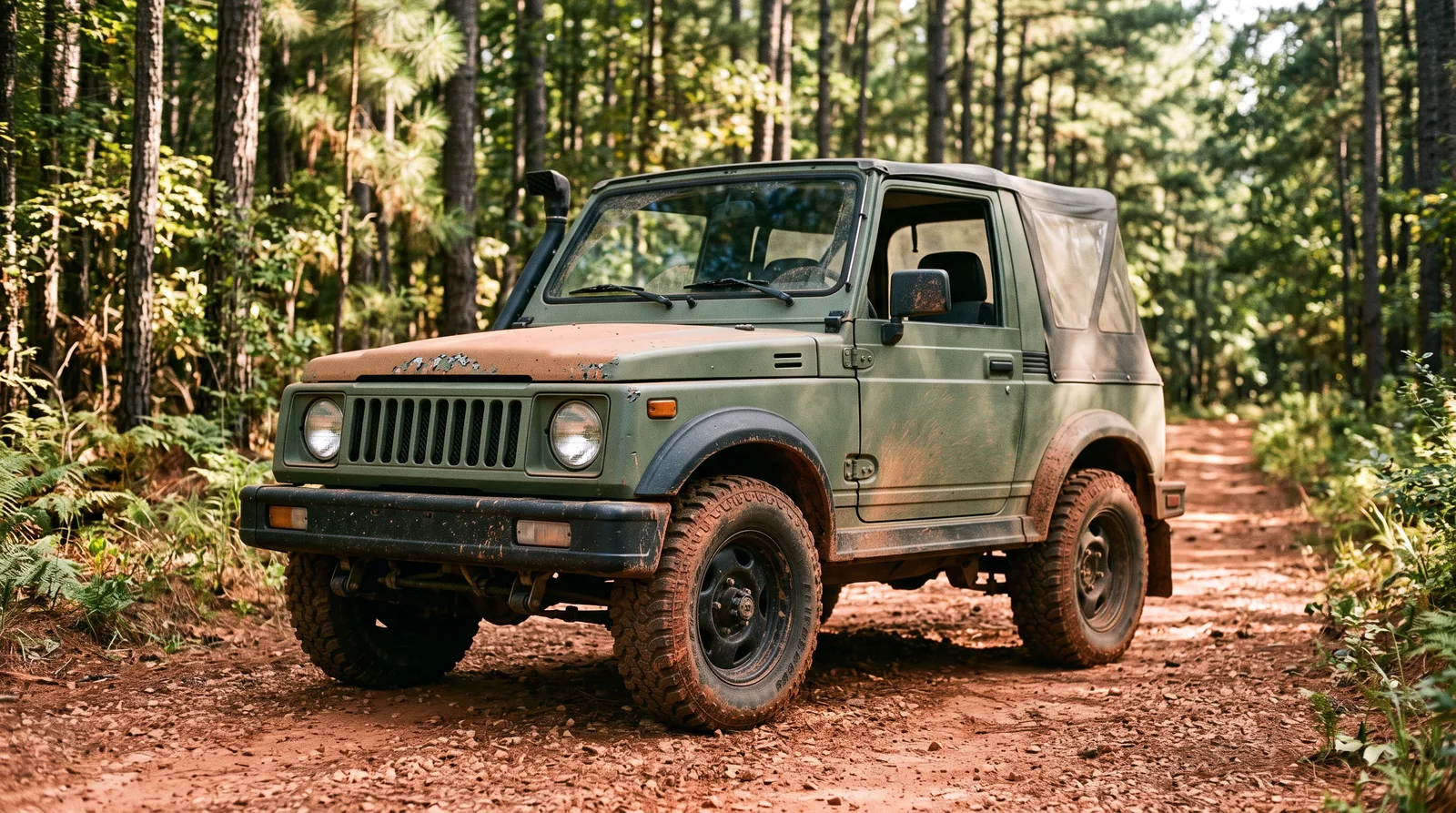
Wrangler trail-rash zones: where the paint actually gets damaged
Wrangler paint damage is predictable, and each damage zone maps to a specific piece of film coverage. Knowing which zones apply to the way you drive is the fastest way to choose the right package without paying for panels you don't need.
| Zone | Main threat | Pavement Wrangler | Trail and gravel Wrangler | Film recommendation |
|---|---|---|---|---|
| Hood (leading edge and full surface) | Rock chips from traffic and gravel | High | Very high | Full hood (full front) |
| Fender tops and painted flares | Chips, tire spray, gear and hand contact | High | Very high | Full fenders (full front) |
| Windshield frame and cowl | Chips off the upright windshield | Moderate to high | High | Full front or add-on |
| Mirrors and headlight surrounds | Chips, brush contact | Moderate | High | Included in full front |
| Painted bumper surfaces (if equipped) | Direct impact | High | Very high | Included in full front |
| Lower doors and rocker areas | Your own tire spray, clay, sand | Low to moderate | Very high | Add-on |
| Rear corners behind the tires | Tire spray, gravel, brush | Low to moderate | High | Add-on |
| Door edges, hinge areas, handle cups | Door removal, storage, keys, rings | Moderate | High | Add-on |
| Body-color hardtop edges | Top removal and storage | Low to moderate | Moderate | Add-on or full body |
| Upper body sides | Branches and brush ("trail pinstriping") | Low | High | Full body |
The hood and fender tops
The hood is the single most chipped panel on any Wrangler. Because it's so flat and so exposed, gravel from the vehicle ahead lands across the whole surface, not just the first foot or two. The fender tops are the second most visible problem area: they sit right in your line of sight from the driver's seat, they collect chips from the front tires, and they get scuffed by hands, straps, and gear when people lean on them or load the vehicle.
The windshield frame
The Wrangler's windshield frame is a painted structural piece standing almost straight up, and it catches the gravel that the hood doesn't. Chips along the top header and the sides of the frame are common on Wranglers that see a lot of highway miles. It's a small area, but it's one of the first spots owners notice, and it's an easy add to a front-end package.
Lower doors, rockers, and rear corners
Big all-terrain or mud-terrain tires are great on the trail, but they throw rocks, clay, and sand back at the body. On a Wrangler, the lower doors, the painted areas around the rockers, and the rear corners behind the back tires live in that spray zone. On trucks and off-roaders, self-inflicted damage from your own tires is a big share of the total, and no amount of following distance prevents it.
Branches and brush
Narrow trails mean branches drag down the sides of the vehicle. Off-roaders call it trail pinstriping. Film resists light brush contact well, and premium self-healing film lets shallow marks fade with heat. A sharp branch with real force behind it can still cut film. The difference is what's underneath: replace the damaged film and the factory paint below is still intact. A gouge in bare paint means body work.
Red clay abrasion
East Alabama's red clay is fine and gritty. When it dries on a panel and gets wiped with a towel, rubbed by a strap, or brushed by a knee climbing in, it acts like sandpaper on clear coat. That's how dirt-road Wranglers end up with hazy, scratched lower panels even without a single big impact. Film's top layer takes that abrasion instead of your paint.
Removable doors and top: what they mean for PPF
The Wrangler's removable doors and top don't make PPF harder to live with, but they do change how we plan the install and which add-ons are worth it. This is the part most general PPF guides skip, and it's the part Wrangler owners ask about most.
Door edges and hinge areas
Every time the doors come off and go back on, the edges, corners, and hinge areas are at risk. Doors get set down on concrete, leaned against a garage wall, stacked on each other, or bumped with a ratchet. Door-edge film and coverage around the hinge areas protect the spots that take that handling. They're small add-ons, and on a Wrangler that goes doors-off every summer, they're some of the best value in the whole package.
Body-color hardtops
On trims with a body-color hardtop, the top itself is a painted surface, and its edges take scuffs when the top is lifted off, carried, stored on a cart or hoist, and reinstalled. Film along the lower edges and corners of a painted hardtop protects against that handling. A black textured hardtop or a soft top is a different story: textured plastic and fabric aren't film surfaces, and we'll tell you so rather than quote you for panels that don't need it.
What configuration to bring it in
Bring the Wrangler in with the doors and top on, the way it'll spend most of its time. That lets us fit and trim the film to the body as it actually sits, with the gaps and edges where they normally are. If there are areas you want covered that are only reachable with a door off, tell us when you book so we can plan for it. Removable panels can actually make some edges easier to wrap, but it has to be planned ahead, not improvised.
Give the film time before pulling doors
Freshly installed film needs time to set. We'll give you specific timing at pickup, but plan on leaving the doors and top in place for the first several days after install, and avoid pressure washing the film edges during that time. Pulling doors right away puts stress on edges that are still settling. Our PPF aftercare guide covers the first-week routine in detail.
Storing doors and the top
Film protects against scuffs, not drops. Store removed doors on padded racks or blankets, keep them from leaning on each other, and store the hardtop on a proper stand or hoist. Treated well, film-covered doors and top edges can go through years of on-and-off seasons and still look new.
Which PPF coverage makes sense on a Wrangler
For most Wrangler owners, full front is the baseline, with off-road add-ons chosen by how much dirt the vehicle sees. The infographic below summarizes how we usually match coverage to the way a Wrangler gets driven. For a detailed breakdown of what each tier includes on any vehicle, see our PPF coverage options guide.
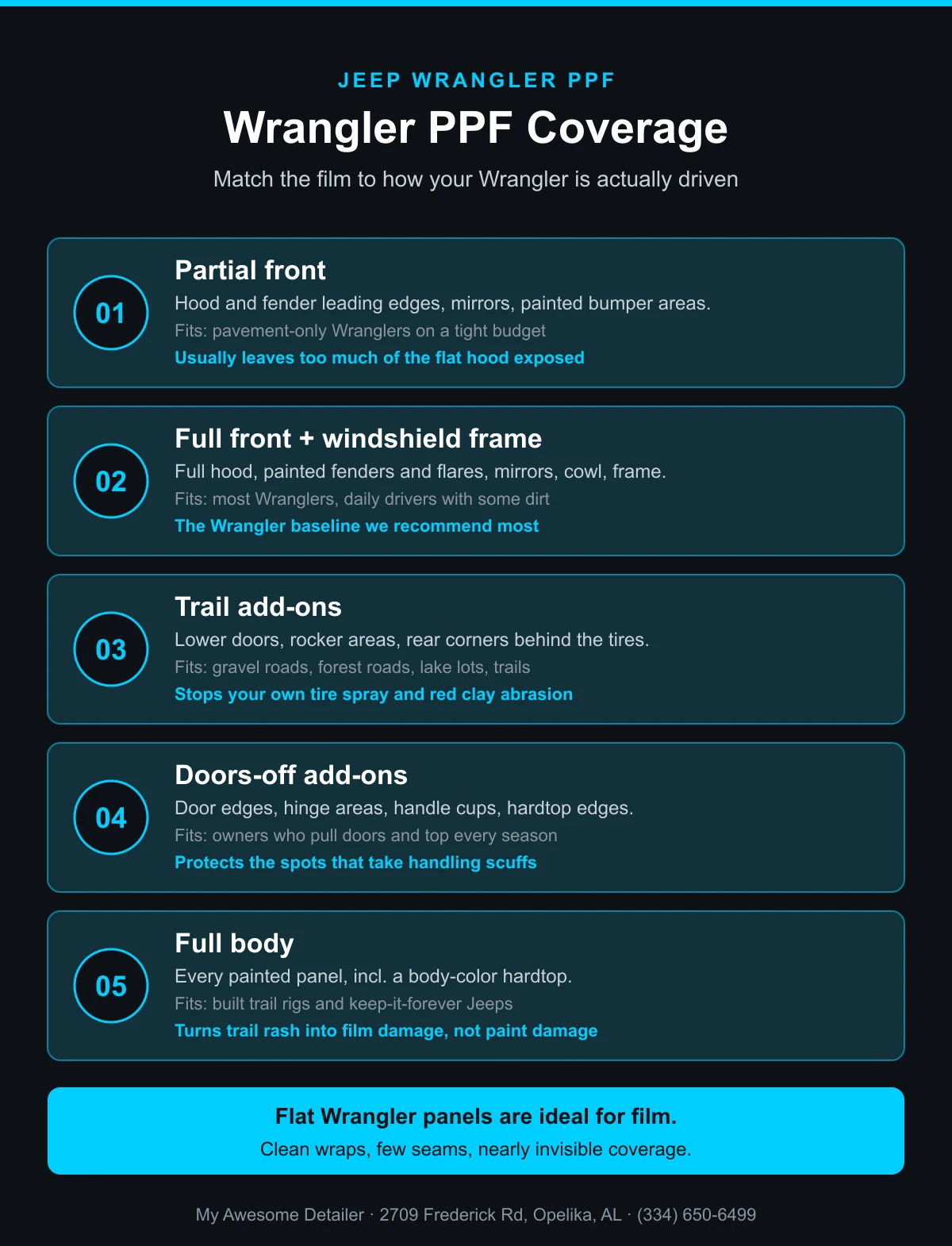
Partial front: usually not enough on a Wrangler
Partial front covers the leading edge of the hood and fenders, the mirrors, and the front bumper surfaces. On a sloped-hood sedan driven around town, that can be a reasonable budget choice. On a Wrangler, it usually leaves too much exposed. The flat hood takes hits well past the first couple of feet, and a visible film line partway across a flat hood is easier to spot than on a curved one. If the Wrangler stays on pavement and budget is tight, partial front beats nothing, but it's not what we normally recommend.
Full front: the Wrangler baseline
Full front covers the entire hood, the painted fenders and flares, the mirrors, the headlight surrounds, and any painted bumper surfaces, with no cut line across the hood. On a Wrangler we also recommend including the windshield frame and cowl, since they take so many chips. For a Wrangler that mostly sees roads, including the highway to Atlanta or Montgomery, full front covers the large majority of the risk. It's the package we recommend most often.
Full front plus trail add-ons
If your Wrangler regularly sees gravel roads, forest roads, lake access lots, or trails, the damage moves down and back. That's where add-ons earn their keep:
- Lower doors and rocker areas: the spray zone for your own front tires, and where red clay grit wears clear coat first.
- Rear corners behind the rear tires: sandblasted by your own rear tires on gravel.
- Door edges, hinge areas, and handle cups: for the doors-off season and everyday key and ring scratches.
- Body-color hardtop edges: for owners who pull the top often.
- Rear tailgate area (if painted): where coolers, bags, and recovery gear get loaded and unloaded.
Full body: for the Wrangler you use hard and plan to keep
Full-body film covers every painted panel. On a weekend-only sedan, that's often more protection than the risk calls for. On a Wrangler that sees trails, it's an easy case to make, because the damage isn't concentrated on the front end. Brush, clay, tire spray, and door and top handling hit the sides, the rear, and the upper body too. If you plan to keep your Wrangler for years and drive it the way it was meant to be driven, full body keeps the whole vehicle factory-original.
What PPF on a Wrangler typically costs in Auburn
Wrangler PPF pricing follows the same tiers as any SUV, with the final number depending on two-door vs. four-door, trim, which panels are painted, and how much paint prep is needed first. These are typical Auburn-Opelika ranges, not a quote for a specific vehicle. Final pricing depends on your Wrangler.
| Coverage | What it includes | Typical price range | Best for |
|---|---|---|---|
| Partial front | Hood and fender leading edges, mirrors, painted bumper surfaces | $700–$1,200 | Pavement-only Wranglers on a tight budget |
| Full front | Full hood, painted fenders and flares, mirrors, headlight surrounds, painted bumper surfaces | $1,500–$2,500 | Most Wranglers; daily drivers with occasional dirt |
| Full front + trail add-ons | Full front plus windshield frame, lower doors, rocker areas, rear corners, door edges as needed | Full front range plus the add-on panels, quoted per vehicle | Wranglers that see gravel roads or trails regularly |
| Full body | Every painted panel, including a body-color hardtop if equipped | $5,000–$8,000+ | Owners who use their Wrangler hard and plan to keep it |
What moves the price on a Wrangler
- Two-door vs. four-door: the four-door has more door panels, more edges, and longer lower body sections for side coverage.
- Which panels are painted: trims differ on whether the fender flares, bumpers, and hardtop are body color or textured black. Textured plastic and steel bumpers usually don't need film; painted panels do.
- Hood style: a flat hood is simpler; a raised or vented hood takes more trimming time.
- Paint condition: a new Wrangler needs only light prep. One that's already been on the trail may need paint correction first, because film seals in whatever is underneath.
- Add-on panels: each add-on is priced by the area, so you only pay for what your driving actually exposes.
The cost of not protecting it
Refinishing a single front panel typically runs in the $500 to $1,200 range, and a hood, fenders, and windshield frame together can climb well past that before you get to doors and rear corners. More important, a repaint is no longer factory paint. Wranglers are famous for holding their value, and buyers look closely at the hood, fender tops, and lower body to judge how hard a Jeep was used. Our guide to whether PPF protects resale value walks through that math.
Get a real number for your Wrangler
Tell us your trim, two-door or four-door, and how you drive it, and we'll quote the coverage that fits, installed in our Opelika shop.
Jeep Wrangler rock chip film by driving style
The right Wrangler coverage depends on how you really drive it, not how the ads show it. Here's how we usually match packages to the Wranglers we see around Lee County.
The daily-driver Wrangler
Plenty of Wranglers are mostly commuters: the drive into Auburn, school pickup, errands around Tiger Town, and highway trips to Atlanta or the Gulf. For these, full front with the windshield frame handles most of the risk. Add door edges and hinge areas if the doors come off every summer, and you're covered where the chips actually happen.
The weekend explorer
This Wrangler commutes during the week and heads out on weekends: gravel roads to a hunting lease, forest roads, a day at Lake Martin or Lake Harding, or an occasional trail ride. For this owner, full front plus lower doors, rocker areas, and rear corners is the sweet spot. That covers highway chips up front and the self-inflicted spray zone down the sides.
The built trail rig
If the Wrangler wears a lift, big tires, and recovery gear, and spends serious time on trails with tight brush, ruts, and mud, the damage spreads over the whole body. Full body is the cleanest answer. It won't make the Jeep immune to a hard rock strike or a deep branch gouge, but it turns most trail rash into film damage instead of paint damage, and it makes clay and mud much easier to wash off. If you've added aftermarket fenders, bumpers, or a different hood, tell us, since that changes which surfaces are painted.
The keep-it-forever Wrangler
Many Wrangler owners have no plan to ever sell. If that's you, the math tilts toward more coverage. Quality film typically lasts around 10 years with reasonable care, and every year it's on the vehicle is another year of paint you didn't have to fix.
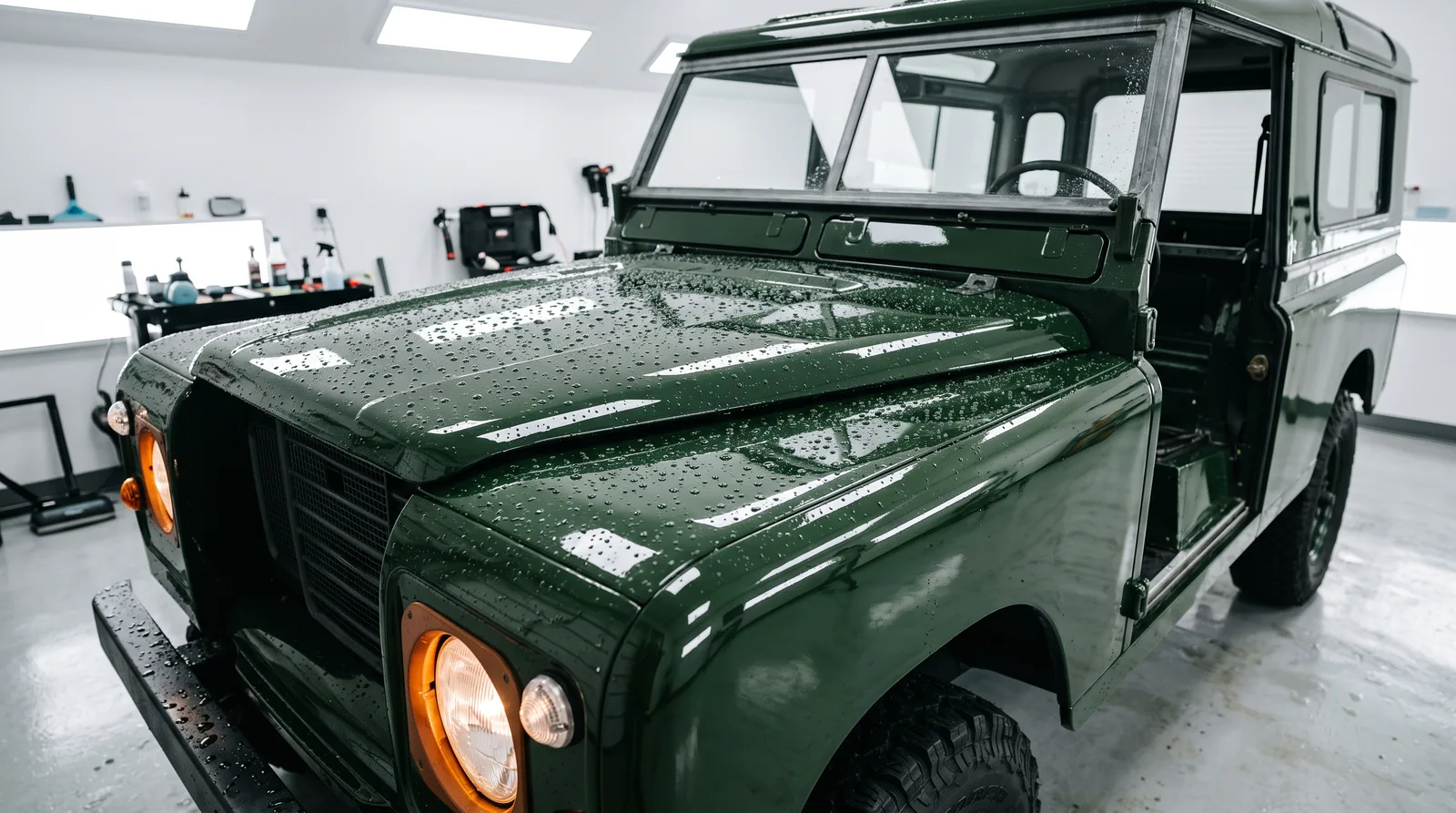
Living with PPF on a Wrangler in Alabama
Once film is on, most Wrangler owners stop thinking about it, but a few habits help it last through mud, clay, and Alabama summers. Off-road use is hard on any finish, so the wash routine matters more than on a typical SUV.
Rinse first, then wash
Red clay and grit are abrasive. Before you touch the Jeep with a mitt, rinse off as much mud as you can. Then hand wash with a pH-neutral soap and a clean mitt, working top to bottom so the dirtiest lower panels come last. Wiping dry clay off with a towel is the fastest way to scratch any surface, filmed or not.
Pressure washers and film edges
A pressure washer is standard equipment after a trail day, and it's fine on film. Just keep the nozzle at a reasonable distance and don't aim a narrow tip straight at a film edge, where a concentrated blast can lift it. Pay extra attention around door edges and hinge areas, where the film wraps.
Heat helps self-healing film
Premium self-healing film responds to warmth. Light swirls and fine brush marks often fade on their own when the Wrangler sits in the sun on a hot Opelika afternoon, or with warm water. We explain the mechanism in our guide to how PPF self-healing works.
Pollen, love bugs, and UV
Lee County's spring pollen and the late-spring and late-summer love-bug swarms hit a Wrangler's flat front end hard. Love-bug residue is acidic and can etch bare clear coat in the heat. Film gives that residue a tough, replaceable surface instead. Quality film also carries UV protection, which matters for a vehicle that spends a lot of time parked outdoors in the Alabama sun.
PPF, ceramic coating, and tint on a Wrangler
PPF is the only one of the three that stops rock chips, but each has a job on a Wrangler, and many owners combine them. Here's how they compare for this vehicle.
| Option | Stops rock chips? | What it does on a Wrangler | Where it fits |
|---|---|---|---|
| Paint protection film | Yes, on covered panels | Absorbs chips, clay abrasion, and light brush scratches; self-heals light marks | Front end at minimum; sides and full body for trail use |
| Ceramic coating | No | Gloss, UV protection, and much easier mud and bug cleanup | Over the whole vehicle, including over the film |
| Window tint | No | Heat and UV rejection through the glass, less glare | Side and rear glass, within Alabama tint law |
| PPF + ceramic coating | Yes, on filmed panels | Impact protection plus easy washing after muddy days | The most popular combination for off-road vehicles |
A coating on top of film is especially useful on a Wrangler, because mud and clay release from a coated surface much more easily, which means less scrubbing and fewer wash scratches. We cover how the two work together in our guide to ceramic coating over PPF, and you can see coating options on our ceramic coating page. For the glass, our guide to window tint for the Jeep Wrangler in Auburn covers the removable-top and soft-top questions, and our window tint page has the film options.
Wrangler vs. Bronco: is the PPF plan the same?
The Wrangler and the Ford Bronco take damage in similar ways, so the coverage logic is similar, but the details differ. Both have upright front ends, removable doors and tops, big tires, and owners who actually go off-road. The Wrangler's flat hood and fender tops, painted windshield frame, and the long Jeep tradition of doors-off driving put a little more emphasis on the windshield frame, fender tops, and door-edge add-ons. If you're cross-shopping or own both, our guide to PPF for the Ford Bronco in Auburn walks through the Bronco side.
Common questions Wrangler owners ask before PPF
Most hesitation from Wrangler owners comes down to whether film makes sense on a vehicle built to get dirty. These are the questions we hear most at the shop.
"Isn't trail rash part of owning a Jeep?"
Some owners like the patina, and that's a fair choice. But there's a difference between earned trail character and a hood peppered with highway chips from the drive to work. Film lets you use the Wrangler hard while keeping the option of a clean, factory-original Jeep when you want it, or when it's time to sell.
"Will film hold up to real off-road use?"
Quality film handles gravel, clay, light brush, and repeated washing very well. It's not armor. A hard rock strike or a sharp branch with force behind it can damage film. When that happens, the damaged section can be replaced and the paint underneath is usually still intact. That's the point: film is the sacrificial layer.
"Should I do it now or after I build it?"
If you're planning a lift, aftermarket bumpers, or different fenders, it often makes sense to get the major parts on first, so the film is fitted to the panels that will actually stay on the vehicle. If the build is months away, full front on the factory panels now still protects the paint you'll keep. Either way, film goes on best over fresh paint, so the sooner the better for the panels that won't change. See how PPF is installed for what the install day looks like.
"What about the textured plastic and steel parts?"
Textured black flares, grille surrounds, and steel bumpers aren't the same problem as painted panels, and they're usually left unfilmed. We'll walk your Wrangler with you and point out which surfaces are painted and worth protecting on your trim.
Getting PPF on your Wrangler at My Awesome Detailer
We install every film package inside our Opelika shop, because a precise PPF install needs clean, decontaminated paint and a dust-free, wind-free space. On a Wrangler, that matters even more: lots of panel edges, hinge areas, seams, and trim transitions, and each one has to be wrapped or finished carefully so mud and pressure washing don't lift it later.
- Owner's Pride Select installer: My Awesome Detailer is one of only about 40 shops in the U.S. with Owner's Pride Select status.
- 4.9 stars from 200+ reviews from drivers across Auburn, Opelika, and Lee County.
- Premium self-healing film with warranty coverage. See our warranty page for the details.
- Honest recommendations: if full front is all your Wrangler needs, we'll tell you. If your driving calls for side coverage or full body, we'll explain why.
Drop the Wrangler off at 2709 Frederick Road and plan around the install time we give you with the quote. We serve Auburn, Opelika, and the Lee County area, and plenty of customers come over from Phenix City and Columbus, GA. You can see all film options on our paint protection film page, call (334) 650-6499, or request a quote online.
Keep the Jeep, lose the chips
Get a free full-front or full-body PPF quote for your Wrangler from Lee County's Owner's Pride Select shop.
The bottom line
The Jeep Wrangler's flat hood, flat fender tops, upright windshield frame, and big tires mean its paint takes more abuse than a typical SUV, from traffic and from its own trips off the pavement. The upside is that those same flat panels are ideal for paint protection film, so coverage goes on cleanly and stays nearly invisible. For most Wrangler owners, full front with the windshield frame is the baseline. If you drive gravel roads or trails, add the lower doors, rocker areas, rear corners, and door edges for the doors-off season, or go full body and stop worrying about it. Install it while the paint is fresh, wash the clay off gently, and your Wrangler can keep its factory finish for years while you use it exactly the way Jeeps are meant to be used.